A lens that looks crisp and a lens that looks slightly foggy rarely differ because of one single thing. Two pairs of glasses can carry the same prescription and the same frame, yet one feels noticeably clearer. In practice, that difference usually comes down to a mix of material dispersion, surface coatings, lens design and how carefully the finished surface was made.
We have been manufacturing optical lenses since 1996, and the question of clarity comes up in almost every conversation with opticians, laboratories and brand buyers. Below is a practical walkthrough of the factors that genuinely shape perceived sharpness, and how to weigh them against cost, thickness and comfort.
Abbe Number: The Quiet Benchmark Behind Visual Sharpness
The Abbe number describes how strongly a lens material spreads white light into its component colours. A higher number means lower dispersion, which translates into less chromatic aberration, that faint coloured fringe that appears along high-contrast edges such as window frames, road markings or black text on a white screen.
This is why low and mid-index materials remain so popular with practitioners. A 1.50 resin lens carries an Abbe number around 58, and materials in the 1.60 range, such as MR8, sit in the low forties, high enough that most wearers describe the optics as clean and colour-neutral. For anyone sensitive to colour fringing, particularly higher-cylinder prescriptions, choosing a material with a strong Abbe number is often the least expensive way to gain real clarity.
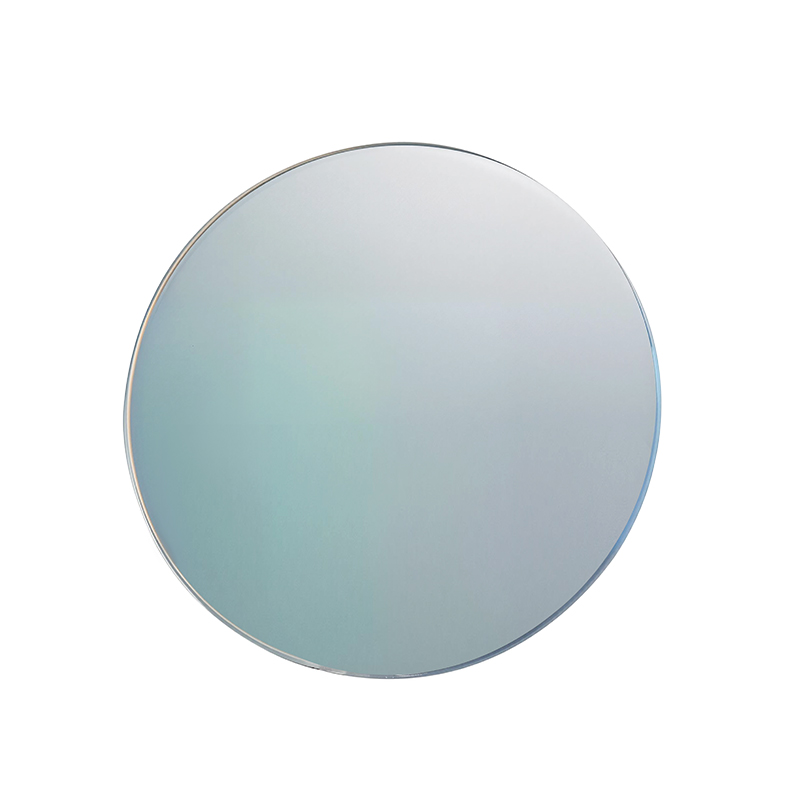
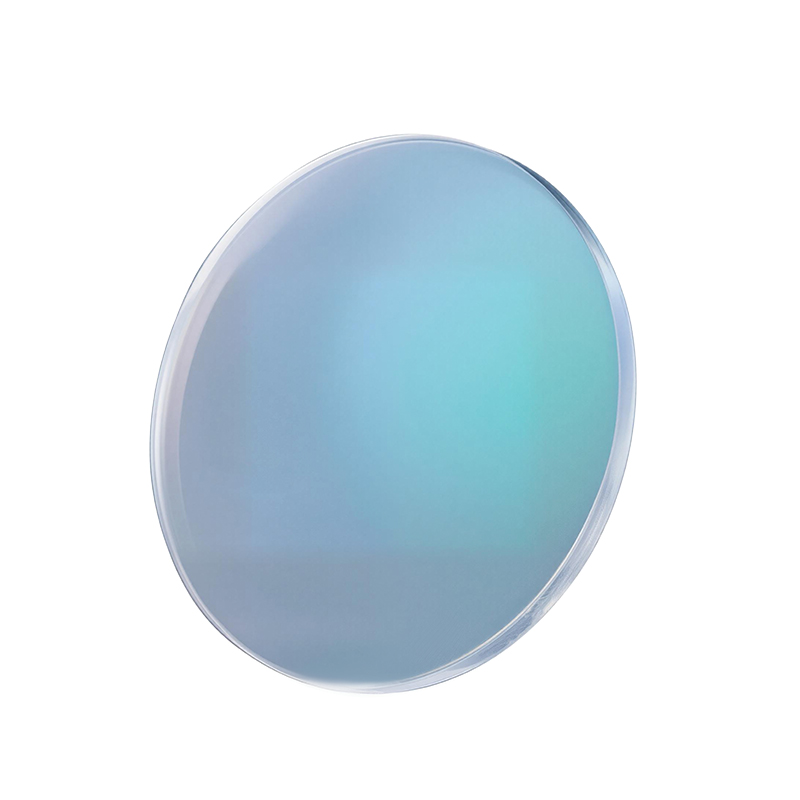
 1.61 MR-8 Single-Vision Lens with Green CoatingMid-index finished lens with Abbe 40.1, UV400 protection and multilayer green anti-reflective coating for clearer, thinner everyday correction.View Product →
It helps to think of the Abbe number as a material property you cannot coat your way out of. Anti-reflective layers improve light transmission, but they do not correct dispersion once the light is inside the lens.
Refractive Index: Thinner Does Not Automatically Mean Clearer
A higher refractive index bends light more efficiently, so the lens can be thinner and flatter for the same prescription. That is a real comfort gain for stronger prescriptions. The trade-off is that most high-index resins also carry lower Abbe numbers, so the image can show slightly more colour separation, especially in low light or at the edge of the lens.
The table below gives a practical overview of how the common indices compare for everyday presbyopic and myopic wearers.
Approximate Abbe values are typical for the resin families most optical laboratories work with; exact figures vary by supplier and material grade.
| Refractive Index |
Typical Abbe Number |
Best Suited To |
Clarity Trade-off |
| 1.50 |
Around 58 |
Low to moderate prescriptions |
Best colour purity, visibly thicker edges |
| 1.56 |
Around 37 to 42 |
Everyday low and mid prescriptions |
Balanced thickness and optical cleanliness |
| 1.61 |
Around 41 |
Moderate to higher myopia |
A strong middle ground: thinner, still clean |
| 1.67 |
Around 32 |
High myopia, thin frame requirements |
Thinnest option, more visible colour fringing |
For many wearers, the mid-index range is where the practical sweet spot sits: a 1.61 non-spherical design keeps the edge thin while retaining a comfortable Abbe number. Only when the prescription climbs well beyond minus six dioptres does the jump to 1.67 usually justify itself.
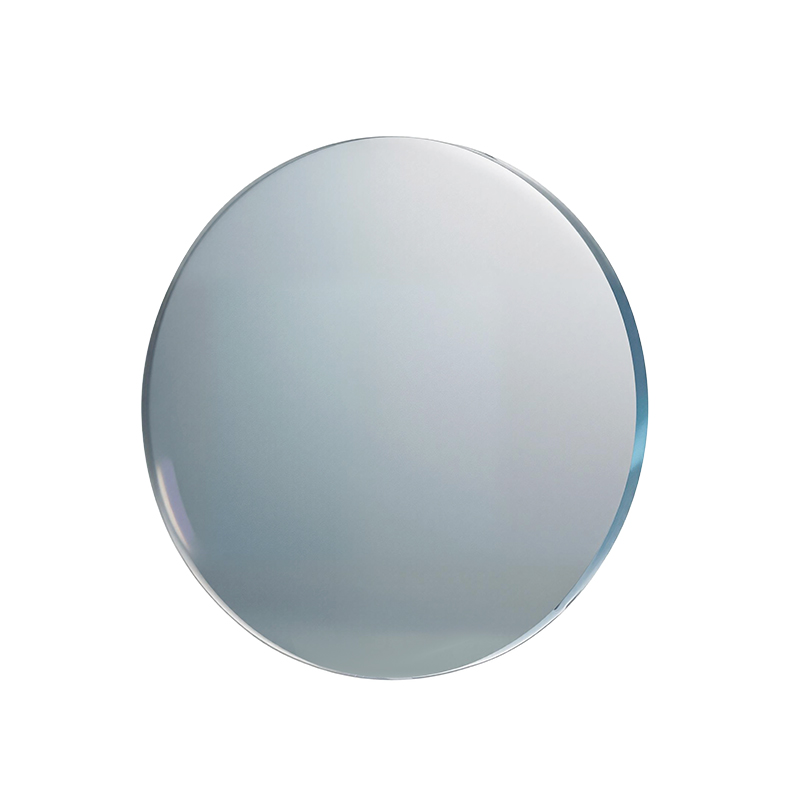
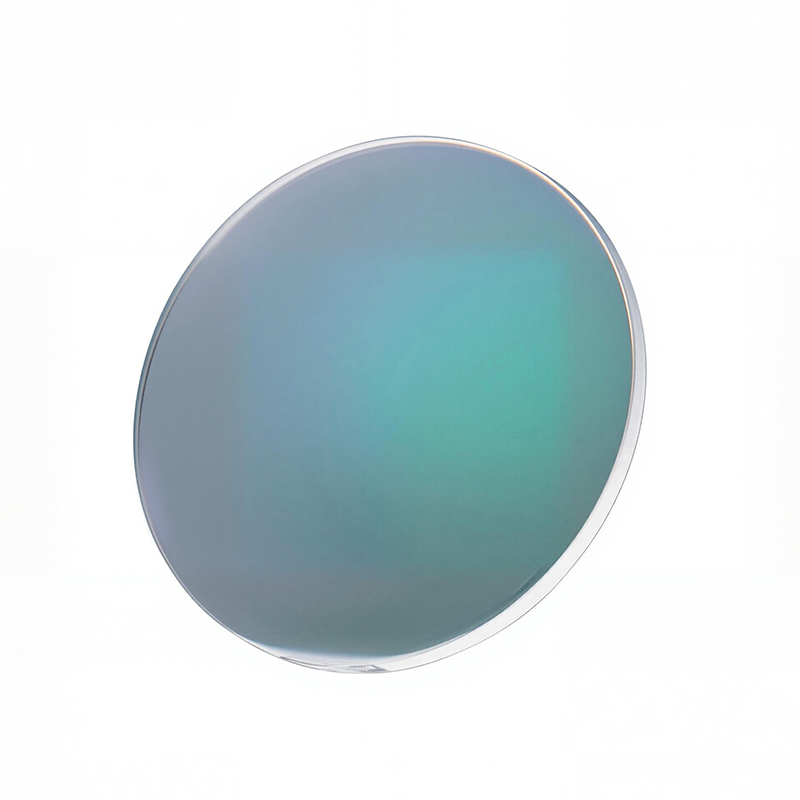 1.67 Aspheric Single-Vision Lens with Green AR CoatingHigh-index finished lens with Abbe 32, UV400 and multilayer green AR coating, suited to stronger prescriptions seeking thinner edges.View Product →
Coatings That Add Clarity, and Coatings That Take It Away
Roughly eight per cent of light is lost at each uncoated lens surface through reflection. Multiply that across two surfaces and the wearer is looking through a lens that is quietly dimmer than it needs to be. That is the case for a properly applied anti-reflective stack.
- Anti-reflective multilayer coatings, often labelled HMC or SHMC, reduce surface reflections and let more light reach the eye. They also cut night-time halos from headlights and street lamps.
- Hard coating protects the surface from the fine scratches that gradually scatter light and dull the view.
- Hydrophobic and oleophobic top layers keep smudges from bonding to the surface, so cleaning is easier and the lens stays optically clean for longer.
- Blue light filtering layers can add comfort for heavy screen users, though a heavily tinted filter coating can shift colour perception slightly. A well-designed coating keeps that shift subtle.
- Photochromic and polarised treatments change how much light reaches the eye in different environments, which matters more for comfort and glare control than for raw sharpness.
The point worth remembering is that coatings can only work with the surface they sit on. A poorly polished lens covered in premium layers will still look soft.
Lens Design: Aspheric and Freeform Precision
Spherical single-vision lenses are perfectly serviceable, but they grow thicker and introduce more edge distortion as power increases. Aspheric designs flatten the curve and reduce the aberrations that make the periphery feel slightly swimmy. For higher prescriptions, that change is often the difference between a lens that feels precise and one that feels merely adequate.
Freeform, or digital surfacing, takes the idea further. Instead of starting from a semi-finished blank with a fixed front curve, the laboratory calculates the back surface point by point for the individual prescription, frame shape and fitting position. The result is a lens that behaves predictably across the whole field of view, which is exactly what progressive wearers notice first.
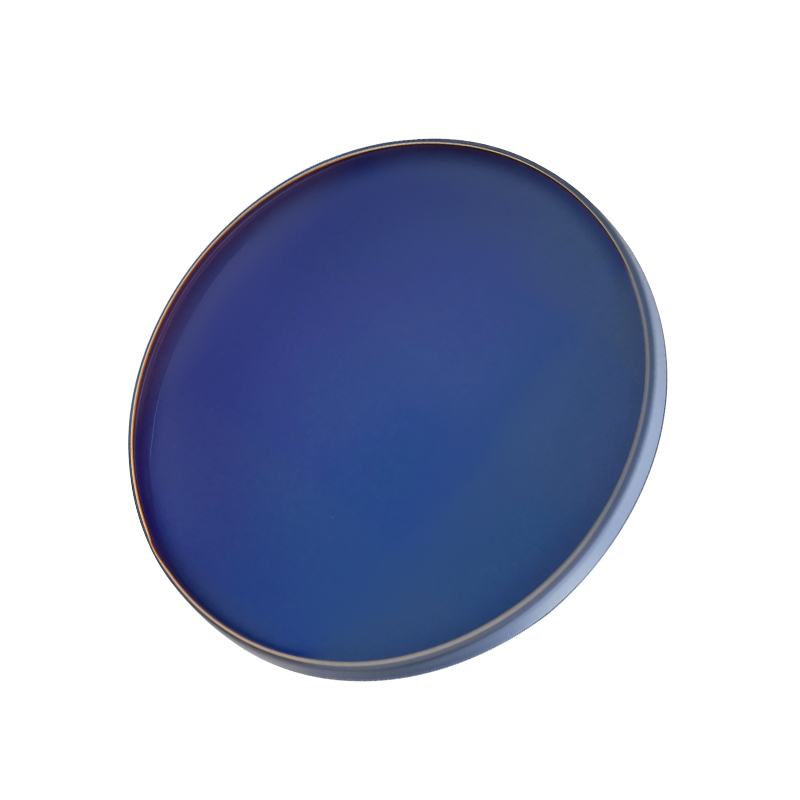 Freeform Progressive Lens in 1.56, 1.61 and 1.67Digital surfacing supports personalized progressive vision with wider fields and reduced peripheral distortion, available in multiple indexes and coatings.View Product →
Matching Lens Clarity to the Wearer
Higher myopia
Thinner edges matter, but so does edge clarity. A high-index aspheric lens with a quality anti-reflective stack usually outperforms a thicker lens that has been left uncoated.
Presbyopia
Progressive lenses depend heavily on corridor design and accurate freeform calculation. A wide, well-placed intermediate zone reduces the head movement many new wearers find frustrating.
Screen-heavy workdays
Reflections from overhead lighting and monitors are the most common complaint in office environments. Anti-reflective coating plus an appropriate blue light filter addresses the practical cause rather than the symptom.
Outdoor and variable light
Photochromic or polarised options trade a small amount of light transmission for a large gain in glare comfort, which many wearers experience as improved perceived clarity.
Materials and Manufacturing: Where Clarity Actually Begins
Resin choice sets the ceiling on optical performance. Materials such as TS-46, MR8 and PU63 each carry their own balance of Abbe number, impact resistance and processing behaviour, and the correct choice depends on the prescription range a laboratory handles most often. Our own production history reflects that evolution: we began with 1.50 resin blanks in 1996, moved into 1.56 with TS-46 in 2000, and now run a vertically integrated facility covering material formulation, casting, coating and finished packaging across a 14,000 square metre site.
Coating consistency matters just as much as the coating recipe. With more than nineteen anti-reflective and hard-coating lines in operation and annual output above 25 million lenses, the practical challenge is keeping layer thickness and adhesion uniform from batch to batch. If you would like a deeper background on resin families, our lens material guide covers the main options in more detail.
How to Judge Clarity Before You Commit
- Ask which material and index the lens uses, and what Abbe number it carries.
- Confirm the anti-reflective coating type rather than accepting a generic "coated" answer.
- Check whether an aspheric or freeform design is specified, especially above minus four dioptres.
- Look at the lens under a point light source: clean coatings show a faint residual colour, not a milky haze.
- For practices and laboratories, review the supplier's surface quality data and coating durability reports before placing volume orders.
Many optical stores and laboratories keep a finished lens stock range on hand for same-day fitting, which makes it easy to compare a coated and an uncoated lens side by side under the same light.
Bringing It Together
The clearest lenses for glasses are rarely the thinnest or the most heavily coated ones. They are the lenses where material, index, design and coating have been chosen to suit a specific prescription and a specific daily routine. Get the Abbe number right for the wearer's sensitivity, keep the design appropriate to the power, and apply a genuinely effective anti-reflective stack, and most people will notice the difference the moment they put the glasses on.
If you are sourcing lenses for a retail chain, a laboratory or a brand programme, the most useful next step is usually a straightforward conversation about which prescriptions dominate your order book. That single detail shapes almost every other decision.

 English
 Français
 Español
 عربى
 中文