Walk into any optical laboratory or eyewear workshop and you will hear the same question again and again: are glasses prescription the same as contacts? The short answer is no. A glasses prescription and a contact lens prescription may look alike at first glance, but they are two separate documents written for two different ways of wearing lenses. At Jiangsu Junshi Optics, where we have spent decades manufacturing resin lenses, we have seen how often this confusion leads to ill-fitting contact lenses and disappointed customers.
Why the Two Prescriptions Are Not Interchangeable
The main reason comes down to distance. A frame lens sits roughly 10 to 12 millimeters in front of your eye, while a contact lens rests directly on the cornea with no gap at all. This distance, known as the vertex distance, changes the effective power your eye receives. When light passes through a lens positioned farther from the eye, the lens power must be adjusted to deliver the same focusing result from a closer position.
Your glasses prescription also has to account for the tilt of the frame and the curve of the lens, whereas a contact lens prescription has to match the curvature and size of your cornea. These are fundamentally different optical conditions. That is why an eye care professional must measure and prescribe for each format separately, and why a contact lens fitting is never a simple copy-and-paste job.
What a Glasses Prescription Actually Contains
A standard glasses prescription includes the numbers that describe how your eye focuses light:
- SPH (sphere): the main lens power in diopters, either minus for myopia or plus for hyperopia.
- CYL (cylinder): the extra power needed when the cornea is not perfectly spherical, which is known as astigmatism.
- AXIS: the angle from 1 to 180 degrees that tells the laboratory where to place the cylinder correction.
- PD (pupillary distance): the distance between your pupils, used to center the optical zones in front of your eyes.
- ADD (addition): the extra magnifying power in the lower portion of progressive or bifocal lenses for near vision.
These values are the blueprint our production lines work from. When we manufacture single vision stock lenses, we shape the front and back curves so the finished power matches the SPH and CYL exactly. Every curve, thickness and coating decision starts with the numbers on that page.
Whether you need a light 1.56 index lens or a high-performance 1.67 design, the prescription tells us which combination will suit your daily visual needs.
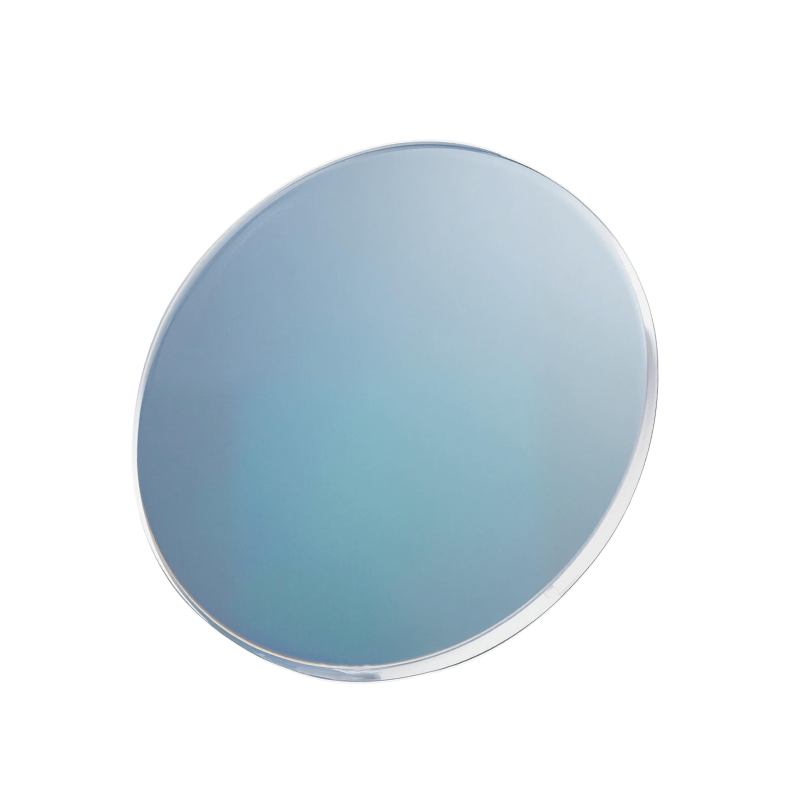 1.56 Aspherical Single-Vision Lens with Green CoatingThis lightweight finished lens offers aspherical clarity, scratch resistance, UV380 protection, and a green coating for comfortable everyday wear.View Product →
What a Contact Lens Prescription Adds
A contact lens prescription contains similar power numbers, but it also carries details that a glasses prescription never includes:
- Base curve (BC): the curvature of the back surface of the lens, which must follow the shape of your cornea.
- Diameter (DIA): the width of the lens, which must cover the correct area of your cornea while allowing stable movement.
- Brand and material: contact lenses are fitted by specific brand and material, and your prescription is valid only for the lens your practitioner tested on your eye.
- Expiration date: contact lens prescriptions typically expire within one year, because the fit of a lens can change as your eyes change.
Key differences between a glasses prescription and a contact lens prescription
| Prescription Detail |
Glasses |
Contact Lenses |
| Sphere power (SPH) |
Yes |
Yes |
| Cylinder and axis |
Yes |
Yes, for toric lenses |
| Pupillary distance |
Yes |
Not usually |
| Base curve |
No |
Yes |
| Diameter |
No |
Yes |
| Brand / material |
No |
Yes |
| Expiration validity |
Typically 1 to 2 years |
Typically 1 year |
Higher Prescriptions Show the Biggest Difference
For modest corrections, the powers on both prescriptions may look almost identical. Between about +4.00 and -4.00 diopters, the vertex distance has only a small optical effect. But once the prescription goes beyond that range, the gap becomes meaningful. A -8.00 glasses prescription, for instance, may need around -7.50 in a contact lens because the contact lens sits so much closer to the eye.
Astigmatism adds another layer of complexity. With glasses, the cylindrical power and axis are simply written into the lens. With contacts, you need a toric lens, which must also stay in the correct rotational position on the eye. That extra stability requirement is part of the reason a contact lens prescription carries so much more fitting data.
Can You Convert a Glasses Prescription to Contacts Online?
You will find many online calculators that claim to convert a glasses prescription into contact lens power. They are convenient, but they are also incomplete. A calculator cannot measure your corneal curvature, check your tear film, or judge how a lens will move on your eye. Those factors are exactly what makes a contact lens fitting a professional process rather than a math exercise.
As an optical lens manufacturer, we always encourage customers to treat their glasses prescription and their contact lens prescription as separate, professional documents. If you want to understand the numbers on your current glasses prescription, we have prepared a detailed guide to reading and interpreting your glasses prescription.
Practical Advice from the Manufacturing Side
Because we make eyeglass lenses for a living, our advice is simple: keep both prescriptions current and never use one in place of the other. When you order new frames, hand your optician the glasses prescription. When you order contacts, make sure the document explicitly states that it was written for contact lenses.
If you wear progressive lenses and your prescription includes an ADD power, the same care applies. The reading addition is measured for a specific fitting height and frame, and it cannot be transplanted into a contact lens prescription without a proper multifocal contact lens fitting. Our progressive finished lenses are designed around the full prescription, including ADD, so that the near, intermediate and distance zones align with your daily viewing habits.
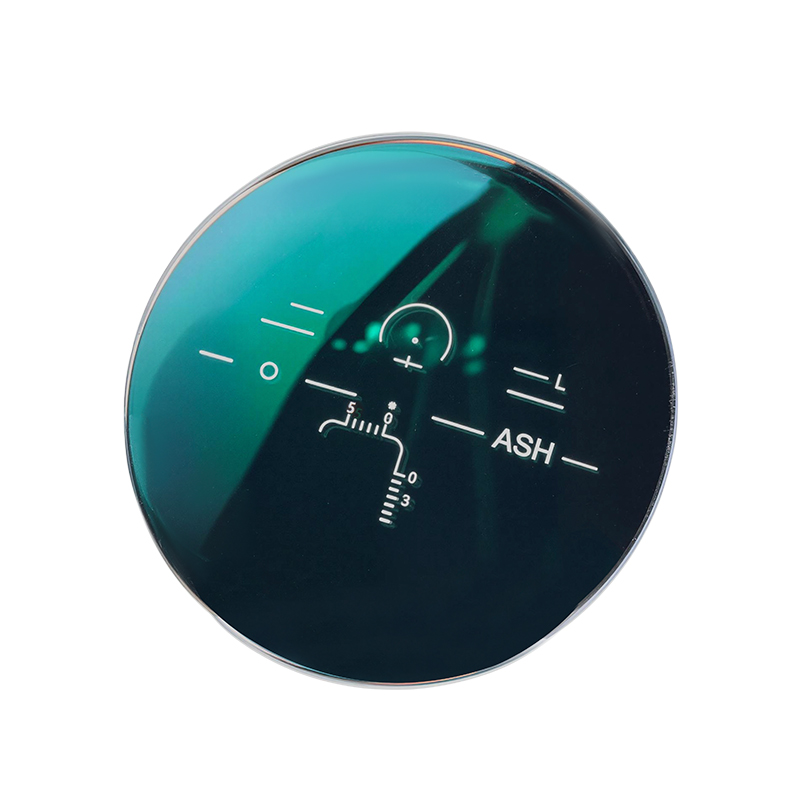 1.61 Progressive Finished Lens for Smooth Multifocal VisionDesigned with a 9+4 corridor and UV400 protection, this progressive lens suits those needing seamless distance-to-near transitions, especially for middle-aged users.View Product →
Do you wear glasses all day and find yourself switching to reading glasses for close work? Talk to your eye care professional about the full range of options. And if you are an eyewear buyer or laboratory owner evaluating lens suppliers, we invite you to see how we combine precise prescriptions with dependable optical lens manufacturing.
The bottom line: are glasses prescription the same as contacts? No. They correct the same eyes, but they do so from different positions, with different fitting requirements and different professional standards. Treat the two prescriptions as the separate medical documents they are, and both your vision and your eyes will thank you.

 English
 Français
 Español
 عربى
 中文