The Technological Upgrading and Market Development of Colored Bifocal Lenses and Photochromic Lens in the Global Optical Industry
The global optical industry is experiencing an important transition from basic vision correction to high-functionality, personalization, and scenario-based applications. Consumer demand for lenses is no longer limited to visual clarity. More attention is now being paid to wearing comfort, fashionable appearance, digital visual experience, and visual adaptability in complex environments. Under this market background, colored bifocal lenses, Photochromic Lens products, and progressive lenses have gradually become core categories emphasized by international eyewear brands, high-end suppliers, and large-scale manufacturers.
In recent years, with the increasing amount of time spent using digital devices, visual fatigue has become more common among consumers, driving strong growth in demand for functional lenses. At the same time, the expansion of the aging population has also promoted the continuous development of bifocal and progressive lenses. Particularly in Europe, North America, and some Asian countries, more consumers are accepting lens products that combine functionality and aesthetics, leading the functional lens market into a period of rapid upgrading.
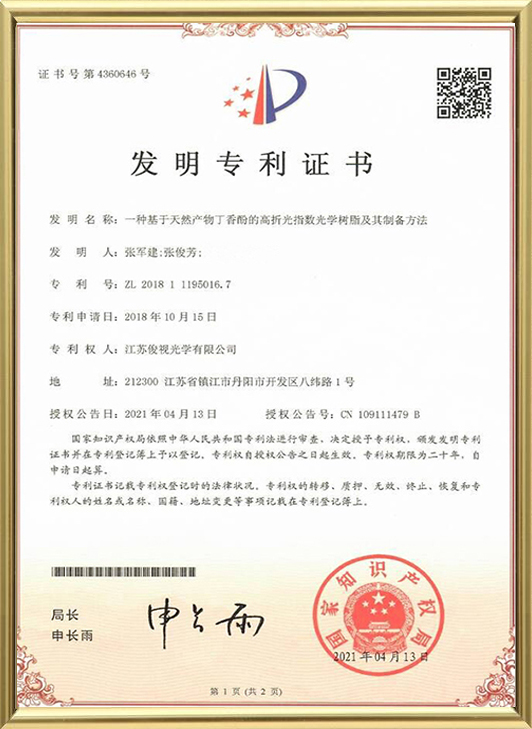
Founded in 2002 in Danyang, China’s renowned “Lens Capital,” Jiangsu Junshi Optics Co., Ltd. is a premier ODM manufacturer specializing in high-performance optical resin lenses, with origins dating back to 1996. The company has long focused on the research and development of high-performance resin lenses and has established a stable influence in the global functional lens ODM market.
As a world-leading high-end optical lens manufacturer, Jiangsu Junshi Optics Co., Ltd. focuses on lens design, engineering research, and production manufacturing. Upholding the philosophy of pursuing excellent optical quality, the company has established a 14,000-square-meter vertically integrated production base, forming a complete manufacturing system from material development and lens molding to functional coating and finished product packaging.
For international brands, a mature lens supplier represents not only large-scale production capacity but also product consistency, continuous R&D capabilities, and long-term delivery reliability. Procurement in the international high-end lens market has gradually shifted from pure price competition to comprehensive manufacturing capability competition. Manufacturers with freeform design, automated inspection systems, and advanced coating technologies are gaining more international cooperation opportunities.
colored bifocal lenses and Photochromic Lens Drive the Upgrading of the Functional Lens Market
Colored bifocal lenses are gradually entering the fashion consumer sector
Traditional bifocal lenses are mainly designed to solve distance and near vision switching problems for middle-aged and elderly consumers. However, with changing consumer concepts, lens products are now integrating fashion attributes with functional attributes. The rapid growth of colored bifocal lenses is an important reflection of this consumption trend.
Many consumers hope to achieve both clear vision and fashionable appearance during daily commuting, driving, outdoor activities, and travel. Traditional transparent bifocal lenses can meet visual needs but lack personalized visual expression, while colored bifocal lenses can provide richer visual styles while maintaining distance and near vision functions.
Currently, colored bifocal lenses on the market have expanded from simple gray and brown colors to gradient tones, fashionable blue, green, and multi-layer color designs. Consumers now focus not only on prescription accuracy when selecting lenses but also on how lens colors coordinate with facial shape, skin tone, and clothing styles.
In European and American markets, colored bifocal lenses have been widely used in the sunglasses sector. Many middle-aged and elderly consumers want lenses that can solve reading issues while also providing sun protection and visual comfort during driving or outdoor activities. As a result, colored bifocal lenses have gradually become an important component of high-end sunglasses.
For lens manufacturers, the production difficulty of colored bifocal lenses is significantly higher than ordinary lenses. Products must ensure accurate bifocal transition areas while also controlling dye uniformity, light transmittance stability, and long-term color consistency. Any slight deviation may affect wearing comfort and visual performance, so high-end suppliers generally adopt stricter quality management systems.
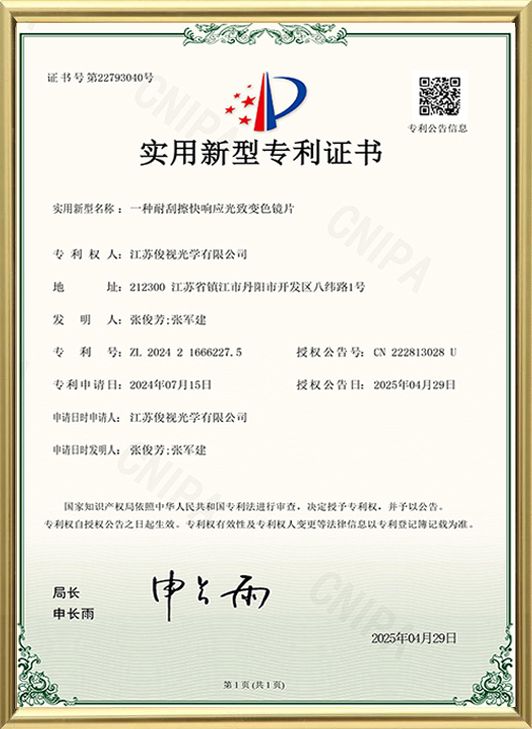
Jiangsu Junshi Optics Co., Ltd. has accumulated extensive experience in functional resin lens development, especially in dyeing technology, functional coating, and visual design. The company can provide customized colored bifocal lenses solutions according to the needs of different countries and brands, which is highly valuable for international customers.
Photochromic Lens has become an important direction in modern functional lenses
Photochromic Lens products have become one of the fastest-growing categories in the global functional lens market in recent years. As consumer awareness of UV protection and visual comfort continues to increase, photochromic technology is gradually expanding from the high-end market into the mass consumer market.
The greatest feature of a Photochromic Lens is its ability to automatically change color depth according to ultraviolet intensity in the environment. Indoors, the lenses remain highly transparent, while outdoors they darken rapidly, helping users reduce glare and improve visual comfort.
This type of lens has a very wide range of applications in modern life. Many consumers do not want to switch frequently between ordinary eyeglasses and sunglasses, while Photochromic Lens products can automatically adjust light transmittance in different environments, making them particularly suitable for people who frequently transition between indoor and outdoor settings.
Driving users have especially strong demand for photochromic lenses. During long driving periods, light conditions change frequently, and ordinary lenses often struggle to adapt to strong sunlight environments. Photochromic Lens products can effectively reduce glare and improve visual stability, making them highly popular in North American and European markets.
Modern Photochromic Lens products are no longer limited to traditional gray and brown colors. As consumer aesthetic demands evolve, more brands are launching blue, green, purple, and fashionable gradient photochromic lenses. This trend is gradually transforming photochromic technology from purely functional products into products that combine fashion and functionality.
High-quality Photochromic Lens products require extremely high technical standards. Lenses must not only provide fast color-changing performance but also maintain stable performance during long-term use. If material stability is insufficient, lenses may develop color fading, yellowing, or slower recovery speed over time. Therefore, international brands usually pay greater attention to a factory’s R&D capabilities and long-term quality control when selecting suppliers.
With a 14,000 sqm production facility, 300+ skilled professionals, and advanced AR coating and inspection systems, Jiangsu Junshi Optics Co., Ltd. delivers 25+ million lenses annually to over 1,000 brand partners worldwide. Through mature AR coating systems and strict inspection procedures, the company provides stable and reliable Photochromic Lens products for global customers.
Progressive Lens Factory is developing toward digitalization and high precision
The progressive lens market has experienced significant growth in recent years. As the aging trend continues to expand, more consumers are paying attention to more natural and comfortable visual solutions. Compared with traditional bifocal lenses, progressive lenses can provide continuous visual transition, making them increasingly important in the mid-to-high-end market.
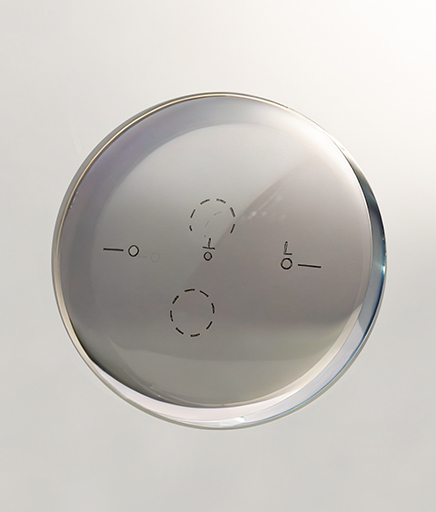
Modern Progressive Lens Factory operations are no longer merely traditional lens production facilities. They have become integrated technical platforms combining freeform design, digital processing, visual algorithms, and precision inspection.
The greatest technical challenge of progressive lenses lies in visual channel design. Lenses must achieve natural transitions between distance, intermediate, and near vision areas within a limited surface while minimizing aberration and edge distortion. If design capabilities are insufficient, wearers may experience dizziness, visual distortion, or adaptation difficulties.
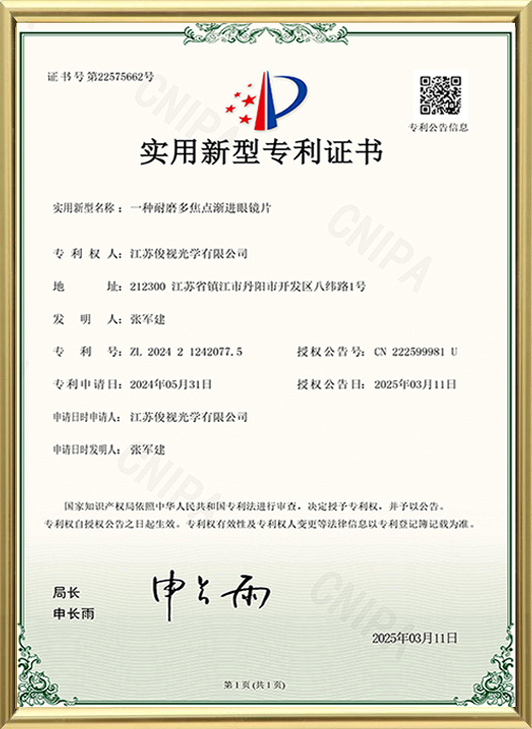
The development of freeform technology has greatly promoted progressive lens upgrading. Traditional lenses are usually produced using fixed molds, while freeform technology can optimize lenses according to user pupillary distance, frame parameters, and visual habits, thereby improving visual comfort.
The international high-end progressive lens market now increasingly values personalized design. Many consumers expect lenses optimized for driving, office work, reading, or outdoor activities. Therefore, modern Progressive Lens Factory facilities require not only manufacturing capacity but also visual algorithm development capabilities.
Jiangsu Junshi Optics Co., Ltd. continues to invest in freeform design research and development. Its progressive lens products are widely used in Europe, North America, and Asia’s high-end markets. The company has established mature technical systems in freeform processing, lens inspection, and functional coating, providing stable ODM support for international brands.
Core Competitive Capabilities of High-End Lens Manufacturers
Material R&D capabilities determine the foundation of lens performance
Modern functional lenses require increasingly high material performance. Different resin materials directly affect lens weight, light transmittance, impact resistance, and long-term stability. Therefore, high-end lens manufacturers generally attach great importance to material R&D capabilities.
Traditional CR-39 materials have long dominated the market due to stable optical performance. However, with growing consumer demand for thinner and lighter lenses, high-index materials are developing rapidly. More international brands are paying attention to lens edge thickness, wearing weight, and long-term comfort, making high-performance resin materials an important foundation for functional lens upgrading.
For Photochromic Lens products, material stability is especially critical. Photochromic molecules must maintain stable activity under long-term ultraviolet exposure. If material control is insufficient, lenses may experience declining photochromic performance after prolonged use.
Modern high-end lens manufacturers usually establish independent laboratories for continuous optimization of material formulas. Such R&D capabilities affect not only lens performance but also long-term market competitiveness.
Jiangsu Junshi Optics Co., Ltd. has established a complete vertically integrated manufacturing system, forming a full industrial chain from material research to lens production. This model helps the company better control product consistency and meet international brands’ demands for stable long-term supply.
High-precision coating technology enhances lens added value
Coating technology has become an indispensable part of modern functional lenses. Consumer requirements for lenses are no longer limited to visual clarity but increasingly focus on reflection control, visual comfort, and long-term durability.
AR coating can effectively reduce lens reflection, improve light transmittance, and enhance visual clarity, making it an important standard configuration for high-end lenses.
In the modern functional lens sector, coating technology is becoming increasingly important. Especially for colored bifocal lenses and Photochromic Lens products, coating quality directly affects lens appearance and long-term stability.
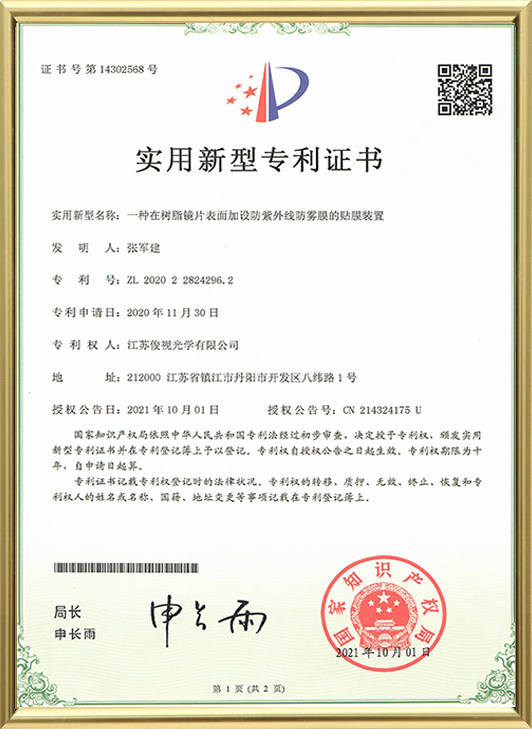
High-quality lenses usually feature more uniform coating layer structures, which not only improve visual performance but also enhance scratch resistance and anti-smudge capabilities. Many international consumers pay particular attention to whether lenses resist fingerprints, remain easy to clean, and maintain clear appearance during long-term use.
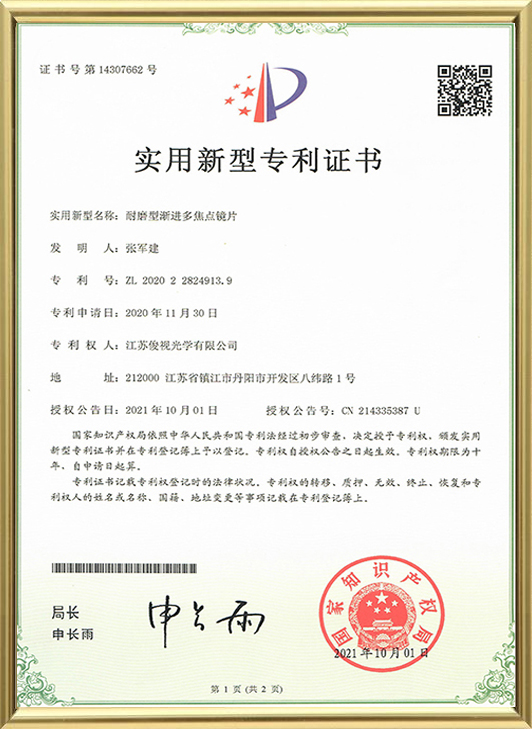
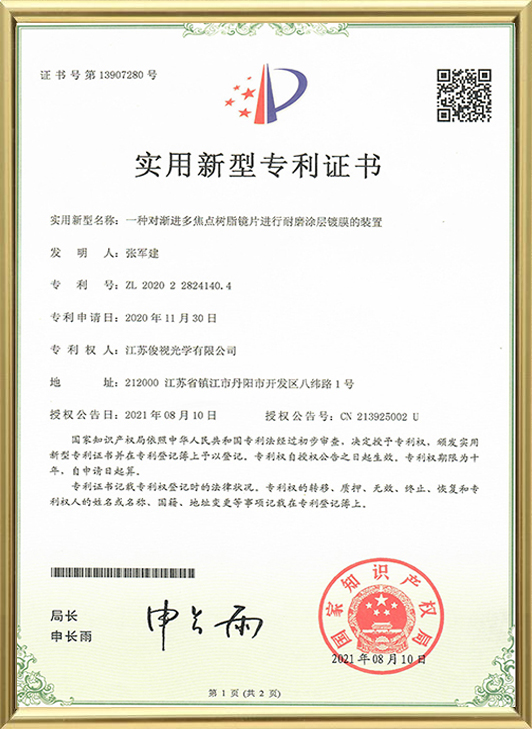
Jiangsu Junshi Optics Co., Ltd. has mature experience in AR coating technology. Its Super Anti-Scratch Technology enjoys strong recognition in international markets. For functional lenses used frequently over long periods, scratch resistance directly affects user experience, making international brands more likely to choose manufacturers with advanced coating expertise.
Automated inspection systems have become an important part of modern lens manufacturing
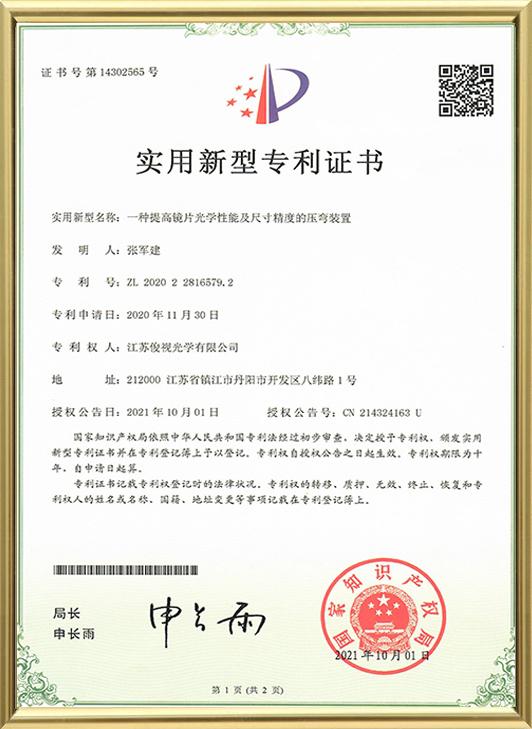
Modern lens production requires extremely high precision. Especially for progressive and bifocal lenses, any small deviation may affect the final wearing experience, making automated inspection systems an essential component of high-end lens manufacturing.
Although traditional manual inspection methods can complete basic checks, it is difficult to maintain completely consistent precision standards in large-scale production environments. As global brands continue raising product consistency requirements, more lens manufacturers are adopting automated inspection systems.
High-precision inspection systems can comprehensively analyze lens prescription accuracy, prism deviation, thickness uniformity, and optical center position, thereby improving product consistency.
For international brands, a mature supplier must possess not only manufacturing capacity but also a complete quality traceability system. Modern digital inspection systems can achieve batch management, production record tracking, and quality data analysis, which is highly important for long-term ODM cooperation.
Through advanced inspection systems and complete quality control procedures, Jiangsu Junshi Optics Co., Ltd. continuously improves product stability and provides reliable long-term supply chain support for global brand customers.
Development Trends in the Global Functional Lens Supply Chain
International brands increasingly value long-term ODM cooperation capabilities
In recent years, the supply chain structure of the global eyewear industry has undergone obvious changes. More brands are adopting asset-light operating models, outsourcing manufacturing and part of their R&D work to professional ODM manufacturers.
This trend has significantly increased the importance of high-end lens suppliers. International brands not only seek stable product supply but also expect suppliers to provide market trend analysis, new product development, and rapid customization capabilities.
For the functional lens sector, technological accumulation is particularly important. Whether in Photochromic Lens products or progressive lenses, long-term R&D experience is essential. Therefore, large brands usually prefer establishing long-term cooperation relationships with experienced manufacturers.
Jiangsu Junshi Optics Co., Ltd. has long served European, North American, Asian, and Middle Eastern markets. Its stable production capabilities and mature ODM systems have helped the company establish strong competitiveness within the international supply chain.
Global consumers continue increasing acceptance of high-function lenses
As lifestyles continue changing, consumers are demanding increasingly advanced lens functionality. Modern consumers not only focus on vision correction but also care more about long-term wearing comfort and visual performance in complex environments.
The increase in digital office environments has caused more people to focus on visual fatigue issues. Meanwhile, the growth of outdoor sports consumption has also promoted the development of functional sunglass lenses. Under this background, colored bifocal lenses and Photochromic Lens products are entering broader consumer markets.
Many consumers are no longer satisfied with single-function lenses. Instead, they hope lenses can simultaneously provide vision correction, UV protection, glare reduction, and fashionable appearance. This shift in consumer demand is driving continuous upgrading in the lens industry.
Chinese high-end lens manufacturers are gaining stronger influence in the global market
China has long been one of the world’s most important lens production bases. With manufacturing technology upgrading, Chinese lens enterprises are gradually transforming from traditional OEM models into high-end ODM models.
Danyang, as a major global lens industry cluster, has already formed a mature industrial chain system. Complete industrial supporting capabilities from raw materials and equipment to molds, functional coating, and inspection systems have helped Chinese manufacturers establish strong competitiveness in the international market.
Relying on Danyang’s mature industrial chain resources, Jiangsu Junshi Optics Co., Ltd. continues expanding its international influence in the high-performance resin lens field. With freeform design, advanced coating technologies, and stable quality control systems, the company provides ODM services for over 1,000 global brand partners.
As global demand for high-end functional lenses continues expanding, Chinese lens manufacturers with R&D capabilities, automated manufacturing capacity, and international service abilities are gaining more international cooperation opportunities.
FAQ
What scenarios are colored bifocal lenses suitable for?
Colored bifocal lenses are suitable for driving, outdoor activities, travel, and daily wear, providing both distance and near vision switching functions along with fashionable appearance.
What are the main advantages of Photochromic Lens products?
Photochromic Lens products can automatically adjust color depth according to ultraviolet intensity, remaining clear indoors while reducing glare outdoors and improving visual comfort.
Why are Progressive Lens Factory operations becoming increasingly important?
Because progressive lenses require advanced freeform design, visual algorithms, and high-precision processing, professional Progressive Lens Factory facilities can provide more stable product quality and personalized design capabilities.
What are the main businesses of Jiangsu Junshi Optics Co., Ltd.?
Jiangsu Junshi Optics Co., Ltd. mainly engages in the research, design, and manufacturing of high-performance optical resin lenses, providing ODM lens solutions for global brand customers.
Why do high-end lenses emphasize freeform design?
Freeform design can reduce edge distortion, expand effective visual fields, and optimize lenses according to user parameters, thereby improving wearing comfort.
Why do international brands prefer experienced ODM suppliers?
Experienced ODM suppliers usually possess stable R&D capabilities, automated manufacturing systems, and long-term supply capacity, helping brands quickly launch high-quality products.
Are photochromic lenses suitable for long-term daily wear?
High-quality Photochromic Lens products are suitable for long-term daily use because they can automatically adjust light transmittance in different lighting environments and reduce the inconvenience of switching glasses frequently.
What is the difference between colored bifocal lenses and ordinary bifocal lenses?
In addition to providing distance and near vision functions, colored bifocal lenses also feature fashionable tinted effects and generally provide better outdoor visual experiences.

 English
 Français
 Español
 عربى
عربى 中文
中文