Single Vision Semi-finished Lens Industry Positioning and Optical Foundation
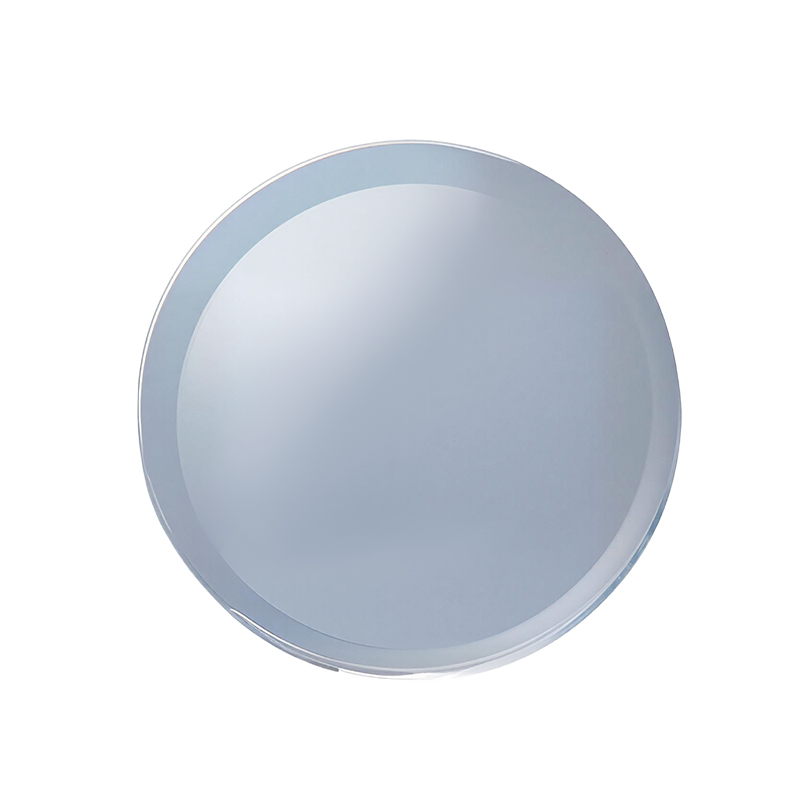
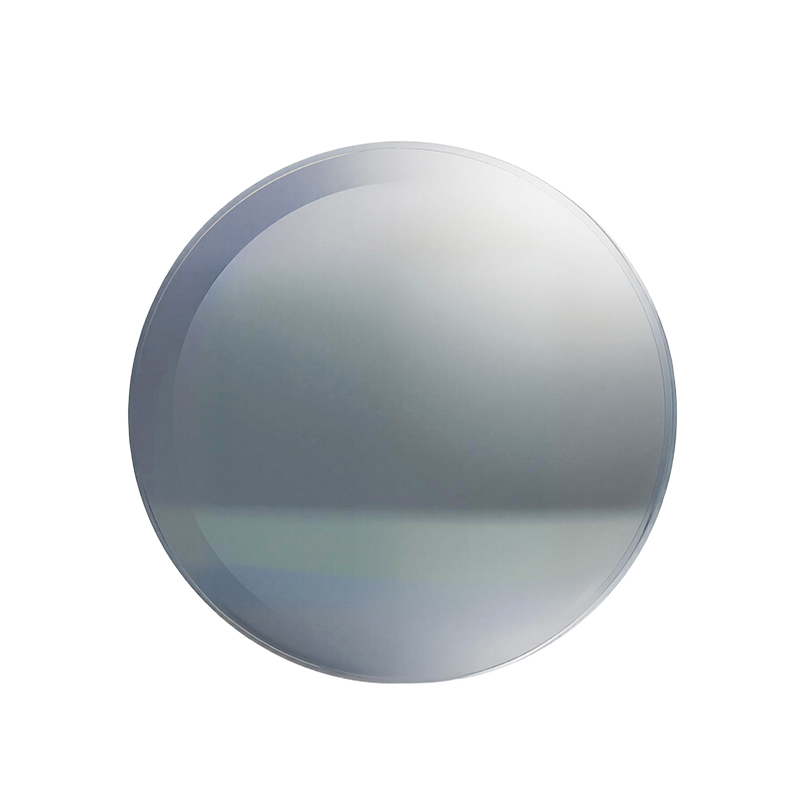
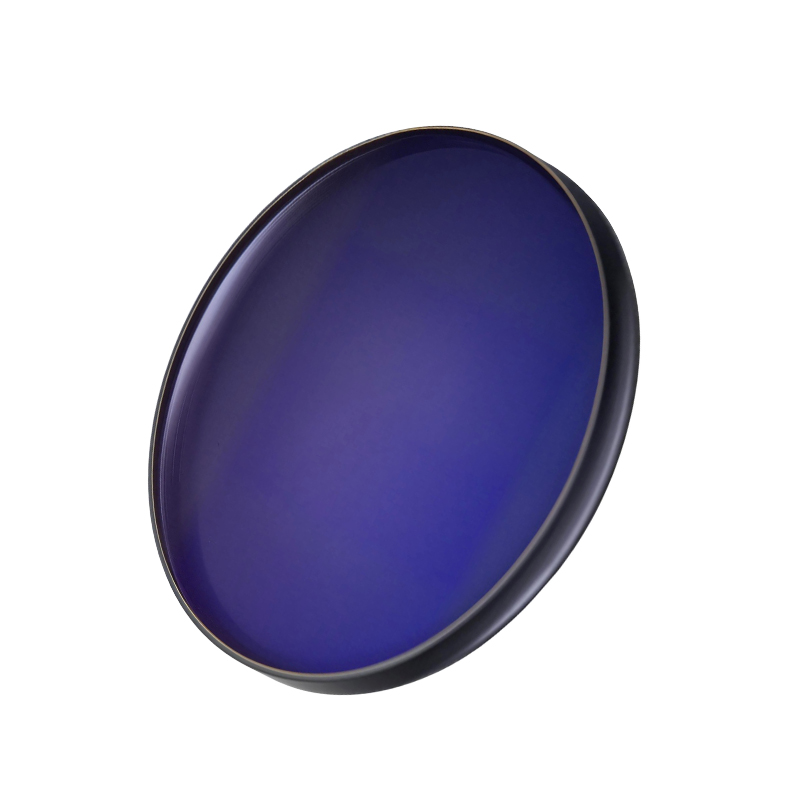
Single Vision Semi-finished Lens is a fundamental intermediate product in the modern ophthalmic lens industry, playing a critical role between standardized optical manufacturing and customized prescription processing. From an optical definition perspective, “Single Vision” refers to lenses that contain only one fixed refractive power, designed to correct vision at a single distance, such as myopia, hyperopia, or simple astigmatism correction scenarios. “Semi-finished” indicates that only one optical surface has been precision-formed, while the other surface remains unfinished and requires individualized processing based on the wearer’s optometric data before final assembly into eyewear frames.
In the global eyewear supply chain, this product category exists within a multi-layered structure involving suppliers, manufacturers, and factories. Upstream raw material suppliers provide optical-grade resin materials such as CR-39 and high-index MR series resins. After purification, these materials are delivered to lens manufacturing factories. Manufacturers are responsible for molding, curing, polishing, and pre-finishing processes that transform raw materials into semi-finished lens blanks, categorized by refractive index, diameter, and base curve specifications.
Within this system, Single Vision Semi-finished Lens serves not only as a standardized industrial unit but also as a foundational carrier for customized optical solutions. Its structural design determines the available processing margin for later surfacing and directly affects final optical performance, wearing comfort, and visual stability.
From the perspective of optical principles, the lens is designed using a single spherical or aspherical surface to achieve fixed refractive correction. In semi-finished form, one surface is completed with precise optical curvature while the other retains uniform thickness for freeform digital surfacing based on RX prescription data. This structure enables an efficient balance between mass production and individualized customization.
In the global market, Single Vision Semi-finished Lens is widely used in mid-to-high-end prescription lens sectors, especially in optical retail chains, regional processing laboratories, and large-scale eyewear manufacturing factories. Suppliers typically provide standardized inventory units to manufacturers and secondary processing labs, enabling rapid global distribution and efficient supply chain responsiveness.
Manufacturing Process and Material Engineering System of Semi-finished Single Vision Lenses
The production system of Single Vision Semi-finished Lens integrates material science, mold engineering, precision optical design, and automated manufacturing technologies. In modern factories, production heavily depends on automated production lines and digital quality control systems.
At the raw material stage, optical resins are supplied by upstream chemical providers. Manufacturers adjust formulations according to refractive index requirements, including 1.56, 1.60, 1.67, and 1.74 high-index systems. The material is injected into precision molds through automated casting systems and undergoes curing under controlled temperature and UV conditions. Mold precision is extremely critical and is typically supported by optical-grade metal mold suppliers capable of micron-level machining accuracy.
After molding, lenses enter pre-processing stages where the front surface is shaped into standardized optical curves, either spherical or aspherical, to reduce aberrations and improve imaging clarity. Manufacturers utilize automated polishing systems and interferometric inspection equipment to ensure curvature accuracy.
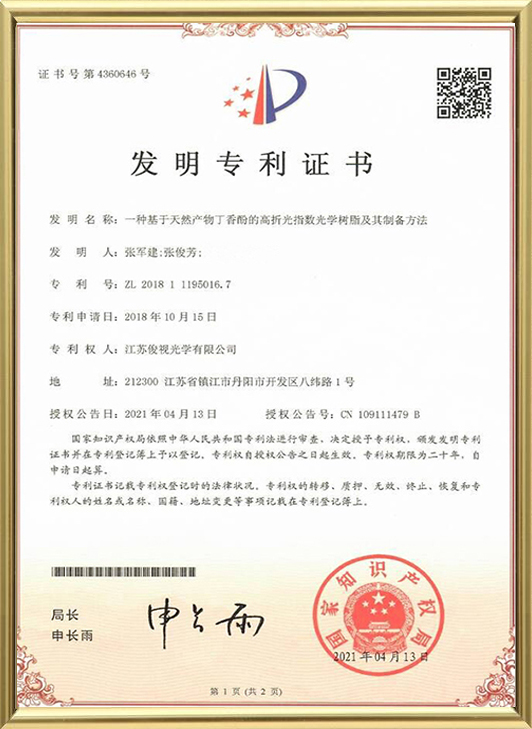
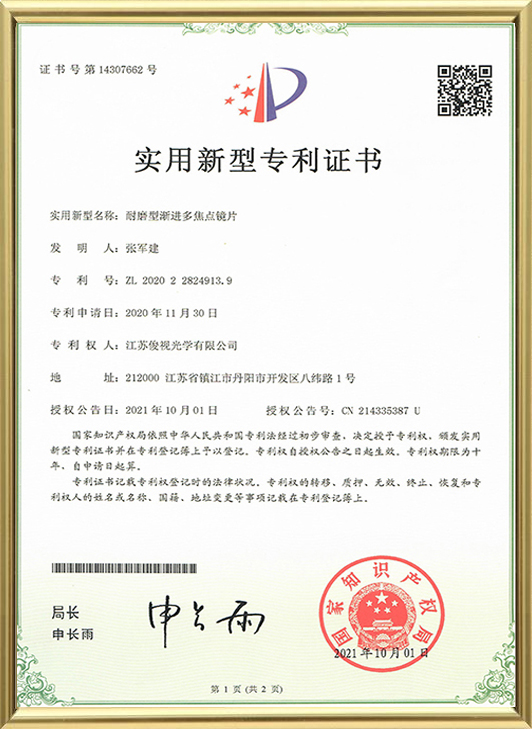
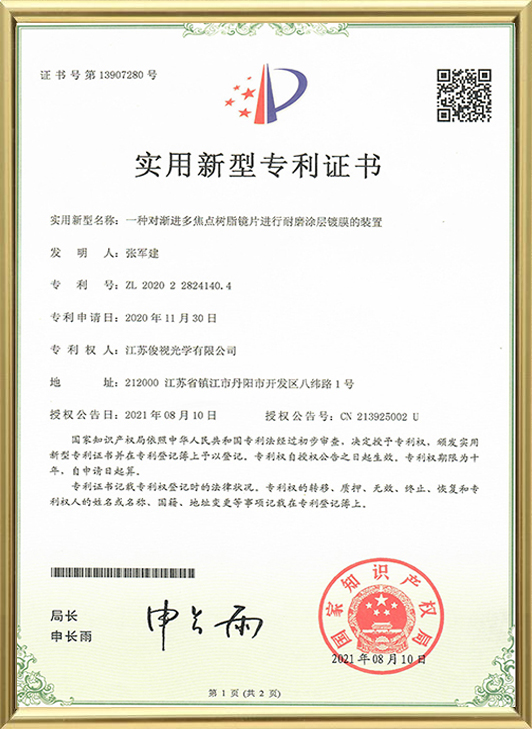
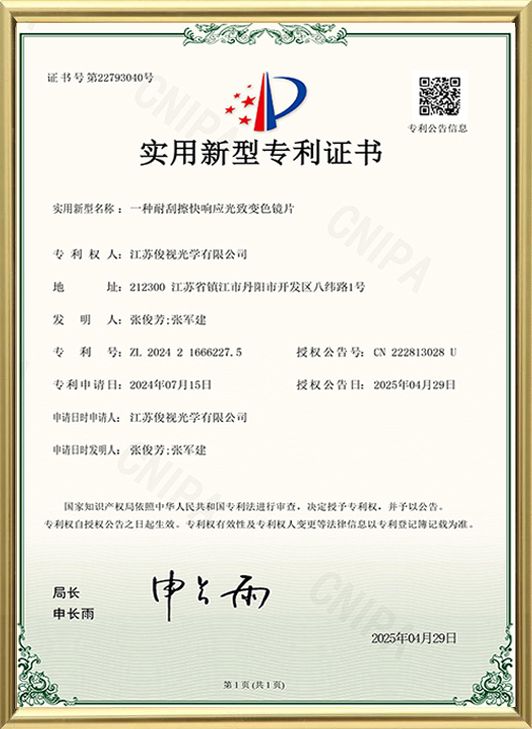
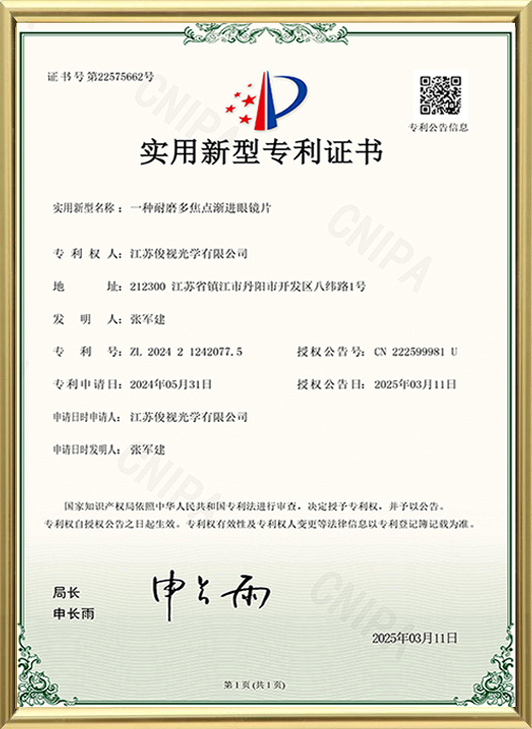
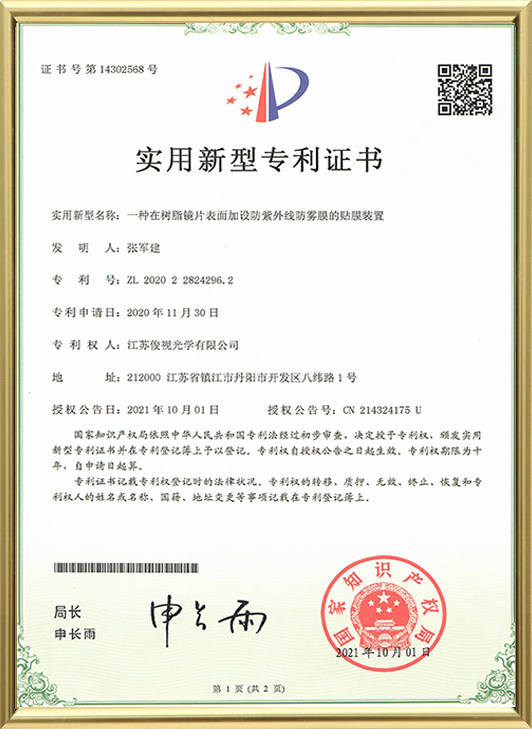
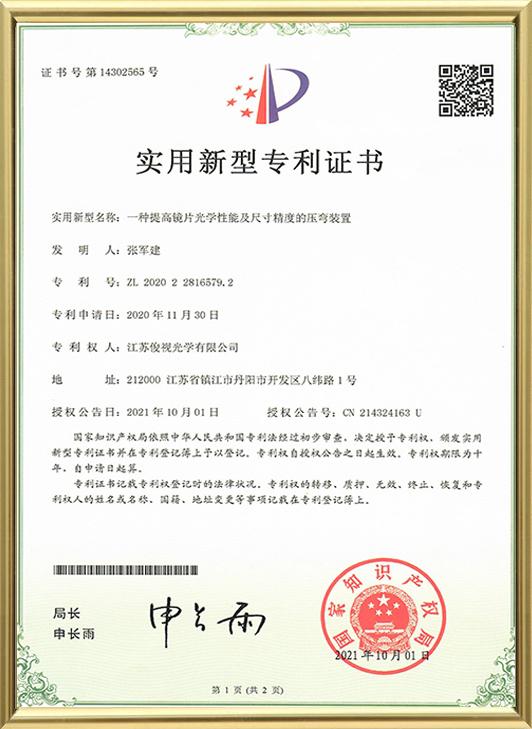
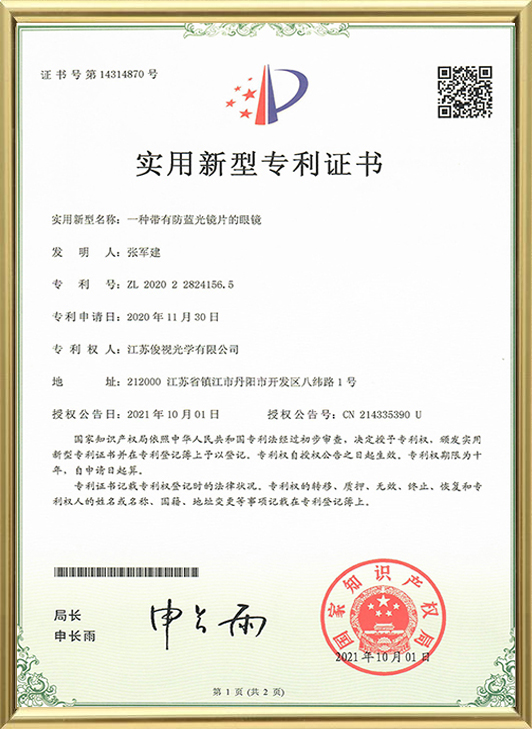
Jiangsu Junshi Optics Co., Ltd. has established a comprehensive production and R&D system in this field. The company invests approximately 12% of annual revenue into research and development, focusing on optical design, coating technologies, and material engineering. It holds more than 35 patents across optical design, coating, and materials, and employs over 40 specialists in optics, chemistry, and automation engineering.
In manufacturing workflows, different factories and manufacturers adopt differentiated process strategies depending on market positioning. High-end producers integrate multi-layer anti-reflective coating systems to improve transmittance and reduce glare, while standard suppliers focus more on balancing productivity and cost efficiency.
| Manufacturing Stage |
Process Content |
Key Equipment |
Control Objective |
| Material Preparation |
Resin purification and formulation adjustment |
Chemical reactors |
Refractive index stability |
| Molding |
Injection casting and curing |
Precision molding systems |
Surface curvature accuracy |
| Front Surface Processing |
Optical surface grinding |
CNC polishing equipment |
Aberration control |
| Semi-finished Inspection |
Interferometric and optical testing |
Optical metrology instruments |
Surface error control |
| Grading and Storage |
Parameter classification management |
Automated warehouse systems |
Batch consistency |
In the global supply chain, suppliers are responsible for raw material and basic blank production, manufacturers handle process integration and quality assurance, while factories focus on large-scale standardized production. This division enables efficient global circulation of Single Vision Semi-finished Lens products.
Global Supply Chain Collaboration and R&D Manufacturing Capabilities of Jiangsu Junshi Optics Co., Ltd.
In the global optical industry, the supply chain of Single Vision Semi-finished Lens spans multiple countries and regions. Raw material suppliers are often located in chemical industrial clusters, while lens manufacturing factories are concentrated in regions with established optical manufacturing ecosystems such as Danyang in China, parts of Japan’s precision optics sector, and emerging Southeast Asian manufacturing hubs.
Manufacturers act as key coordinators in this ecosystem, connecting upstream material suppliers with downstream RX processing laboratories and eyewear brand owners. Factories not only handle production but also respond to diverse market demands regarding refractive index, coating types, and edge thickness specifications.
Jiangsu Junshi Optics Co., Ltd. has built an integrated system covering design, manufacturing, and global delivery capabilities. The company cooperates with more than 300 international partner brands and operates a distribution network of over 5,000 partner stores across China, enabling its products to reach multiple levels of the optical market.
In terms of manufacturing capability, the company relies on highly automated production systems and multiple AR coating lines to achieve scalability and consistency. A digital traceability system is implemented, allowing every Single Vision Semi-finished Lens to be traced back to raw material batches, production time, and processing equipment parameters.
On the R&D side, more than 40 specialists continuously work on optical design optimization and material performance improvement, focusing on aspherical structure enhancement, coating durability, and high-index material stability. These achievements are accumulated through patent systems and continuously drive manufacturing upgrades.
Within global manufacturing collaboration networks, factories serve not only as production nodes but also as data and quality control nodes. Modern optical factories adopt MES systems and automated inspection technologies to monitor production in real time and adjust processes dynamically, improving yield and batch consistency.
Jiangsu Junshi Optics Co., Ltd. collaborates with global suppliers and distribution systems. Its products serve traditional eyewear retail markets, large optical chains, and professional optometry institutions. Under OEM and ODM models, the company provides both custom manufacturing based on client designs and complete optical solutions including lens design, material selection, and coating configuration.
Frequently Asked Questions (FAQ)
Q1: What is the main difference between Single Vision Semi-finished Lens and finished lenses?
A1: Semi-finished lenses have only one optical surface completed, while the other surface requires personalized processing based on prescription data. Finished lenses are fully processed and ready for direct use.
Q2: Why do manufacturers prefer producing semi-finished lenses?
A2: Semi-finished lenses enable a balance between standardized mass production and customized RX processing, improving efficiency across suppliers, manufacturers, and processing labs.
Q3: What is the role of factories in semi-finished lens production?
A3: Factories are responsible for large-scale production, quality inspection, and batch consistency control, ensuring stable optical performance.
Q4: What advantages does Jiangsu Junshi Optics Co., Ltd. have in the industry?
A4: The company has strong R&D capabilities, advanced automation production systems, multiple patents, and a global cooperation network spanning brands and retail stores.
Q5: How do suppliers influence lens quality?
A5: Suppliers provide optical-grade resin materials that directly affect refractive index stability, transparency, and overall optical performance of lenses.

 English
 Français
 Español
 عربى
عربى 中文
中文

 +86- 511-86229810