Polarized Sunglass Lens UC and Sun Lens Industry Development Trends and Manufacturing Technology Analysis
As the global outdoor consumer market continues to expand, consumer demand for visual comfort, eye protection, and fashionable appearance is continuously increasing. The sunglasses industry has gradually evolved from a simple shading tool into a comprehensive industry integrating optical technology, material engineering, fashion design, and precision manufacturing. In this context, Polarized Sunglass Lens UC and sun lens products have become an important part of the international eyewear market. Especially in driving, sports, tourism, seaside activities, and plateau environments, consumer demand for polarization, UV protection, high-definition vision, and lightweight lenses is growing rapidly.
For the global sunglasses supply chain, lenses are no longer merely transparent processed materials but the core optical component determining wearing experience, visual quality, and brand competitiveness. Whether for high-end fashion brands in Europe and America or functional sports eyewear manufacturers, lens performance has become an important direction of product development. In recent years, more and more international brands have started cooperating with professional lens suppliers, manufacturers, and factories, hoping to quickly launch competitive sunglasses products through mature optical R&D capabilities and stable large-scale production systems.
Among China’s optical manufacturing industrial clusters, Danyang in Jiangsu Province has become an important global production base for sunglasses lenses due to its complete lens industrial chain, mature resin lens processing capabilities, and rich international export experience. As a professional optical lens manufacturer in the industry, Jiangsu Junshi Optics Co., Ltd. has long focused on the development and production of high-performance optical resin lenses and has accumulated rich experience in the field of Polarized Sunglass Lens UC and sun lens products. The company can not only provide complete ODM lens solutions but also carry out OEM manufacturing services according to international brand customer requirements, forming a complete industrial collaboration system from optical design, material engineering, and functional coating to branded mass production implementation.
For modern sunglasses, the Sunglass Lens is the most critical optical component of the entire product. Its main function is to filter or reflect intense light, especially ultraviolet rays and excessive visible light, thereby reducing irritation and damage caused by strong light to the eyes. Compared with ordinary lenses, Polarized Sunglass Lens UC can effectively filter glare generated by water surfaces, snowfields, roads, and other environments, improving visual clarity. Therefore, it has extremely high demand in sports sunglasses, driving sunglasses, and high-end outdoor eyewear markets.
Core Optical Principles and Market Value of Polarized Sunglass Lens UC
The development of polarized sunglasses lenses is closely related to modern transportation, outdoor sports, and eye health concepts. Although ordinary sun lens products can reduce light intensity, their ability to handle reflective glare is relatively limited, while Polarized Sunglass Lens UC can filter light waves in specific directions through special polarized film structures, significantly improving visual comfort.
Natural light usually vibrates irregularly during propagation. When light strikes smooth surfaces such as water, glass, snow, wet roads, or vehicle hoods, part of the light becomes polarized. Such strong reflected light creates dazzling glare, leading to visual fatigue, temporary blindness, and observation errors. Polarized lenses reduce glare interference by allowing only specific directions of light to pass through the built-in polarization layer.
In driving environments, polarized sun lens products can reduce reflections caused by windshields and wet roads, improving road recognition capabilities. In sea fishing, water sports, and skiing, Polarized Sunglass Lens UC significantly enhances scene layering, enabling users to observe water surface changes and terrain details more clearly. As consumers increasingly pursue high-quality visual experiences, polarized lenses are gradually expanding from the high-end professional market into the mass consumer market.
Currently, sunglasses lenses in the international market mainly include several technological directions.
Ordinary dyed sunglasses lenses mainly reduce brightness by absorbing part of visible light and are suitable for daily wear.
UV400 protective lenses focus on enhancing ultraviolet filtering capability to protect the eyes from UV damage.
Polarized Sunglass Lens UC combines light reduction, UV protection, and polarization functions, occupying an important position in the functional eyewear market.
High-performance sports sun lens products also combine anti-oil, waterproof, scratch-resistant, anti-reflective, and high-definition imaging technologies to adapt to complex outdoor environments.
As international consumers continue demanding higher visual quality, more brands are paying attention to the technical capabilities of lens suppliers. Traditional low-end lens manufacturing can no longer satisfy international market demand. Professional manufacturers with material R&D, optical design, and functional coating capabilities are becoming the core competitiveness of the industry.
Jiangsu Junshi Optics Co., Ltd. continues investing in technology development in the field of polarized lenses and can provide diversified Polarized Sunglass Lens UC solutions according to different market demands. The company not only supports standardized large-scale production but can also provide customized ODM development for international customers, including lens colors, light transmittance, polarization efficiency, abrasion resistance, and multilayer coating optimization.
Within the global sunglasses supply chain, the importance of professional lens factories is continuously increasing. Many international brands may possess market channels and brand influence, but their core lens technologies often rely on support from professional manufacturers. Especially for high-performance sun lens products, the production process involves resin polymerization, optical inspection, polarized layer lamination, curvature control, and surface strengthening, all of which place extremely high demands on factory technical capabilities.
From the perspective of market structure, Europe and North America remain important consumer markets for high-end Polarized Sunglass Lens UC products. Consumers pay more attention to lens optical performance and long-term wearing comfort. Meanwhile, demand for fashionable sun lens products is growing rapidly in Southeast Asia, the Middle East, and South America, driving continuous expansion in colorful lenses, gradient lenses, and multifunctional lens markets.
In recent years, the rise of sports culture has further promoted the development of the polarized sunglasses industry. Cycling, running, off-road activities, mountaineering, and marine sports all place higher demands on lenses. Traditional lenses are prone to image distortion, severe reflections, and insufficient impact resistance, so high-performance resin polarized lenses are gradually becoming mainstream in the market.
Sun Lens Manufacturing Process Upgrades and Global Supply Chain Changes
Modern sun lens production has evolved from traditional dyeing processes into a comprehensive manufacturing system integrating material science, precision molds, automated coating, and digital inspection. Especially as international brands continuously raise requirements for product consistency, the automation level and quality control capability of lens factories directly determine product competitiveness.
Current mainstream sun lens materials mainly include CR-39 resin, nylon, high-index resin, and PC materials. Among them, resin lenses still occupy an important market position due to their lightweight characteristics, stable optical performance, and ease of processing. Different materials differ significantly in polarization layer bonding capability, high-temperature resistance, and coating adhesion performance, so lens manufacturers usually select corresponding material systems according to different market positioning.
In the production process of Polarized Sunglass Lens UC, polarized film lamination technology is one of the core processes. If the polarized layer and substrate are not stably bonded, lenses may develop bubbles, delamination, and optical distortion during long-term use. Therefore, high-end lens suppliers usually adopt more stable lamination processes and strict temperature control systems to ensure uniform distribution of the polarization layer.
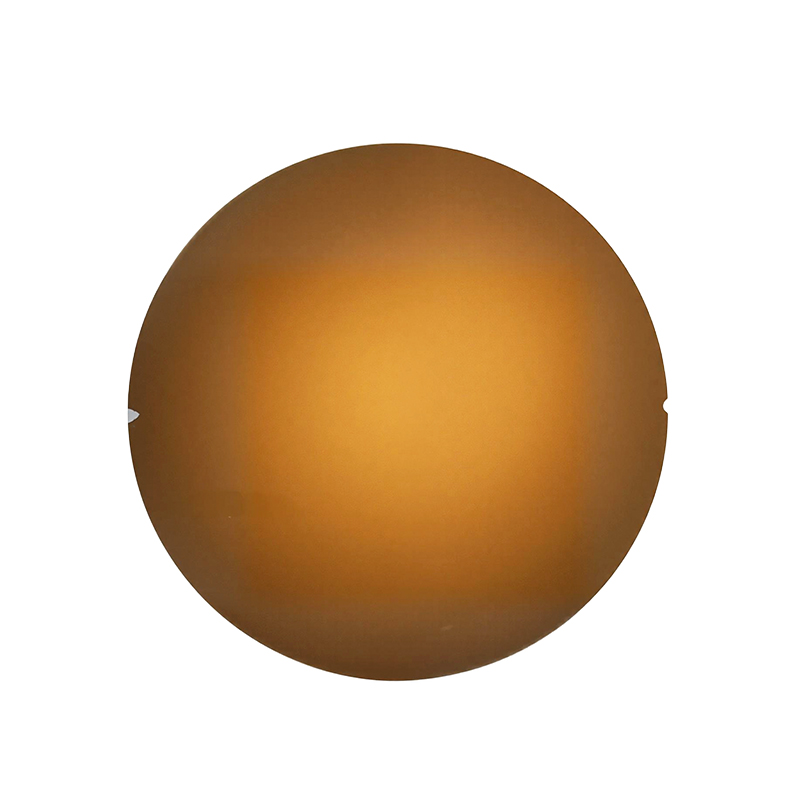
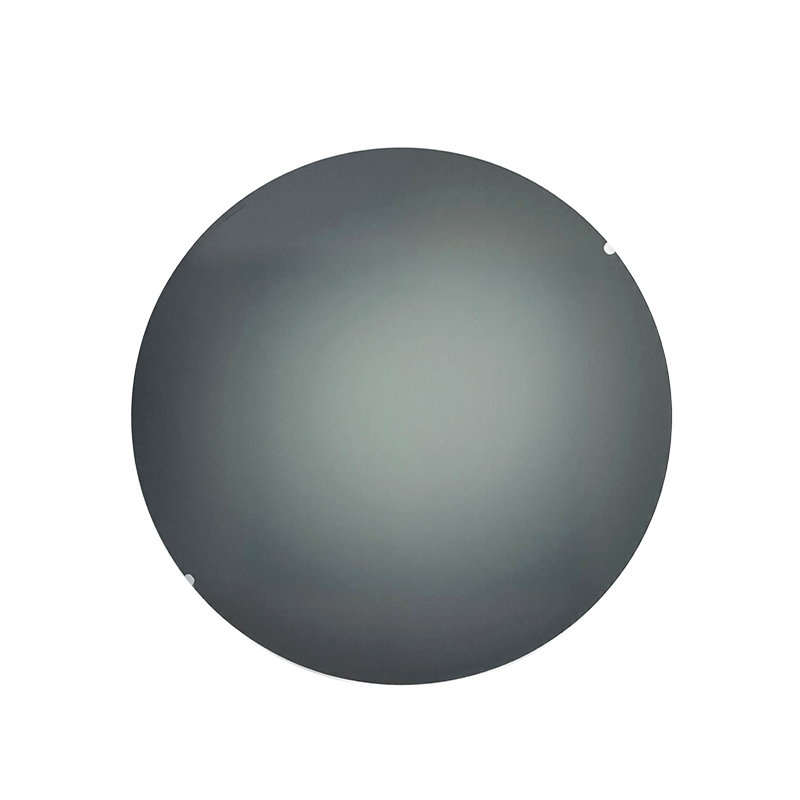
Lens dyeing processes also affect final visual performance. Traditional sunglasses lenses had relatively limited color options, while the modern sun lens market has developed rich color systems including gray, brown, green, blue, pink, and various fashionable gradient effects. Different lens colors have different spectral absorption capabilities, so manufacturers need to adjust optical parameters according to application scenarios.
For example, gray sun lens products can better restore natural colors and are suitable for driving environments; brown lenses can enhance contrast and are more popular in outdoor sports; green lenses help relieve visual fatigue and are suitable for long-term wear; blue and mirrored lenses are more oriented toward the fashion consumer market.
In recent years, multilayer functional coating technology has developed rapidly, making Polarized Sunglass Lens UC no longer limited to simple polarization functions. More and more high-end lenses are now combined with anti-reflective coating technology, hydrophobic and anti-oil technologies, abrasion-resistant strengthening technology, blue light protection functions, high-definition enhancement structures, mirror reflective films, and salt spray resistance treatment processes.
The integration of these functions significantly improves the overall performance of sun lens products and further raises manufacturing barriers in the lens industry. Ordinary small processing factories often find it difficult to establish complete coating systems, leading industry resources to gradually concentrate toward large professional manufacturers.
Jiangsu Junshi Optics Co., Ltd. has established a relatively complete ODM and OEM manufacturing system during its lens production process. The company can systematically develop lens materials, polarization performance, appearance colors, and functional coatings according to customer brand positioning and target market requirements. For international sunglasses brands, such integrated supply chain services can effectively shorten product development cycles while ensuring consistency in mass-produced products.
In the changing global sunglasses supply chain, Chinese lens factories still occupy an important position. On one hand, China possesses a mature resin lens industry support system; on the other hand, large-scale automated production capabilities can effectively control costs and improve competitiveness in the international market. Especially in optical industry clusters such as Danyang, a complete industrial ecosystem has formed from mold development, lens molding, and coating processing to packaging and export.
At the same time, international markets are increasingly emphasizing environmentally friendly manufacturing requirements. More brands are paying attention to energy consumption, waste recycling, and environmental certification standards in lens manufacturing processes. Some high-end sun lens manufacturers have started optimizing resin formulations and coating technologies to reduce volatile emissions during production.
In terms of consumer trends, the integration of fashion and functionality has become an important direction in the sunglasses market. In the past, consumers paid more attention to the appearance of sunglasses, while today visual comfort and eye health are equally valued. This change continues driving the expansion of demand for Polarized Sunglass Lens UC products.
Especially among younger consumer groups, sunglasses are no longer merely shading tools but an important part of daily fashion and outdoor lifestyles. Many international brands have started launching products combining fashionable design with high-performance optical technology, thereby further driving the growth of the high-quality sun lens market.
As cross-border e-commerce and global brand cooperation models continue developing, more and more international customers prefer directly cooperating with professional lens suppliers. This trend provides more international order opportunities for factories with ODM development capabilities and stable manufacturing systems.
Manufacturing Capability and Industrial Collaboration of Jiangsu Junshi Optics Co., Ltd. in the High-Performance Sun Lens Field
Against the backdrop of continuously intensifying competition in the global sunglasses lens industry, relying solely on low-cost production is no longer sufficient to establish long-term market advantages. International brands are paying greater attention to whether suppliers possess continuous R&D capabilities, stable quality systems, and flexible ODM service capabilities. For high-performance Polarized Sunglass Lens UC products, lens manufacturing is not merely a simple processing procedure but involves a complete optical engineering system.
Since its establishment, Jiangsu Junshi Optics Co., Ltd. has continuously focused on the field of high-performance optical resin lenses. The company can not only provide ODM lens solutions for global customers but also support OEM customized manufacturing services. By integrating optical design, material engineering, functional coating, and large-scale manufacturing, the company has gradually formed strong competitiveness in the international market.
In the modern sunglasses market, different brands have significantly different demands for sun lens products. Fashion brands pay more attention to lens color and appearance consistency, while sports brands place greater emphasis on polarization performance and impact resistance. Driving sunglasses customers usually focus more on visual clarity and long-term wearing comfort. Therefore, lens factories need strong customized development capabilities.
Jiangsu Junshi Optics Co., Ltd. can optimize lens curvature, thickness, light transmittance, and polarization efficiency according to different customer requirements. The company has accumulated rich experience in resin lens manufacturing and can meet diversified international market demands.
For Polarized Sunglass Lens UC products, balance must be maintained between polarization efficiency and visual clarity. Excessive polarization effects may affect certain digital screen displays, while insufficient polarization layer stability may impact long-term usage experience. Therefore, lens manufacturers usually optimize process parameters through extensive testing.
In modern lens factories, automated inspection systems have become important tools for ensuring product consistency. Processes including light transmittance testing, polarization axis inspection, optical distortion detection, and surface defect inspection directly affect final product quality. Especially for high-end sun lens products exported to European and American markets, stricter international standards often need to be met.
As global consumers increasingly demand lightweight products, the resin lens market continues expanding. Compared with traditional glass lenses, resin sun lens products are not only lighter but also possess better impact resistance, making them more suitable for sports and daily wearing environments. In recent years, the development of high-index resin materials has further improved lens visual performance.
Meanwhile, multifunctional composite lenses are gradually becoming an important direction in the industry. For example, some high-end Polarized Sunglass Lens UC products now combine photochromic technology, enabling lenses to automatically adjust color depth according to ambient light intensity. Such products place higher demands on manufacturing processes and require lens suppliers to possess more mature material engineering capabilities.
Regarding international cooperation models, ODM business is becoming an increasingly important choice for many brands. Traditional OEM models mainly produce according to customers’ existing designs, while ODM requires manufacturers to possess independent R&D capabilities and assist customers in product development and technical optimization. For many emerging sunglasses brands, cooperating with professional ODM lens factories can effectively reduce R&D costs and improve market response speed.
Jiangsu Junshi Optics Co., Ltd. possesses strong comprehensive capabilities in ODM lens development. The company can provide integrated services including lens color design, polarization function development, functional coating optimization, and mass production implementation according to customer market positioning and consumer demand. Such end-to-end solutions help brand customers enter markets more quickly.
Currently, the global sun lens market still maintains relatively high growth momentum. Outdoor sports industries, tourism consumption, and automobile driving demands continue driving the expansion of the polarized sunglasses market. At the same time, increasing consumer awareness of eye health further promotes demand for UV-protective lenses.
Future competition in the lens industry will focus more on material R&D capabilities, functional integration capabilities, and intelligent manufacturing levels. Traditional low-end processing models are gradually being replaced by high-value-added optical manufacturing systems. For professional lens manufacturers, only by continuously improving technical capabilities and international quality standards can they maintain competitiveness in the global market.
FAQ
What is the difference between Polarized Sunglass Lens UC and ordinary sun lens products?
Polarized Sunglass Lens UC can not only reduce light intensity but also filter reflective glare, making it especially suitable for driving, water sports, skiing, and environments with strong reflections. Ordinary sun lens products mainly reduce brightness through dyeing but have limited glare reduction capabilities.
Why are polarized sunglasses more popular in driving applications?
During driving, roads, vehicle glass, and wet surfaces can generate strong reflections. Polarized Sunglass Lens UC effectively reduces glare and improves visual clarity and comfort, resulting in strong demand in the driving sunglasses market.
Why are resin sun lens products more common than glass lenses?
Resin lenses are lighter in weight, possess better impact resistance, and are more suitable for complex curved surface processing, making them widely used in sports sunglasses and daily sunglasses markets.
What role do lens suppliers play in the sunglasses industry?
Professional lens suppliers are responsible not only for producing lenses but also for providing optical design, material R&D, coating technology, and ODM development support. Many international brands rely on professional manufacturers and factories to develop high-performance sun lens products.
What lens services can Jiangsu Junshi Optics Co., Ltd. provide?
Jiangsu Junshi Optics Co., Ltd. provides ODM and OEM lens solutions, including optical design, material engineering, functional coating, polarized lens development, and large-scale manufacturing services covering various high-performance sunglasses lens requirements.
Do sun lens colors affect visual performance?
Different sun lens colors provide different light filtering effects. Gray lenses are closer to natural color restoration, brown lenses enhance contrast, and green lenses help relieve visual fatigue. Therefore, different application scenarios usually require different lens colors.
Why do high-end sunglasses place greater emphasis on coating technology?
Functional coatings improve abrasion resistance, waterproof performance, anti-oil capabilities, and visual clarity. Modern high-end Polarized Sunglass Lens UC products usually adopt multilayer composite coating structures to improve overall user experience.
What is the difference between ODM and OEM sunglasses lens manufacturing?
OEM mainly produces according to customers’ existing designs, while ODM involves manufacturers participating in product R&D and design optimization. Many international brands choose lens factories with ODM capabilities to improve product development efficiency.

 English
 Français
 Español
 عربى
عربى 中文
中文

 +86- 511-86229810