Industry Definition of RX Lens and Changes in Global Market Demand
RX Lens, commonly referred to as prescription lenses or customized optical lenses, is characterized by the fact that the lenses are not mass-produced standardized products, but are individually designed and processed according to the wearer’s eye examination parameters. As the global rates of myopia, presbyopia, and digital eye strain continue to rise, RX Lens has become one of the fastest-growing product categories in the modern optical industry. For professional RX Lens suppliers, improving manufacturing efficiency while maintaining optical precision has become a crucial factor affecting international competitiveness.
In the traditional eyewear consumption era, consumers mainly focused on the basic function of “seeing clearly.” However, with global consumption upgrading, users are increasingly concerned about lens comfort, natural visual transition, long-term wearing stability, and functional experiences. Especially in Europe, North America, the Middle East, and Southeast Asia, demand for high-end customized lenses is continuously growing, driving more prescription lenses manufacturers toward digitalization, intelligent production, and precision manufacturing.
RX Lens is essentially a highly personalized industrial product. Different users have variations in pupillary distance, astigmatism axis, refractive error, and usage scenarios, meaning that each pair of lenses requires complex data calculation, optical design, and precision manufacturing. Compared with ordinary sunglass lenses, RX Lens has extremely low tolerance for processing errors, and even micron-level deviations may affect wearing comfort and visual clarity.
The current global vision problem is becoming increasingly younger. Long-term use of electronic devices among teenagers has led to a rapid increase in myopia cases, while middle-aged and elderly groups are increasingly accepting progressive multifocal lenses. Under this background, global eyewear brands are relying more heavily on RX Lens suppliers with strong R&D and large-scale manufacturing capabilities to meet continuously rising market demand.
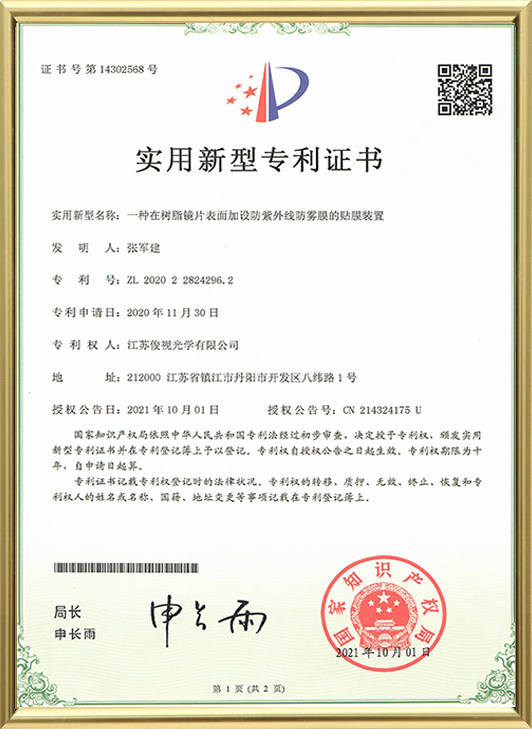
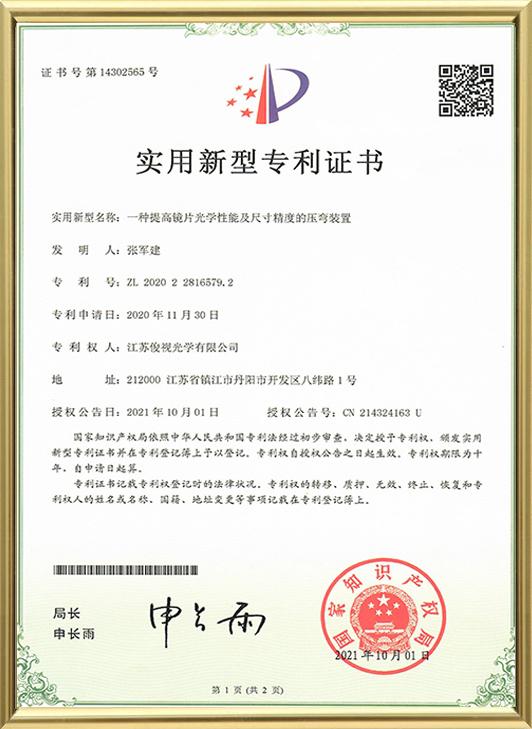
As an important enterprise in China’s high-end resin lens manufacturing field, Jiangsu Junshi Optics Co., Ltd. has established a complete ODM R&D system and vertically integrated production capabilities in the RX Lens sector. Located in Danyang, China’s world-renowned lens manufacturing base, the company has continuously focused on high-performance resin lens development since entering the industry in 1996 and officially established its modern manufacturing system in 2002. Through its 14,000-square-meter production base, the company realizes full-process control covering raw material formulation, mold design, lens molding, hard coating, AR coating, and final packaging, forming stable competitiveness in the international prescription lens market.
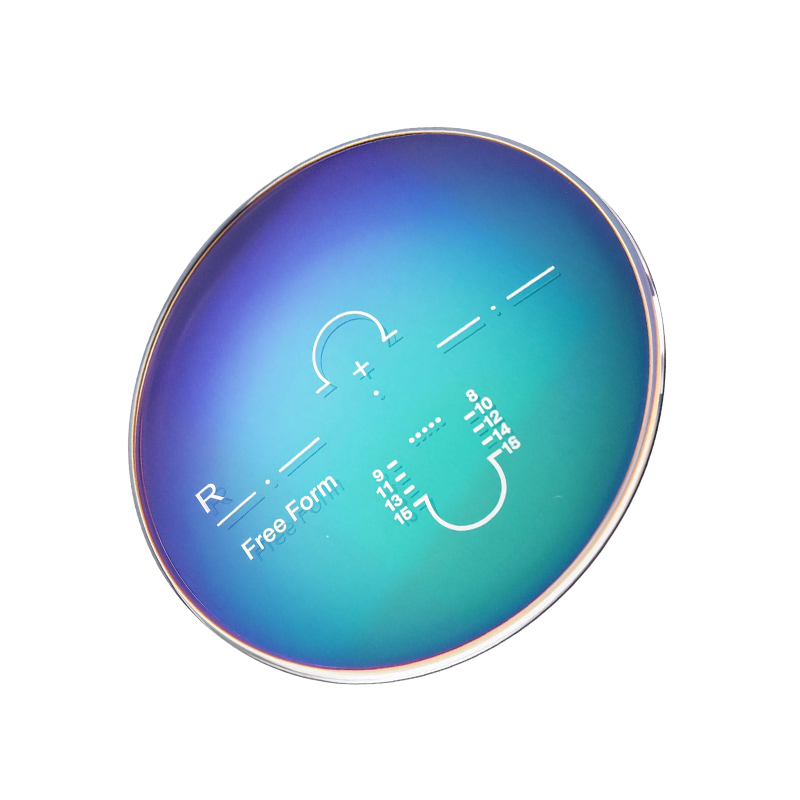
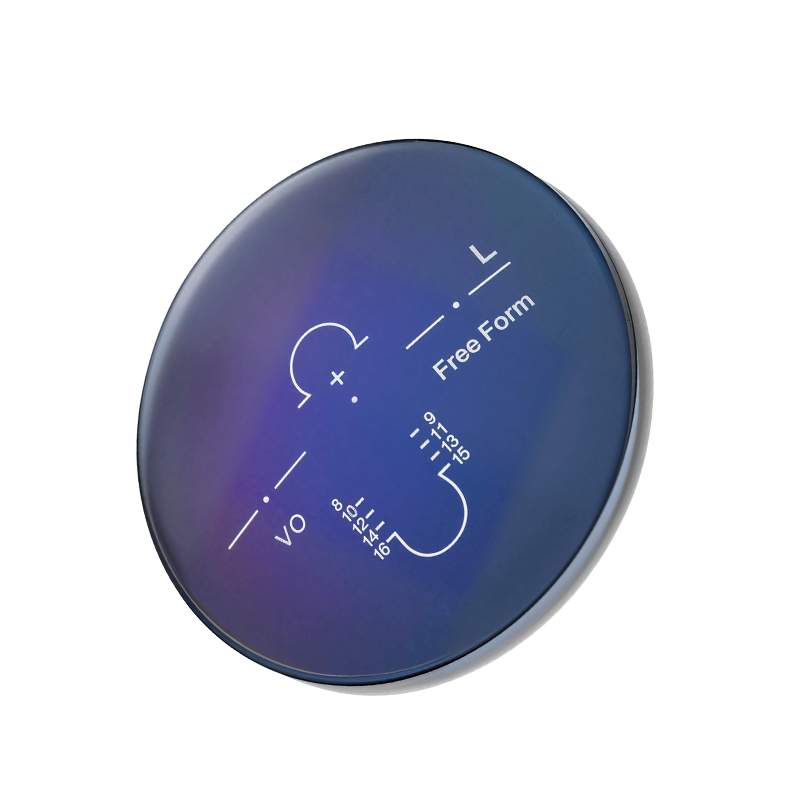
For modern prescription lenses manufacturers, manufacturing capability no longer simply means production scale, but also data processing and precision manufacturing capabilities. With the development of freeform design technology, lens manufacturing has gradually entered the era of digital optics from traditional spherical processing. Freeform technology can dynamically optimize lenses according to facial parameters, frame shapes, and visual habits, thereby improving peripheral visual clarity and reducing long-term visual fatigue.
The application of digital processing equipment has also promoted industry upgrading. Today’s high-end RX Lens factories usually adopt CNC freeform processing systems, automated coating lines, and high-precision inspection systems to ensure accurate control of lens surface curvature and optical centers. Especially in the field of high-index lenses, processing difficulty increases significantly, and only manufacturers with mature process systems can consistently ensure finished product yield rates.
In recent years, consumer demand for lightweight lenses has continued to rise. Traditional glass lenses, due to their heavier weight and lower impact resistance, have gradually been replaced by high-performance resin lenses. Modern RX Lens products widely use 1.56, 1.60, 1.67, and even 1.74 high-index materials, achieving thinner and lighter lenses while improving wearing comfort. This trend also drives RX Lens suppliers to continuously optimize material formulations and manufacturing processes.
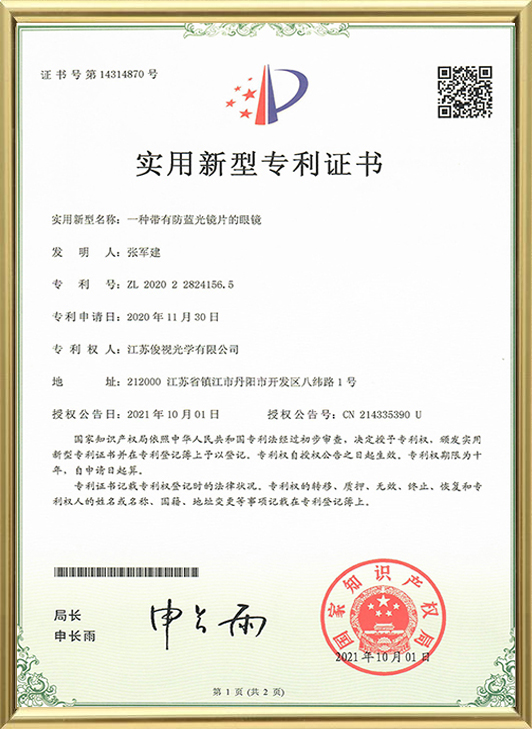
At the same time, blue light protection technology is becoming an important development direction for prescription lenses. Due to the increasing frequency of digital screen usage, more consumers hope their lenses have blue light filtering functions. For professional prescription lenses manufacturers, balancing blue light blocking effects with lens transmittance has become a key focus of technical R&D.
In international markets, different regions show significant differences in RX Lens demand. European markets pay more attention to optical quality and environmental standards; North American markets emphasize functionality and personalization; Middle Eastern markets prefer products with stronger scratch resistance; Southeast Asian markets focus more on cost-effectiveness and heat resistance. Therefore, RX Lens suppliers with global service experience can often improve market adaptability through region-specific product development.
Jiangsu Junshi Optics Co., Ltd. has established a global business network covering Europe, North America, Asia, and the Middle East through years of international cooperation experience. The company supplies more than 25 million lenses annually to over 1,000 brand partners and improves long-term durability and wearing stability through advanced AR coating systems and proprietary Super Anti-Scratch Technology. This comprehensive capability, ranging from material R&D to end-use application, has gradually made it an important manufacturing partner for international high-end eyewear brands.
The rapid development of the RX Lens industry has also driven supply chain upgrades. In the past, the lens industry relied heavily on traditional manual experience, while modern optical manufacturing increasingly emphasizes data-driven production. The application of automated fitting, intelligent warehousing, digital order systems, and online optical simulation technologies is driving the entire industry toward smart manufacturing.
At the same time, global consumers are demanding higher aesthetic standards for lenses. Modern RX Lens products not only need precise correction functions, but also require edge thickness control, coating color uniformity, and reflection suppression capabilities. High-end lens manufacturers usually improve transmittance and reduce glare through multi-layer AR coating technology.
For long-term wearers, lens comfort and durability directly affect the consumer experience. Therefore, professional RX Lens factories place special emphasis on lens hard coating and anti-smudge treatment technologies. High-quality lenses must not only have excellent transmittance, but also maintain stability under high temperature, humidity, and complex environments.
Under the background of global industrial transfer, China has gradually become an important center for global RX Lens manufacturing. Its complete supply chain system, mature technical workforce, and rapid response capabilities have enabled Chinese lens factories to occupy an increasingly important position in international markets. Especially in the field of high-end resin lenses, Chinese manufacturers are gradually upgrading from traditional OEM models to ODM R&D models.
Core Manufacturing Technologies and Process Upgrades of Prescription Lenses Manufacturers
Modern prescription lens manufacturing is no longer traditional industrial processing, but rather a comprehensive industry integrating optical engineering, material science, precision manufacturing, and digital algorithms. For professional prescription lenses manufacturers, every stage of the manufacturing process directly affects the final optical performance, which is why global high-end lens factories continue increasing investments in technological R&D.
The core manufacturing process of RX Lens generally includes raw material preparation, lens molding, semi-finished processing, freeform design, coating treatment, edging, and final inspection packaging. Each process requires extremely high precision control, especially in the field of advanced freeform lenses where manufacturing errors often need to be controlled within micron levels.
Lens materials form the foundation of RX Lens performance. Modern resin lenses usually use CR-39, MR-series high-index materials, and polycarbonate materials. Different materials vary significantly in refractive index, Abbe value, impact resistance, and heat resistance. High-end RX Lens suppliers usually develop differentiated material systems according to various market demands.
For example, consumers in Europe and North America pay more attention to thin and lightweight lenses with high transmittance, resulting in higher demand for 1.67 and 1.74 high-index lenses. In children’s myopia control fields, polycarbonate materials are widely used because of their stronger impact resistance. For professional manufacturers, balancing lightweight performance and visual comfort remains a major direction in material development.
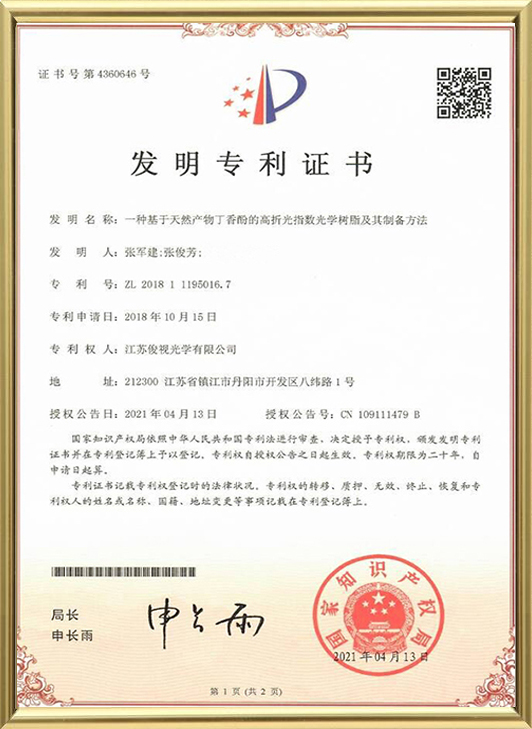
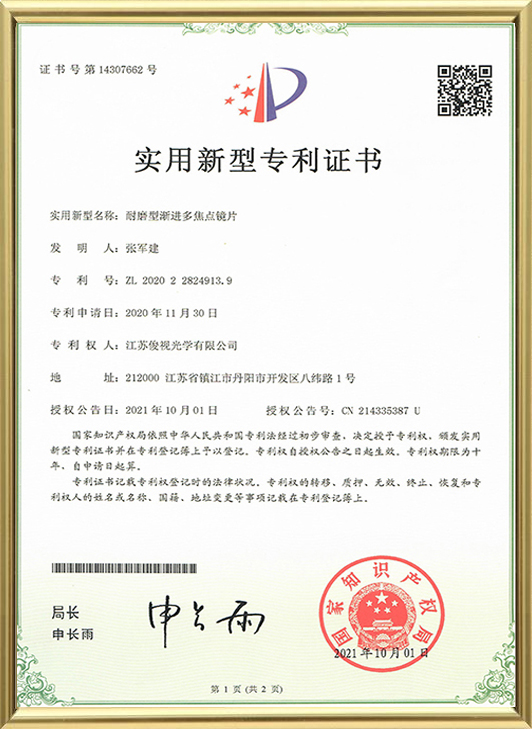
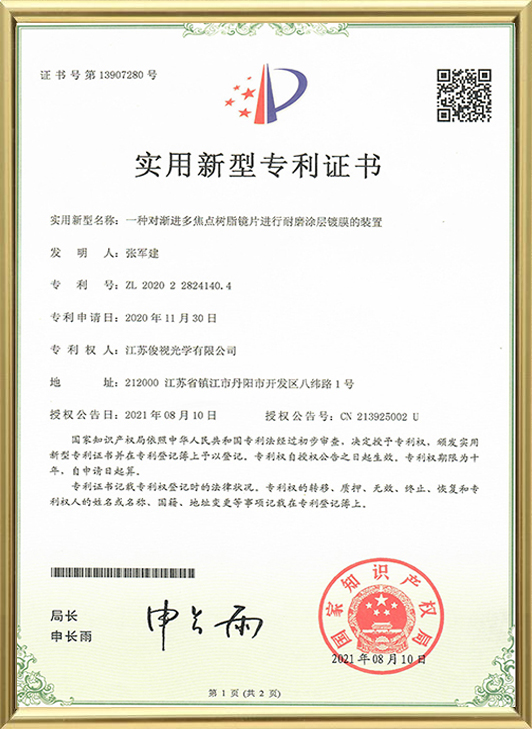
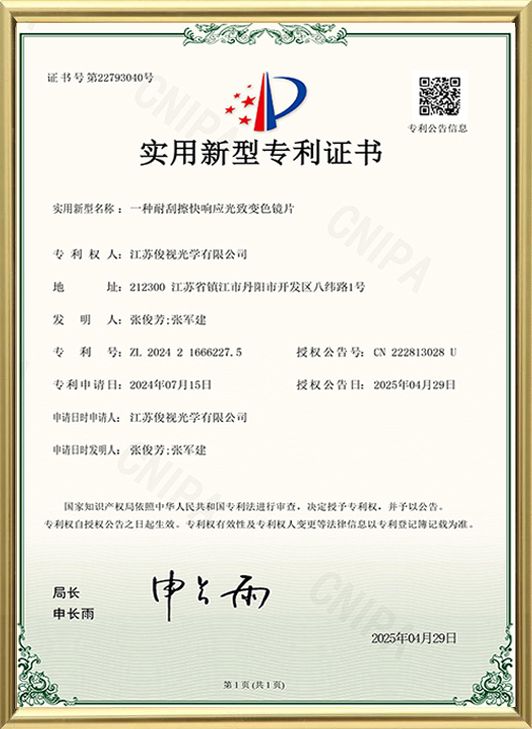
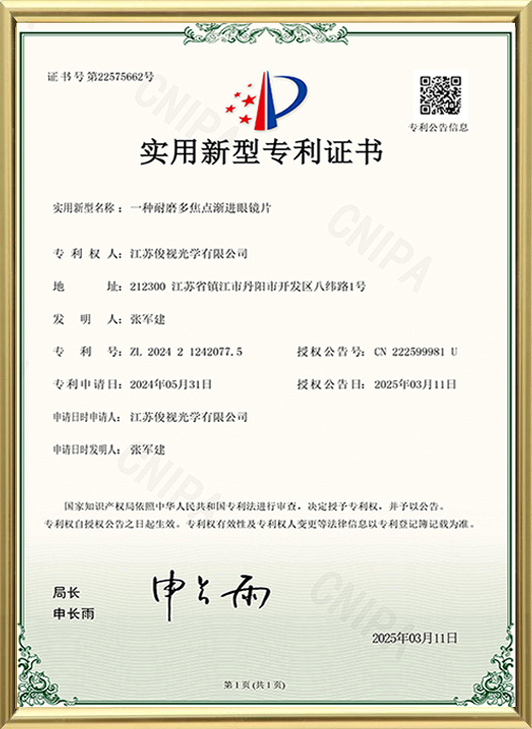
Jiangsu Junshi Optics Co., Ltd. has long focused on the development of high-performance resin lenses. Through continuous optimization of material engineering and mold technologies, the company constantly improves optical stability and surface quality. It has established a mature resin lens R&D system and developed multiple functional prescription lens products based on international market demand.
The development of freeform technology has become a major turning point in the RX Lens industry. Traditional spherical lenses are limited in design and often produce peripheral distortion, while freeform lenses can optimize surfaces through digital algorithms to improve overall visual clarity.
Modern freeform processing equipment usually adopts five-axis CNC systems and high-speed cutting technologies to achieve complex curvature processing. Compared with traditional technologies, freeform lenses can optimize according to actual wearing posture, including frame tilt angle, vertex distance, and head movement trajectories.
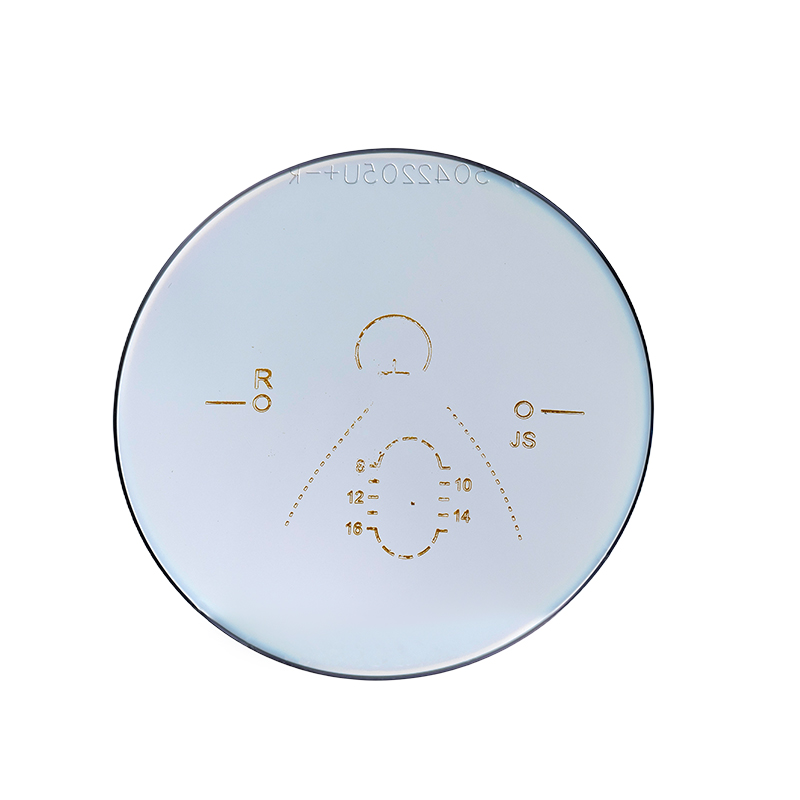
In the field of progressive multifocal lenses, the importance of freeform technology becomes even more prominent. Progressive lenses must achieve smooth transitions between far, intermediate, and near vision areas within one lens, placing extremely high demands on optical design capabilities. High-end prescription lenses manufacturers usually maintain professional optical design teams to ensure more natural and comfortable visual channels.
Coating technology is also a key aspect of RX Lens manufacturing. Modern lenses usually undergo multi-layer functional coating treatments, including hard coating layers, anti-reflective layers, anti-smudge layers, and blue light filtering layers. Different coatings must maintain stable adhesion, otherwise long-term performance may be affected.
AR anti-reflective coatings can effectively improve lens transmittance and reduce glare interference during night driving. For high-end lens products, transmittance can usually exceed 99%. Meanwhile, super hydrophobic coating technologies are becoming increasingly popular, giving lenses stronger oil and dirt resistance.
Jiangsu Junshi Optics Co., Ltd. possesses advanced AR coating systems and complete inspection systems, enabling the company to maintain stable coating quality during large-scale production. Its proprietary Super Anti-Scratch Technology further improves surface durability, allowing products to maintain better performance during long-term wear.
Modern RX Lens factories impose extremely strict requirements on quality inspection. Lenses must pass not only basic optical testing, but also abrasion resistance testing, heat resistance testing, salt spray testing, and adhesion testing. High-end manufacturers usually use automated inspection equipment to reduce human error.
Digital inspection systems can automatically identify tiny surface defects, including scratches, bubbles, and uneven coatings. With the development of AI visual inspection technologies, the quality control capabilities of lens factories continue improving.
In recent years, environmentally friendly manufacturing concepts have also begun influencing the RX Lens manufacturing industry. International markets are placing increasingly high demands on green manufacturing, and many brand customers are paying attention to energy consumption control, wastewater treatment, and environmentally friendly material applications. Therefore, modern RX Lens suppliers not only need high-quality manufacturing capabilities, but also compliance with international environmental standards.
The popularization of automated production lines is changing the traditional lens factory model. Many processes previously depended on manual experience, while more manufacturers now adopt intelligent equipment for automated processing and data tracking. This transition not only improves production efficiency, but also enhances product consistency.
In the international supply chain system, delivery speed has become an important factor affecting customer cooperation. Global eyewear brands increasingly prefer RX Lens suppliers with rapid response capabilities to meet short-cycle order requirements. Therefore, efficient supply chain management has become an important competitive advantage for modern lens manufacturers.
Jiangsu Junshi Optics Co., Ltd., with more than 300 professional employees and a complete manufacturing system, can achieve large-scale stable production while responding quickly to international customer demands. Through vertically integrated production models, the company reduces supply chain fluctuation risks while improving product consistency and delivery efficiency.
With the development of intelligent optometry technology, the future RX Lens industry will continue moving toward digitalization. The application of digital optometry devices, cloud-based lens design systems, and AI visual analysis technologies is driving prescription lenses from traditional industrial products toward intelligent visual solutions.
How RX Lens Suppliers Are Driving the Development of Global Personalized Vision Solutions
Global visual health demand is undergoing profound changes. In the past, consumers mainly focused on basic vision correction, but now people pay more attention to long-term visual experience, scenario-based usage needs, and personalized vision solutions. This transformation means RX Lens suppliers are no longer merely lens providers, but are gradually becoming important technological drivers of the global vision industry.
Modern RX Lens products are widely used in office work, driving, sports, children’s myopia management, and high-end fashion applications. Different scenarios place different requirements on lens performance. For example, users who spend long hours on computers care more about blue light filtering and visual fatigue relief, while drivers pay more attention to night clarity and glare suppression.
As global aging accelerates, the progressive multifocal lens market is growing particularly rapidly. Traditional reading glasses can only satisfy fixed-distance vision requirements, while modern progressive lenses provide continuous visual transition for multiple distances within one lens, greatly improving convenience in daily life.
For professional prescription lenses manufacturers, producing progressive lenses is far more difficult than manufacturing ordinary single-vision lenses. Channel design must comprehensively consider reading habits, head movement patterns, and visual adaptation capabilities. Therefore, high-end progressive lenses often rely on complex algorithms and freeform design technologies.
Children’s myopia management is becoming an important growth area in the RX Lens industry. The continuously increasing global myopia rate among teenagers has led more families to focus on myopia control lenses. Modern myopia management lenses usually adopt special defocus designs to slow axial elongation.
This field places extremely high demands on optical design capabilities because lenses must ensure clear vision while achieving specific optical intervention effects. Many international brands are strengthening cooperation with professional RX Lens suppliers to jointly develop next-generation myopia management products.
The sports optics market is also bringing new opportunities to RX Lens manufacturing. Sports lenses usually require stronger impact resistance, UV protection, and stable visual performance. In cycling, skiing, golf, and similar sports scenarios, lenses require higher dynamic visual responsiveness.
The development of high-performance resin materials has made sports RX Lens products possible. Compared with traditional glass lenses, resin lenses are lighter and less likely to shatter, making them more suitable for high-intensity sports environments. Modern sports prescription lenses also combine polarized and photochromic technologies to improve visual comfort under complex lighting conditions.
Jiangsu Junshi Optics Co., Ltd. continues investing in functional lens R&D. Through freeform design and advanced coating technologies, the company provides diversified customized lens solutions for global customers. The company has long served markets in Europe, North America, Asia, and the Middle East, accumulating extensive international cooperation experience.
The requirements of international eyewear brands for suppliers are also changing. In the past, brands focused more on price and delivery cycles, but now they pay more attention to R&D capability, quality stability, and innovation capacity. Therefore, modern RX Lens suppliers must possess ODM development capabilities rather than only OEM manufacturing abilities.
ODM models mean lens manufacturers participate not only in production, but also in product definition, structural design, and functional development. This model helps brands launch differentiated products more quickly while shortening product development cycles.
Modern consumers are also demanding higher aesthetic standards for lenses. High-index lenses need to minimize edge thickness as much as possible, while coating colors need to appear more natural and transparent. High-end prescription lenses manufacturers usually develop differentiated appearance solutions according to various markets to satisfy fashion-oriented consumption demands.
Against the background of rapidly developing global e-commerce, the online eyewear market is also continuously expanding. Digital optometry technology and remote lens customization services are changing traditional eyewear sales models. Consumers can complete customized lens orders online by uploading optometry data, which places higher demands on the flexible manufacturing capabilities of RX Lens suppliers.
Small-batch, multi-batch, and rapid delivery production has become an important trend in modern lens manufacturing. Traditional large-scale single-type production models are gradually shifting toward flexible intelligent manufacturing. RX Lens factories equipped with digital production systems can process complex order structures more efficiently.
Global supply chain stability has also become an industry focus. In recent years, fluctuations in international logistics have prompted many brands to reassess supply chain layouts. Chinese lens manufacturers continue increasing their importance in the global market thanks to mature industrial chains and stable manufacturing capabilities.
Jiangsu Junshi Optics Co., Ltd. enhances supply chain stability through vertically integrated production models and achieves rapid order response capabilities through its complete manufacturing system. The company has accumulated extensive experience in high-performance resin lenses and continues promoting upgrades in freeform technologies and high-end coating processes.
The future development direction of the RX Lens industry will focus more on intelligence and personalization. The application of AI optical design, intelligent optometry systems, and big data visual analysis technologies will further improve lens customization precision. Meanwhile, consumer attention toward healthy visual experiences will continue driving the expansion of functional lens markets.
Competition among high-end RX Lens suppliers has gradually shifted from simple manufacturing capability competition to comprehensive competition in R&D capability, brand collaboration ability, and global service capability. Manufacturers with long-term technological accumulation and international experience will occupy increasingly important positions in the future global optical industry.
FAQ
What is the difference between RX Lens and ordinary lenses?
RX Lens refers to prescription lenses customized according to individual optometry parameters, while ordinary lenses are usually standardized products. RX Lens requires personalized processing based on myopia, hyperopia, astigmatism, and presbyopia data, resulting in much higher optical precision requirements.
Why are more brands choosing Chinese RX Lens suppliers?
China possesses mature lens industry chains, complete manufacturing support systems, and abundant technical talent resources. Many Chinese high-end lens factories already have freeform design, AR coating, and automated inspection capabilities capable of meeting international brands’ demands for high-quality prescription lenses.
How do prescription lenses manufacturers ensure lens precision?
High-end manufacturers usually adopt digital freeform processing systems, automated inspection equipment, and strict quality control procedures to ensure that lens optical centers, curvature, and thickness comply with prescription requirements.
What are the advantages of high-index RX Lens products?
High-index lenses can achieve thinner and lighter designs under the same prescription conditions, making them more suitable for users with high myopia. High-index lenses also improve wearing aesthetics.
What is the function of AR coating on RX Lens products?
AR anti-reflective coatings improve lens transmittance, reduce reflections and glare, and enhance night vision comfort. At the same time, multi-layer coatings improve abrasion resistance and anti-smudge performance.
What lens products does Jiangsu Junshi Optics Co., Ltd. mainly provide?
Jiangsu Junshi Optics Co., Ltd. mainly focuses on the development and manufacturing of high-performance resin lenses, including RX Lens, freeform lenses, high-index lenses, blue light blocking lenses, and various functional customized lens products.
Why is freeform technology becoming increasingly important in the RX Lens industry?
Freeform technology enables personalized optimization according to actual wearing parameters, improving peripheral visual clarity and reducing long-term visual fatigue, making it widely used in high-end prescription lens fields.
Why are RX Lens factories placing more emphasis on automated production?
Automated production improves processing precision, reduces human error, and enhances order response efficiency. At the same time, intelligent production systems can meet modern market demands for small-batch and multi-batch customized orders.

 English
 Français
 Español
 عربى
عربى 中文
中文

 +86- 511-86229810