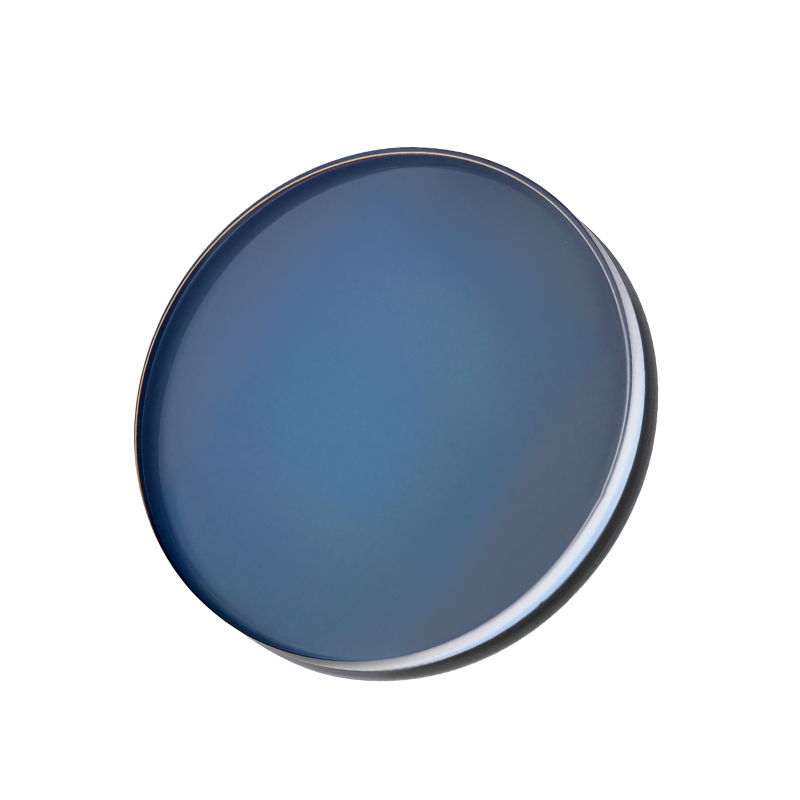
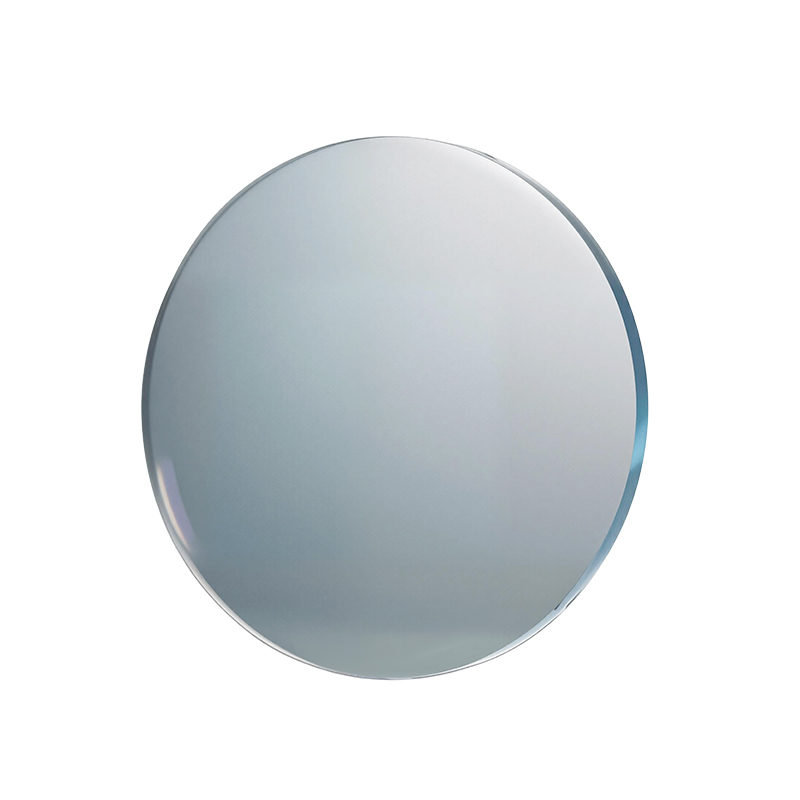
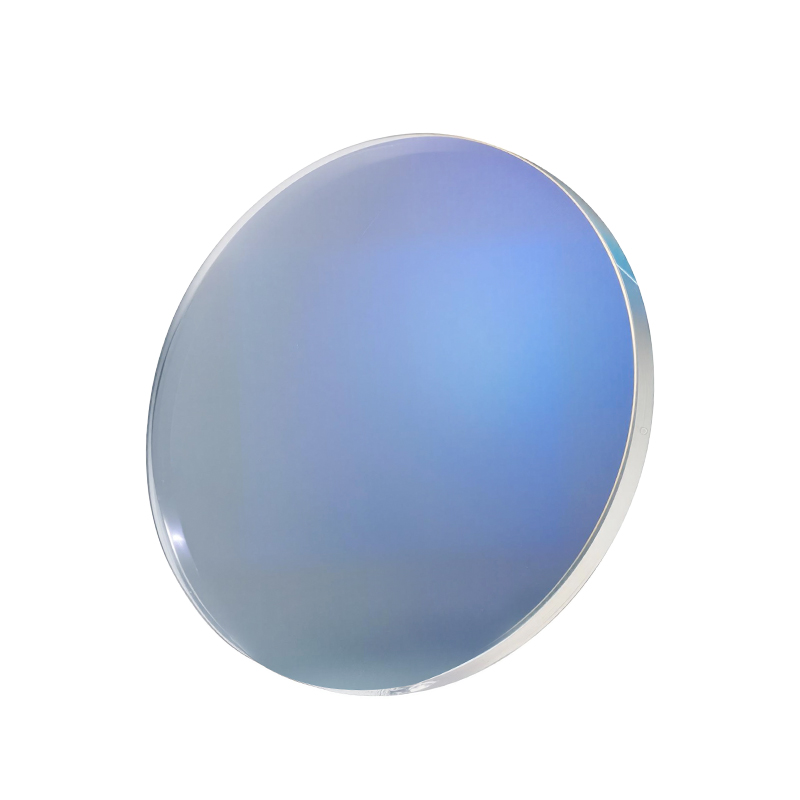
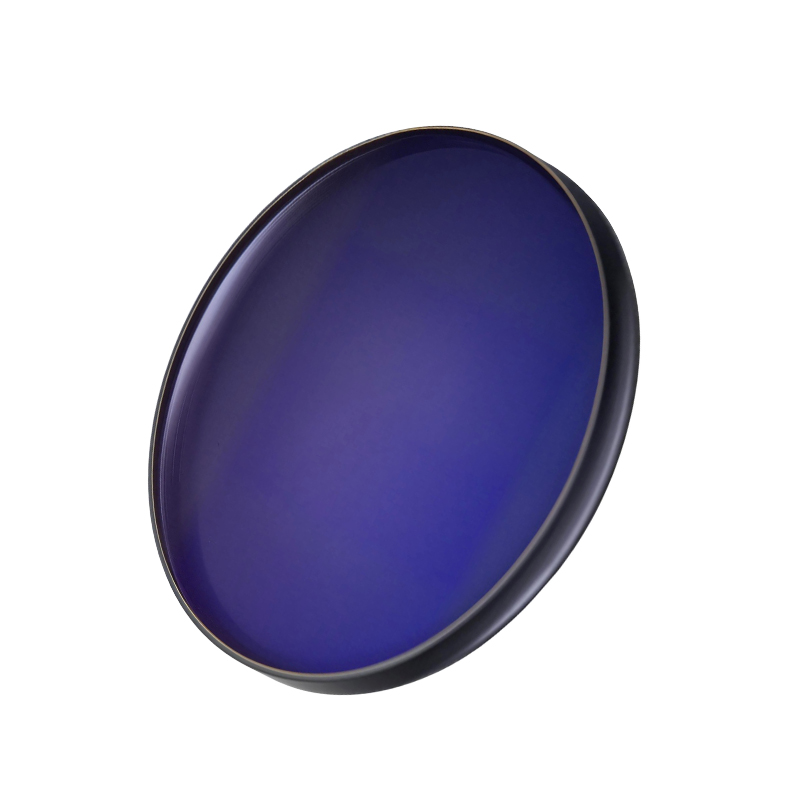
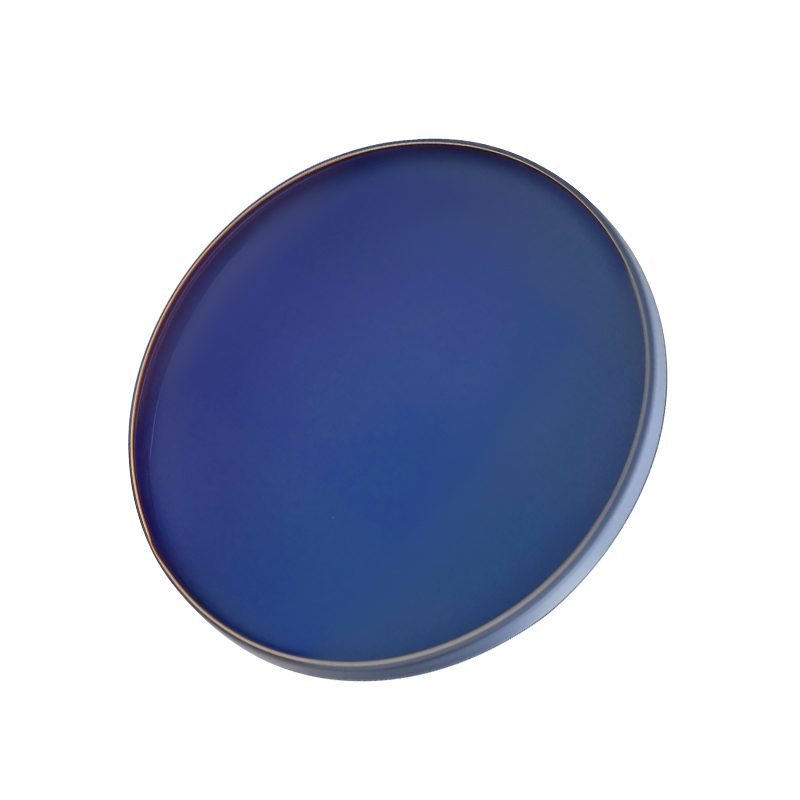
What Is a Single Vision Finished Lens?
A single vision finished lens is a pre-manufactured ophthalmic lens ground to a single, uniform optical power across its entire surface — designed to correct one specific visual condition, whether nearsightedness (myopia), farsightedness (hyperopia), or astigmatism. Unlike progressive or bifocal lenses, which feature multiple power zones, single vision lenses deliver one consistent correction. And unlike semi-finished lens blanks that require custom surfacing in a lab, finished lenses are fully surfaced on both sides before they leave the manufacturer, making them immediately ready for edging and insertion into frames.
This distinction matters enormously in the optical supply chain. Finished lenses are stocked in large quantities, dispensed rapidly, and priced far below custom-surfaced alternatives. For the majority of prescriptions — particularly those without complex cylinder corrections — a finished single vision lens delivers equivalent optical performance at a fraction of the cost and lead time.
According to industry estimates, single vision lenses account for roughly 60–65% of all ophthalmic lens volume globally, with finished lenses representing the dominant format within that category. Understanding what they are, how they are made, and where they fit within a dispensary's strategy is foundational knowledge for anyone in the optical industry.
Finished vs. Semi-Finished: A Critical Industry Distinction
The terms "finished" and "semi-finished" are sometimes used interchangeably in casual conversation, but they describe fundamentally different products with different roles in the supply chain.
Semi-Finished Lens Blanks
A semi-finished blank has one surface — typically the front (convex) surface — already molded or ground to a base curve. The back surface is left unfinished and must be custom-surfaced (either by conventional grinding or free-form digital surfacing) to achieve the patient's exact prescription. Semi-finished blanks allow labs to produce virtually any prescription combination, including high cylinders, prism, and complex multifocals. However, this flexibility comes with added time, equipment, and cost.
Single Vision Finished Lenses
A finished single vision lens has both surfaces already formed during manufacture. The optical power is built into the lens itself — no further surfacing is required. The lab or optician simply edges the lens to the shape of the chosen frame. This makes finished lenses ideal for standard, commonly prescribed powers.
Comparison of finished and semi-finished single vision lens formats across key operational dimensions
| Factor |
Finished Lens |
Semi-Finished Blank |
| Surfacing Required |
None |
Yes (back surface) |
| Turnaround Time |
Same-day to 24 hours |
2–7 business days |
| Cost to Dispensary |
Lower |
Higher |
| Prescription Range |
Standard powers only |
Wide range, including complex Rx |
| Cylinder Handling |
Limited (low cylinder only) |
Full range |
| Inventory Stocking |
Stocked by power |
Stocked by base curve / material |
| Free-Form Compatible |
No |
Yes |
For a dispensary managing a high-volume practice where most patients fall within the –6.00 to +4.00 sphere range with cylinder under 2.00 DC, finished lenses can fulfill 70–80% of prescriptions without ever sending a job to a surfacing lab — a significant operational and financial advantage.
How Single Vision Finished Lenses Are Manufactured
The manufacturing process for finished single vision lenses has evolved considerably over the past two decades, driven by advances in molding technology, coating automation, and quality control systems. Understanding this process helps explain both the strengths and the inherent limitations of the finished lens format.
Step 1: Material Selection and Casting (Plastic Lenses)
For the most common finished lens materials — CR-39 (optical-grade allyl diglycol carbonate), polycarbonate, and mid-index polymers like 1.56 or 1.60 — manufacturing begins with either injection molding or cast molding. In cast molding, a liquid monomer is poured between two glass molds held in precise position by a gasket. The assembly is cured using ultraviolet light or heat. The resulting lens blank is already formed to the correct front and back surface curves, encoding the finished optical power.
Polycarbonate finished lenses are injection-molded — molten polycarbonate is forced under pressure into precision molds. Injection molding produces lenses with excellent consistency and allows rapid production cycles, making it the preferred method for high-volume finished lens manufacturing.
Step 2: Inspection and Verification
After demolding, lenses pass through automated optical inspection stations that verify power, base curve, diameter, center thickness, and optical clarity. Lenses that fall outside tolerance — typically ±0.06 D for sphere and cylinder in finished stock lenses per international standards like ISO 21987 — are rejected. High-volume manufacturers report rejection rates below 1% for standard powers with modern molding equipment.
Step 3: Surface Treatment and Coating
Finished lenses are coated in large batches, which is a key cost advantage over custom-surfaced lenses. Common coatings applied at the factory level include:
- Hard coat (scratch resistance) — applied via spin-coating or dip-coating, typically a silicone-based lacquer
- Anti-reflective (AR) coat — vacuum-deposited metal oxide layers that reduce surface reflections from 8% to below 0.5%
- UV blocking — incorporated into the lens material or applied as a surface treatment
- Blue light filtering — increasingly integrated at the manufacturing stage, either through the monomer or a surface coating
- Hydrophobic and oleophobic topcoats — applied over AR coatings to repel water and oils
The batch nature of finished lens coating is a significant contributor to their cost efficiency. A single vacuum deposition chamber can coat hundreds of lenses per cycle, compared to the single-lens handling required when adding coatings after custom surfacing.
Step 4: Packaging and Stocking
Finished lenses are packaged in pairs, labeled with power, material, index, and coating details, and stocked in distributor or lab inventories across a defined power range. A typical finished lens inventory for a standard CR-39 product covers sphere powers from –6.00 to +4.00 in 0.25 D steps, with cylinder options up to –2.00 DC in 0.25 D steps — representing hundreds of individual SKUs per product family.
Lens Materials: Choosing the Right Index for Finished Stock
Single vision finished lenses are available in a range of refractive index materials, each with distinct properties. The choice of index affects lens thickness, weight, optical aberration profile, and price — and directly influences patient satisfaction.
Common refractive index materials used in single vision finished lenses and their typical application ranges
| Material |
Refractive Index |
Abbe Value |
Ideal Rx Range |
Key Advantage |
| CR-39 |
1.499 |
58 |
±2.00 D and lower |
Excellent optical clarity, low cost |
| Polycarbonate |
1.586 |
30 |
Any; preferred for safety |
Impact resistance, UV block, thin |
| Mid-Index (1.56) |
1.560 |
37–40 |
±3.00 to ±4.00 D |
Thinner than CR-39, affordable |
| High-Index (1.60) |
1.600 |
36–42 |
±4.00 to ±6.00 D |
Noticeably thinner edge/center |
| High-Index (1.67) |
1.670 |
31–32 |
±5.00 to ±8.00 D |
Slim profile for higher powers |
| High-Index (1.74) |
1.740 |
33 |
±7.00 D and above |
Thinnest available finished option |
One frequently overlooked consideration is Abbe value — a measure of chromatic aberration. Lower Abbe values (as seen in polycarbonate at 30) mean more color fringing at the lens periphery, which some patients notice particularly in higher powers. CR-39, with an Abbe value of 58, produces the least chromatic aberration of any common lens material, which is one reason it remains a preferred optical substrate despite being thicker than alternatives.
In finished lens format, not all materials are available across all power ranges. Stocking considerations, weight economics, and optical performance thresholds mean that most finished lens programs are structured so that lower-index materials cover mild prescriptions while higher-index materials handle moderate to strong corrections.
Prescription Range and Fitting Considerations
Single vision finished lenses are manufactured to fixed optical powers, which means their correct application depends on careful prescription matching and proper optical centration. These are not interchangeable with custom-surfaced lenses in every clinical scenario.
Sphere and Cylinder Limitations
Most finished lens programs stock sphere powers in increments of 0.25 D across the range of approximately –6.00 to +4.00 D. Cylinder is more limited — typically up to –2.00 DC in 0.25 D steps, with axis fixed at either 90° or 180° in many ready-made programs, or available across all axes in more complete optical lab stock.
Prescriptions outside these parameters — high cylinder powers (beyond –2.50 DC), oblique axes that produce poor optical results with mass-produced finished lenses, or sphere powers beyond the stocked range — require semi-finished blanks and custom surfacing. Attempting to fit a complex prescription into a finished lens format introduces optical error that degrades visual performance.
Optical Centration and Pupillary Distance
Finished lenses arrive with the optical center located at the geometric center of the lens blank. When the lens is edged to a frame, the optician must align the optical center with the patient's pupillary distance (PD). If the frame is too large, or the patient's PD is significantly asymmetric, decentration can introduce unwanted prismatic effect — causing eyestrain, double vision, or adaptation difficulty.
Prentice's Rule states that the prismatic effect (in prism diopters) equals the power of the lens (in diopters) multiplied by the decentration (in centimeters). For example, a –4.00 D lens decentered by 4 mm (0.4 cm) produces 1.6 prism diopters of unwanted prism — enough to cause noticeable discomfort in many patients. This relationship underscores why finished lens fitting requires careful PD measurement and frame selection, particularly for higher-power prescriptions.
Minimum Blank Size
Finished single vision lenses are produced in standard blank sizes — typically 65–75 mm in diameter for most products. When edging, the optician must verify that the finished lens blank is large enough to yield the required frame shape with the optical center properly positioned. A lens that is too small will not yield a usable edged lens — a situation known as a "cutout failure." Larger frames, high wrap angles, or atypically large frame dimensions may require a larger blank size than standard finished stock provides.
Optical Performance Standards for Finished Lenses
A common misconception is that finished lenses represent an optical compromise. In reality, for the prescriptions they are designed to address, finished single vision lenses meet or exceed the same performance standards as custom-surfaced equivalents.
The governing international standard is ISO 21987:2017 ("Ophthalmic optics — Mounted spectacle lenses"), which specifies tolerances for both finished and surfaced lenses. For single vision finished lenses, tolerances include:
- Back vertex power (sphere): ±0.12 D for powers up to ±6.00 D
- Cylinder power: ±0.12 D for cylinders up to 2.00 DC
- Cylinder axis: ±5° for cylinders ≤0.50 DC; ±3° for cylinders 0.75–1.50 DC; ±2° for cylinders ≥1.75 DC
- Prism: ≤0.25 prism diopters for standard powers
- Optical quality: No clinically significant bubbles, striae, or inclusions in the central optical zone
These are the same tolerances applied to surfaced lenses in most categories. High-volume finished lens manufacturers routinely achieve actual production tolerances of ±0.06 D or better using modern injection and cast molding equipment — often tighter than what a surfacing lab guarantees on a custom-ground job.
Where finished lenses do have an optical limitation relative to free-form surfaced lenses is in aspheric optimization. A custom free-form lens can be designed with an aspheric back surface tailored precisely to the patient's prescription, vertex distance, pantoscopic tilt, and wrap angle — minimizing oblique astigmatism across the entire lens area. Finished lenses, even when produced with aspheric front curves, use a generalized design optimized for the nominal power, not the individual patient's visual axis and frame geometry. For patients with higher prescriptions or demanding visual requirements, this difference is perceptible. For patients within mild to moderate prescription ranges in standard frames, it typically is not.
The Business Case for Stocking Finished Single Vision Lenses
For optical dispensaries, wholesale labs, and retail optical chains, finished single vision lenses represent one of the highest-leverage inventory decisions in the business. The economics are compelling — but so are the management requirements.
Turnaround Time as a Competitive Differentiator
In an era when patients increasingly expect rapid service, the ability to edge and dispense glasses on the same day is a significant competitive advantage. Dispensaries with an in-office edger and a finished lens stock can offer same-day service for a large proportion of their patient base — typically those with sphere-dominant prescriptions in standard powers. Industry surveys indicate that same-day service increases patient satisfaction scores by 20–30% compared to standard 5–7 day lab turnaround, and meaningfully reduces frame and lens cancellations caused by patient impatience.
Margin Structure and Cost of Goods
Finished lenses are significantly cheaper to procure than lab-surfaced equivalents. A standard CR-39 single vision finished pair can be stocked at cost as low as $3–10 per pair at scale, compared to $15–40 or more for a surfaced CR-39 job from a wholesale lab (exclusive of coating). This differential creates substantial gross margin opportunity — or enables aggressive retail pricing that drives volume. High-index finished lens pairs (1.60 or 1.67) typically cost $15–35 at wholesale, still well below equivalent custom-surfaced costs.
The key financial risk in finished lens stocking is inventory carrying cost and obsolescence. A dispensary that stocks 400 SKUs of finished lenses but turns each item only twice per year is tying up significant capital in slow-moving inventory. The most effective finished lens programs are built around demand-driven inventory models, tracking which powers are actually dispensed and calibrating stock levels to match local prescription distribution.
Stocking Strategy: Pareto Principles in Practice
Prescription frequency in a typical optical practice follows a distribution well suited to the Pareto principle: a relatively small number of powers account for a large share of volume. Research into prescription frequency distributions in developed markets consistently shows that:
- Approximately 50% of single vision prescriptions fall within the sphere range of –1.00 to –3.00 D
- The majority of dispensed cylinder powers are 0.50, 0.75, and 1.00 DC
- Plano and low positive powers (+0.25 to +1.50) account for much of the remaining volume
A focused finished lens inventory of 150–200 high-turnover SKUs can often fulfill the same volume as a broader inventory of 400+ SKUs, while dramatically reducing capital tied up in slow-moving powers. Sophisticated dispensaries review their dispensing data quarterly and rotate their finished lens stock accordingly.
Integration with In-Office Edging
Finished lens stocking only delivers its full value when paired with in-office edging capability. Without an edger, even a dispensary holding finished lens stock must still send jobs to a lab for edging — eliminating much of the turnaround advantage. Entry-level digital edgers are available in the $15,000–30,000 range, with premium systems reaching $60,000–100,000. For practices dispensing 50 or more pairs per week with a significant proportion in standard powers, the return on investment in edging equipment is typically achieved within 18–30 months through lab cost avoidance alone.
Coatings and Add-Ons in Finished Lens Programs
The coating landscape for finished lenses has expanded significantly in the past decade. What was once a choice between basic hard coat and uncoated is now a sophisticated menu of functional coatings, many available pre-applied at the factory level on finished lens stock.
Anti-Reflective Coatings
Anti-reflective (AR) coatings on finished stock lenses have become nearly ubiquitous in premium optical retail. Factory-applied AR on finished lenses uses the same vacuum deposition technology as lab-applied AR, but benefits from batch processing economics. The quality of factory AR on premium finished lens products is comparable to mid-tier lab AR — adequate for most patients, though premium lab AR systems may offer superior durability and additional functional layers (such as anti-static or EMI-shielding properties).
Studies show that AR coating increases patient-reported satisfaction with single vision lenses significantly — patients with AR lenses report fewer complaints about glare, halos, and visual fatigue compared to uncoated wearers, particularly for night driving and extended screen use.
Blue Light Filtering
Blue light filtering has become one of the most commercially active areas of finished lens product development. Available either as a surface coating (which creates a visible yellowish tint under certain lighting conditions) or as an intrinsic property of the lens material itself (matrix-incorporated filtering), blue light filtering finished lenses are now stocked by most major distributors.
The clinical evidence for blue light filtering lenses remains an active area of discussion. The American Academy of Ophthalmology does not currently recommend blue light blocking glasses specifically to prevent digital eye strain, noting that the evidence base is insufficient. However, patient demand for blue light lenses continues to grow, driven by consumer awareness and lifestyle marketing, making them an important finished lens SKU for retail-focused dispensaries regardless of the clinical debate.
Photochromic Finished Lenses
Photochromic technology — which causes lenses to darken in UV light and return to clear indoors — has been available in finished single vision format for several years. The photochromic compounds are either embedded within the lens matrix or applied as a surface imbibing process. Factory-embedded photochromic finished lenses are available in CR-39 and some mid-index materials, though polycarbonate photochromic finished lenses are less common due to the technical challenges of surface imbibing on injection-molded substrates.
Photochromic finished lenses typically command a retail premium of $80–150 over clear equivalents, making them an effective upsell opportunity in finished lens dispensing. They are particularly popular in outdoor-active patient demographics and regions with high ambient UV levels.
Ready-Made Reading Glasses vs. Single Vision Finished Lenses
A segment of the single vision finished lens market that warrants separate discussion is ready-made reading glasses — also called over-the-counter (OTC) readers. These are pre-assembled eyewear products using finished single vision lenses in positive powers (typically +1.00 to +3.50 D), in standardized frames, without any optical centration to the wearer's individual PD.
Ready-made readers occupy a fundamentally different market position than dispensary-finished single vision lenses. Their advantages are price (often $10–30 retail) and convenience (available at pharmacy, grocery, and general retail outlets). Their limitations are significant from an optical standpoint:
- Both eyes receive identical power — any difference between the eyes' prescription is uncorrected
- Optical centers are typically set for an average PD of 64 mm, which may not match the wearer's actual interpupillary distance
- No cylinder correction is possible
- Frame quality is typically low
Despite these limitations, the global OTC reading glasses market was valued at approximately $4.1 billion in 2023 and is growing, reflecting the enormous scale of demand for affordable near-vision correction. For optical dispensaries, this segment represents both a competitive threat and a referral opportunity — patients who begin with OTC readers often transition to professionally dispensed single vision finished lenses as their visual demands increase.
Global Market Trends Shaping Finished Lens Supply and Demand
The single vision finished lens market does not exist in isolation. Several macroeconomic and demographic trends are reshaping both demand volume and supply chain dynamics.
Myopia Prevalence Growth
Myopia is the single largest driver of single vision lens demand globally. The World Health Organization projects that half the world's population — approximately 5 billion people — will be myopic by 2050, up from an estimated 30% today. East Asia is at the epicenter of this trend: myopia prevalence among young adults in South Korea, China, and Singapore now exceeds 80–90%. This demographic shift represents the most powerful demand driver for single vision finished lenses over the coming decades.
Online Optical Retail and Direct-to-Consumer Models
The growth of online optical retail has introduced new dynamics into the finished lens supply chain. Direct-to-consumer eyewear platforms, which allow consumers to enter their prescription online and receive fully assembled glasses by mail, are almost entirely built on finished single vision lens inventory. The low cost and stocking efficiency of finished lenses makes the online model viable at aggressive retail price points.
Online optical platforms have grown from a niche channel in 2010 to representing an estimated 10–15% of eyewear units sold in North America and Europe by the mid-2020s. This shift has applied downward pricing pressure on single vision finished lens dispensing in traditional retail channels, accelerating the need for dispensaries to differentiate on service quality, dispensing expertise, and premium lens technology.
Manufacturing Consolidation and Supply Chain Resilience
The manufacturing of standard single vision finished lenses is heavily concentrated in Asia — primarily China, South Korea, and Taiwan — where a small number of large-scale producers supply a significant proportion of the global market. Supply chain disruptions during 2020–2022 exposed the risks of this concentration, with shortages and lead time extensions affecting finished lens availability in multiple markets.
In response, major optical distribution groups have increased safety stock levels, diversified supplier relationships, and in some cases invested in regional manufacturing capacity. Supply chain resilience has become a strategic priority for finished lens distributors in a way that was not true a decade ago.
Myopia Control and Specialty Finished Lenses
An emerging category within the single vision finished lens space is myopia control lenses — products designed not just to correct myopia optically, but to slow its progression in children and young adults. These lenses incorporate peripheral defocus designs, DIMS (Defocus Incorporated Multiple Segments) technology, or similar optical engineering intended to reduce the stimulus for axial eye growth. Early finished lens products in this category are now available from several manufacturers, representing a premium segment with strong growth prospects as clinical evidence for myopia control interventions accumulates.
Quality Verification: What Dispensaries Should Check Before Fitting
Even factory-manufactured finished lenses require verification before dispensing. Consistent quality control at the dispensary level protects patients and reduces the risk of remakes, complaints, and adaptation failures.
A standard pre-dispensing check for single vision finished lenses should include:
- Lensometer verification — confirm back vertex power in sphere, cylinder, and axis against the stated values on the lens packaging. Check both eyes.
- Prism check — confirm optical center location and verify that no unwanted prism is present using the lensometer's prism scale.
- Visual inspection — examine each lens against a light source for scratches, chips, coating defects, mold release marks, striae, or inclusions in the optical zone.
- Coating integrity — check AR coating for even coverage, pinholes, or delamination by examining reflected light uniformly across the lens surface.
- Centration after edging — confirm that the optical center aligns with the marked PD after edging, and that edging has not induced unintended prism.
Industry benchmarks suggest that 1–3% of finished lenses from any supplier will fall outside acceptable tolerances or show visible quality defects — a reminder that manufacturer quality control is a starting point, not a substitute for dispensary-level verification.
When Finished Lenses Are Not the Right Choice
Finished single vision lenses are the right answer for a large proportion of prescriptions — but not all. Clear patient selection criteria protect visual outcomes and professional reputation.
Prescriptions that should not be filled with standard finished lenses include:
- Sphere powers outside the stocked range (typically below –6.00 or above +4.00 D)
- Cylinder powers greater than –2.00 DC or at oblique axes where finished lens optical quality is insufficient
- Prescriptions requiring prescribed prism (vertical or horizontal)
- Patients with narrow PDs or large frame choices where decentration will produce unacceptable induced prism
- High-demand patients (surgeons, professional drivers, artists, pilots) who may notice and be troubled by the slight peripheral optical compromise of non-individualized lens designs
- Patients with anisometropia greater than 2.00–2.50 D where mass-produced finished lenses cannot accommodate the differential magnification and image disparity requirements
Recognizing the boundary of finished lens suitability — and guiding patients appropriately toward custom-surfaced or free-form solutions when needed — is a hallmark of professional optical dispensing.
References
- ISO 21987:2017 — Ophthalmic optics: Mounted spectacle lenses. International Organization for Standardization.
- Holden BA, et al. (2016). Global Prevalence of Myopia and High Myopia and Temporal Trends from 2000 through 2050. Ophthalmology, 123(5), 1036–1042.
- American Academy of Ophthalmology (2023). Blue Light Glasses. Clinical Statement.
- Rabbetts RB. Bennett and Rabbetts' Clinical Visual Optics, 4th ed. Butterworth-Heinemann, 2007.
- GrandView Research (2024). OTC Eyewear Market Size & Forecast Report, 2024–2030.
- Jalie M. Ophthalmic Lenses and Dispensing, 3rd ed. Butterworth-Heinemann, 2008.
- Morgan IG, et al. (2012). Myopia. The Lancet, 379(9827), 1739–1748.
- Vision Council (2023). VisionWatch U.S. Eyewear Market Report.

 English
 Français
 Español
 عربى
عربى 中文
中文