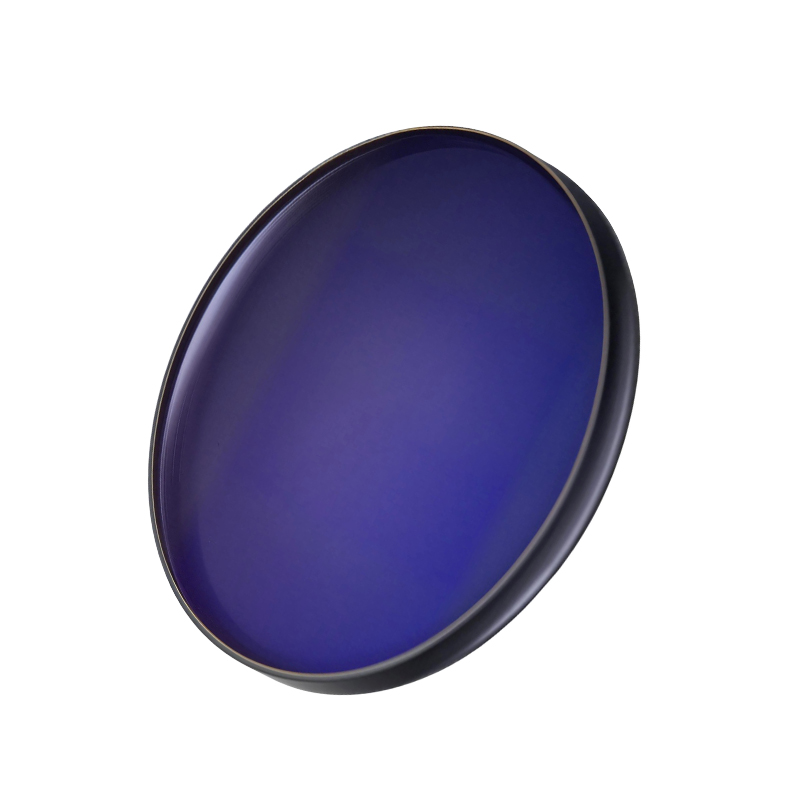
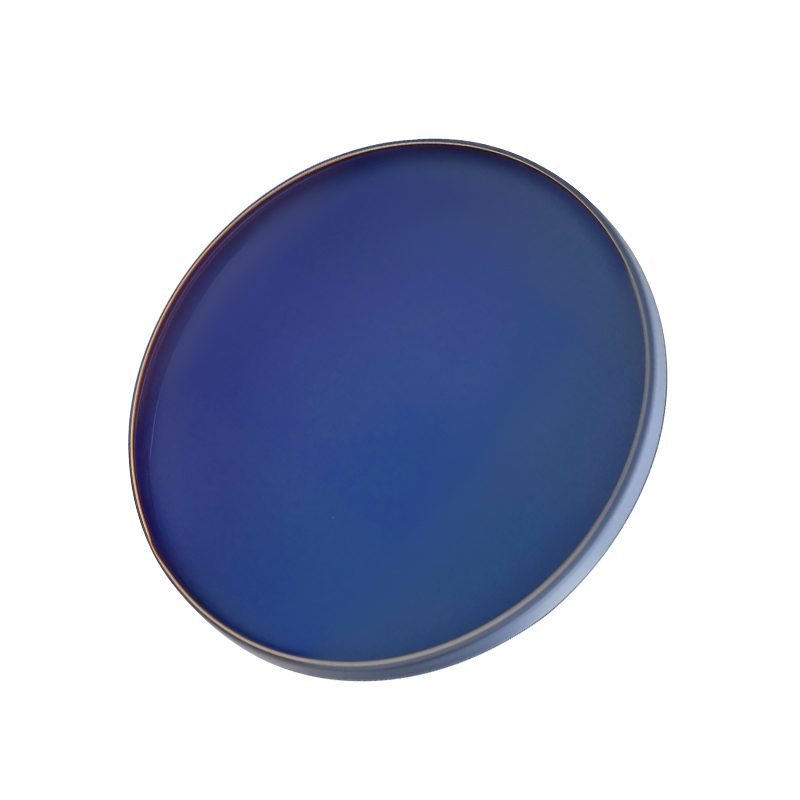
What a Single Vision Semi-finished Lens Is and Why It Exists
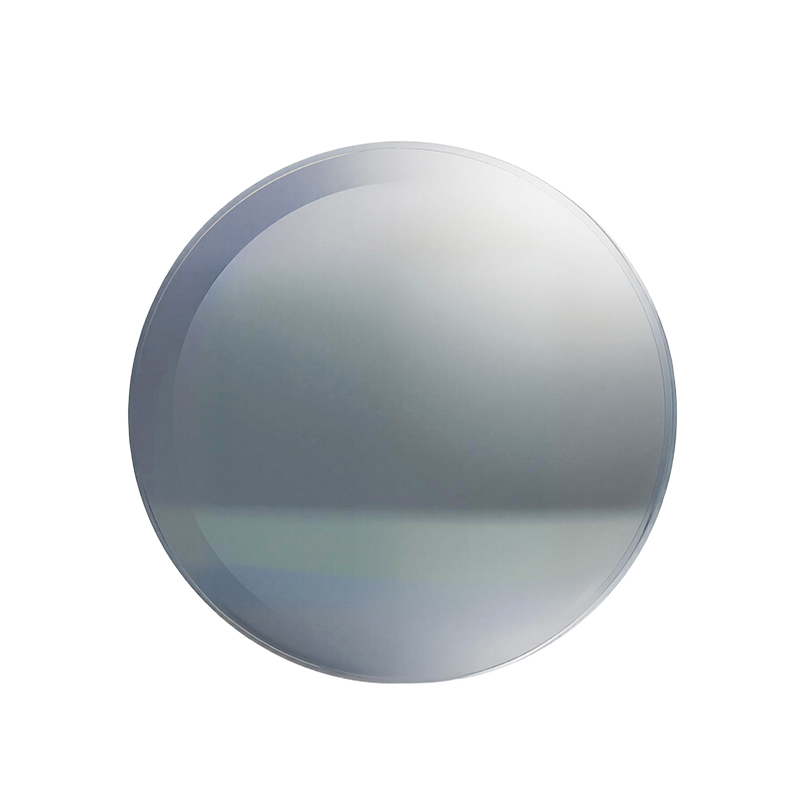
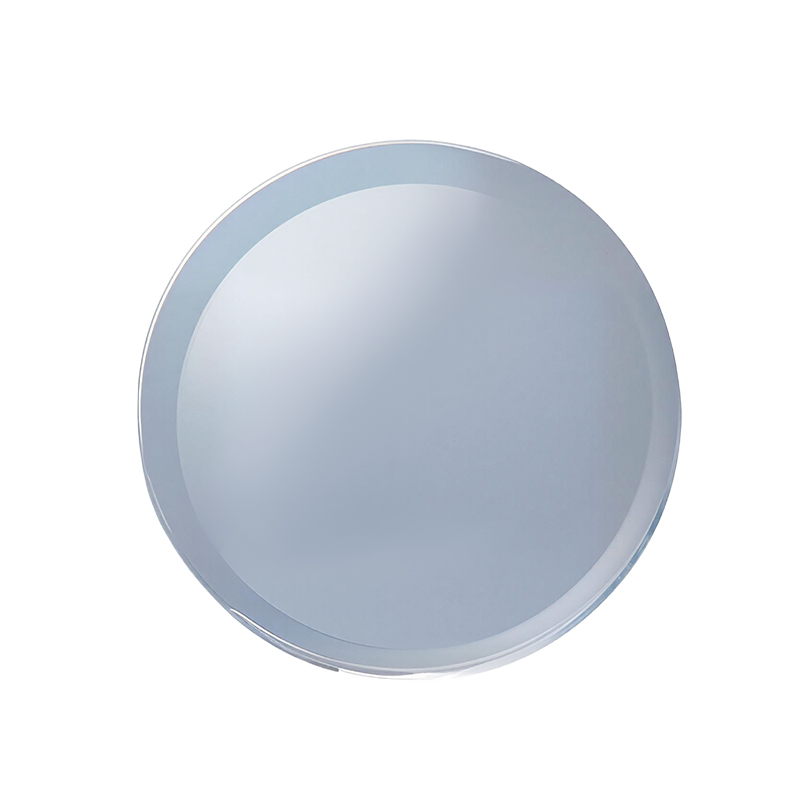
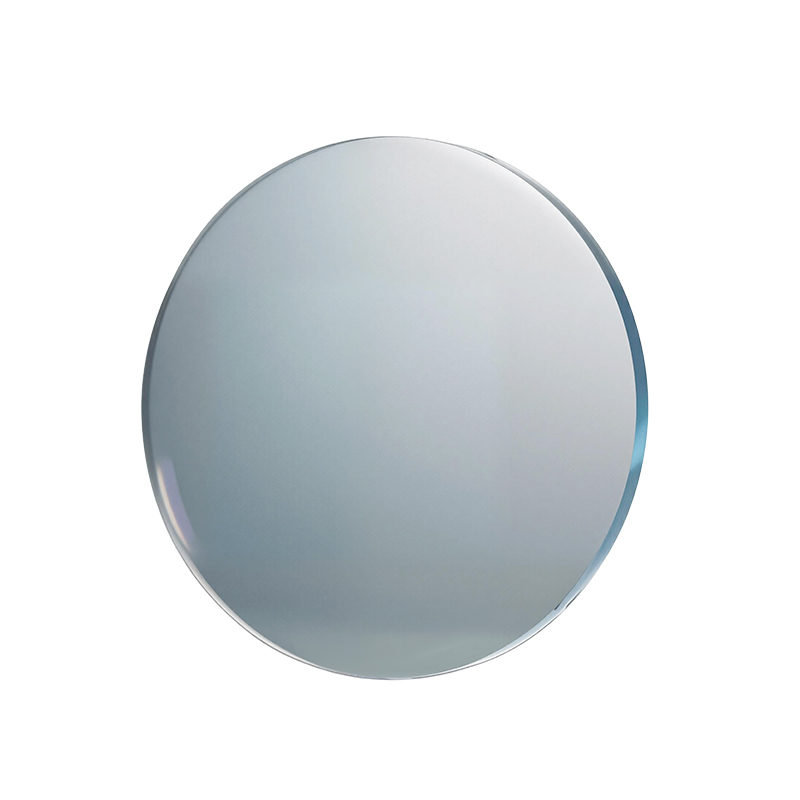
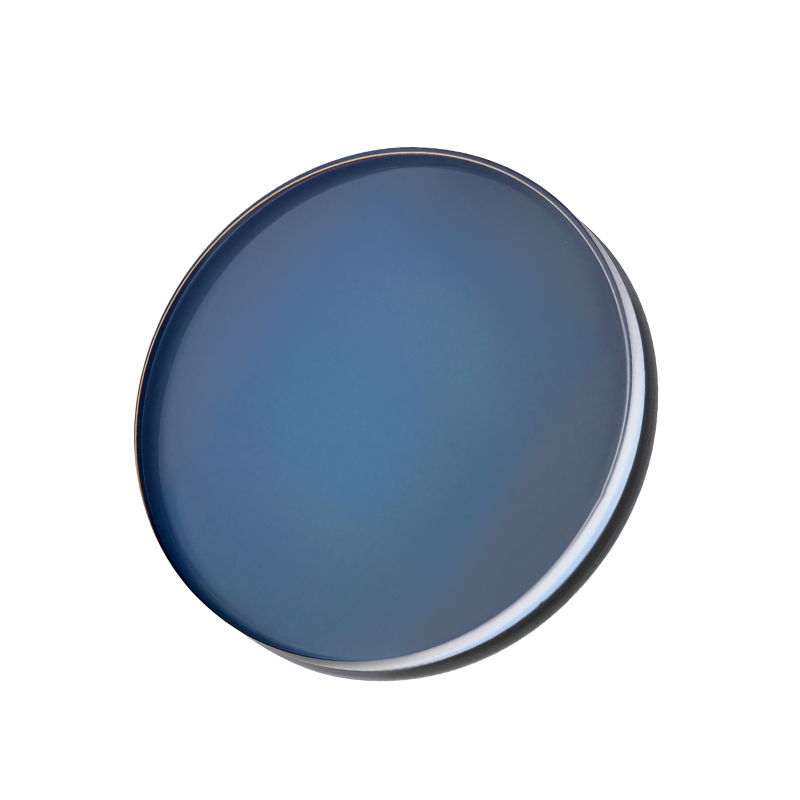
A Single Vision Semi-finished Lens is an optical lens blank that has one surface (the front, or convex surface) already precision-molded or cast to its final curvature, while the back surface remains unprocessed and ready to be surfaced, ground, and polished by an optical laboratory to the exact prescription power required for an individual patient. The semi-finished format is the dominant supply method in the professional optical industry globally because it allows lens manufacturers to produce large volumes of standardized front-curve blanks in a range of materials and coatings, while optical laboratories and optical practices retain the flexibility to customize the back surface for any prescription within the lens's power range.
Single Vision Semi-finished Lens products are used to produce lenses that correct only one focal distance, which distinguishes them from progressive (no-line multifocal) and bifocal semi-finished blanks. Single vision correction is appropriate for patients who are either purely myopic (nearsighted), purely hyperopic (farsighted), or require astigmatic correction, and who need only one focal distance rather than a range of distances in the same lens. Single vision lenses account for approximately 55% to 65% of all prescription lens volumes globally, making the Single Vision Semi-finished Lens the highest-volume product category in the wholesale optical lens supply chain.
How a Single Vision Semi-finished Lens Is Made: The Manufacturing Process
Understanding the manufacturing process of a Single Vision Semi-finished Lens explains why this format is commercially preferred over alternatives and helps buyers and laboratory managers evaluate quality claims from manufacturers.
Stage 1: Material Selection and Monomer Preparation
Single Vision Semi-finished Lens blanks are produced from one of several optical polymer systems, with the material selection determining the refractive index, weight, impact resistance, and optical clarity of the final lens. The liquid monomer (or preformed polycarbonate resin) is prepared by the manufacturer and cast into molds that define the front surface curvature. The monomer formulation also includes UV absorbers, thermal stabilizers, and release agents that are blended in precisely controlled ratios before casting.
Stage 2: Casting and Polymerization
For thermoset plastic lens materials such as CR-39, MR-7, MR-8, and MR-10 series (the industry designations for different index materials from Mitsui Chemicals), the prepared monomer is injected into glass molds or gasket-sealed lens molds and heated in a controlled temperature profile oven over a cycle of 16 to 24 hours. The polymerization cycle is critical to optical quality: too fast and the lens develops internal stress that degrades optical clarity and causes premature coating failure; too slow and production throughput is unacceptably low. The front mold surface defines the exact front curve of the semi-finished blank, while the back mold surface defines only the rough thickness at the back of the blank, leaving material for laboratory surfacing.
For polycarbonate (PC) lenses, the process uses injection molding rather than casting, with polycarbonate pellets melted and injected into precision steel molds under high pressure. Polycarbonate injection molding cycles are much faster (minutes rather than hours) but require more expensive tooling and produce lenses with different residual stress profiles than cast materials.
Stage 3: Inspection, Coating, and Warehousing of Semi-finished Blanks
After casting and demolding, each Single Vision Semi-finished Lens blank undergoes quality inspection for optical clarity, surface quality, power accuracy of the front curve, and thickness at center and edge. Rejected blanks are removed at this stage before any coating is applied. Approved blanks are then coated with hard coat (scratch-resistant coating) and in some supply formats with the full anti-reflective (AR) coating stack on the front surface, before being labeled with the front curve power (base curve), material, index, and diameter specifications and warehoused for distribution to optical laboratories.
Stage 4: Laboratory Surfacing to Final Prescription
When an optical laboratory receives a prescription order, it selects the appropriate Single Vision Semi-finished Lens blank from its inventory based on the required final lens power, material, and the frame dimensions. The laboratory then processes the blank through the following steps:
- Blocking: The front (finished) surface is mounted on a metal block using a low-melt alloy or adhesive pad that holds the lens securely during surfacing without marking the finished front surface.
- Generation: A CNC generator (free-form generator for free-form lenses, or spherical generator for conventional lenses) machines the back surface to the target sphere and cylinder powers of the prescription to within plus or minus 0.02 diopter accuracy.
- Fining and Polishing: Sequential abrasive polishing removes the tool marks left by the generator and brings the back surface to final optical polish quality with surface roughness below 0.01 microns Ra.
- Cleaning and Coating: The surfaced lens is cleaned ultrasonically and coated with hard coat and AR coating if not pre-coated by the manufacturer.
- Edging: The lens is edged to the shape of the selected frame using a CNC edger, and the finished lens is inspected before dispensing.
Materials Available for Single Vision Semi-finished Lens Blanks
The material of a Single Vision Semi-finished Lens determines its refractive index (which determines lens thickness for a given prescription power), its weight, its impact resistance, its UV blocking capability, and its compatibility with various coating systems. Selecting the correct material for the patient's prescription and lifestyle requirements is one of the most important decisions in lens specification.
Refractive Index and Lens Thickness: The Core Trade-Off
Higher refractive index materials bend light more efficiently, meaning thinner lens profiles for the same prescription power. The relationship is direct and significant: a patient with a prescription of minus 6.00 diopters will have a lens that is approximately 30% to 40% thinner in 1.74 index material than in standard 1.50 CR-39 material for the same frame and pupillary distance, which dramatically improves both appearance and comfort for high-power prescriptions.
| Material |
Refractive Index |
Abbe Value |
Specific Gravity |
Impact Resistance |
Best For |
| CR-39 (standard plastic) |
1.499 |
58 |
1.32 |
Moderate |
Low prescriptions, value segment |
| Polycarbonate |
1.586 |
30 |
1.20 |
Very high |
Children, safety eyewear, sports |
| Trivex |
1.532 |
45 |
1.11 |
Very high |
Safety, drill mount frames, rimless |
| Mid-index 1.60 |
1.597 to 1.600 |
36 to 41 |
1.30 to 1.34 |
Moderate to good |
Mid-range prescriptions up to +/- 4.00 |
| High index 1.67 |
1.665 to 1.670 |
31 to 32 |
1.35 to 1.37 |
Good |
Strong prescriptions above +/- 4.00 |
| Ultra high index 1.74 |
1.740 |
33 |
1.47 |
Moderate |
Very high prescriptions above +/- 6.00 |
The Abbe Value Trade-Off: Optical Clarity vs Thinness
The Abbe value (also called the constringence) measures a material's dispersion of light into its spectral components. A lower Abbe value means more chromatic aberration, which patients perceive as colored fringing around high-contrast edges particularly when looking through the periphery of the lens. CR-39 with an Abbe value of 58 produces virtually no chromatic aberration, while 1.74 index material with an Abbe value of 33 produces measurably more peripheral chromatic aberration, which some patients notice as visual discomfort or reduced clarity particularly in demanding visual conditions such as night driving or rapid eye movements.
For patients with prescriptions below plus or minus 4.00 diopters, the Abbe value advantage of CR-39 or Trivex is worth considering over higher-index materials. For prescriptions above plus or minus 6.00, the weight and thickness reduction from 1.67 or 1.74 index typically outweighs the Abbe value disadvantage in patient satisfaction and compliance.
Single Vision Semi-finished Lens vs Finished Stock Lens: Understanding the Key Difference
Many optical practices and some wholesale buyers are confused about the distinction between a Single Vision Semi-finished Lens and a finished stock lens (also called a finished uncut lens). Both are supplied by lens manufacturers to optical practices and laboratories, but they serve fundamentally different functions in the dispensing workflow.
- Single Vision Semi-finished Lens: Has a molded or cast front surface only. The back surface must be surfaced and polished by an optical laboratory to the specific prescription power. Requires surfacing equipment. Enables any prescription power within the blank's power range. Allows free-form digital surfacing for customized prescription optimization.
- Finished stock lens: Both front and back surfaces are already completed at the factory to a specific pre-defined prescription power. No surfacing required. The practice or laboratory needs only an edger to shape the lens to the frame. Limited to the specific stock powers available in the manufacturer's inventory, which typically covers common powers in 0.25 diopter steps but may not include every combination of sphere, cylinder, and axis in the patient's prescription.
For optical practices dispensing high volumes of common prescriptions and wanting to minimize laboratory processing time, finished stock lenses in the most common powers reduce turnaround time to same-day or next-day edging. For prescriptions outside the common stock range, for high-prescription patients where material and thickness optimization is important, and for practices offering free-form personalized lenses, the Single Vision Semi-finished Lens processed through a laboratory is the correct supply format.
Diameter Sizes and Base Curve Selection for Single Vision Semi-finished Lens
Single Vision Semi-finished Lens blanks are supplied in standard diameters and across a range of front curve (base curve) options. Both specifications must be correctly matched to the frame and prescription requirements before a blank is selected for processing.
Standard Blank Diameters
The most common Single Vision Semi-finished Lens blank diameters in the professional market are 65mm, 70mm, 75mm, and 80mm, with 70mm and 75mm being the most widely stocked sizes for standard adult frame applications. The correct blank diameter must be large enough that after the edger cuts the lens to the frame shape, the entire frame aperture is covered by the lens with no edge chip-out, which requires the blank to be at minimum 5mm to 8mm larger in diameter than the frame's largest chord measurement (the longest diagonal of the frame aperture).
Larger frame styles, wrap-around sports frames, and frames with high decentration between the optical center and the frame geometric center require larger blanks (75mm or 80mm). Smaller fashion frames and conservative professional frames can typically be processed from 65mm or 70mm blanks, which reduces material cost per lens.
Base Curve Selection and the Lens Bending Rule
The base curve of a Single Vision Semi-finished Lens blank is the front surface power in diopters, expressed as a positive value. The selection of base curve for a given prescription follows the "best form" lens design principle, which selects the front and back curve combination that minimizes off-axis optical aberrations (oblique astigmatism and power error) for the specific prescription power. The practical guideline most laboratories follow for Single Vision Semi-finished Lens base curve selection is:
- For prescriptions from plus 6.00 to minus 2.00: Use a 6.00 base curve blank
- For prescriptions from minus 2.25 to minus 4.50: Use a 4.00 base curve blank
- For prescriptions from minus 4.75 to minus 7.00: Use a 2.00 base curve blank
- For prescriptions more minus than minus 7.00: Use a 0.50 or flat base curve blank
These are guidelines for conventional spherical surfacing. Free-form digital surfacing tools calculate the optimal base curve electronically for each individual prescription and calculate the compensated back surface accordingly, which is why free-form processing can use a single base curve blank for a wider prescription range than conventional surfacing while still maintaining excellent optical performance.
Coatings Available on Single Vision Semi-finished Lens Products
Most Single Vision Semi-finished Lens blanks are supplied with at least one factory-applied coating, and premium blanks may carry several coating layers applied at the manufacturing facility rather than at the optical laboratory. Understanding which coatings are pre-applied versus laboratory-applied helps buyers evaluate the total cost of ownership of different blank supply options.
Hard Coat: Standard on All Quality Semi-finished Blanks
Hard coat (scratch-resistant coating) is applied to the front surface of virtually all Single Vision Semi-finished Lens blanks before they leave the manufacturing facility. Hard coat applied by dip or spin-coating in a controlled manufacturing environment produces a more uniform, harder scratch-resistant layer than hard coats applied by optical laboratories using spray or dip processes on individual finished lenses. Manufacturer-applied hard coats on premium Single Vision Semi-finished Lens blanks typically achieve Bayer abrasion test values of 15 to 25 (where higher numbers indicate greater scratch resistance), compared to 5 to 10 for uncoated CR-39 and 8 to 15 for laboratory-applied hard coats.
Pre-coated Anti-Reflective Blanks: Efficiency Advantage for Laboratories
A growing proportion of Single Vision Semi-finished Lens supply is now available in pre-coated AR format, where the full multi-layer anti-reflective coating stack is applied to the front surface by the manufacturer before distribution. When the optical laboratory surfaces and polishes the back, it then applies a hard coat to the back surface only (or a simplified AR system if required), eliminating the need for the laboratory to operate a front-surface AR coating process and the associated vacuum deposition equipment investment.
Pre-coated AR blanks are particularly valuable for smaller optical laboratories that cannot justify the capital investment of a complete vacuum deposition AR coating plant but still want to offer quality AR products to their customers. The trade-off is reduced flexibility: once the front surface AR is applied, the blank can only be used for its specified prescription range and cannot be converted to a photochromic or polarized front surface after the fact.
Photochromic Semi-finished Blanks
Photochromic Single Vision Semi-finished Lens blanks incorporate a photochromic dye system either imbibed into the surface layer (traditional method for CR-39) or homogeneously distributed through the lens matrix (used for Trivex and some high-index materials). These blanks darken when exposed to UV radiation and clear when UV is removed, providing combined prescription and sun protection in a single lens. Premium photochromic semi-finished blanks change from clear (transmission approximately 80% to 88% in indoor conditions) to dark (transmission approximately 15% to 25% in outdoor UV conditions) within 30 to 60 seconds of UV exposure, with full clearing in approximately 2 to 5 minutes at room temperature.
Wholesale Sourcing of Single Vision Semi-finished Lens Products: What Buyers Need to Evaluate
Optical laboratories and large optical practices purchasing Single Vision Semi-finished Lens blanks in wholesale quantities need to evaluate suppliers on multiple dimensions beyond price per blank, because the quality, consistency, and service reliability of the blank supply directly determines the quality of the finished lenses produced and the efficiency of the laboratory's production operation.
Key Supplier Evaluation Criteria
- Base curve accuracy and consistency: The front surface power of Single Vision Semi-finished Lens blanks must be within plus or minus 0.06 diopter of the stated base curve across the entire surface and between blanks from the same batch. Inconsistent front surfaces require the surfacing CNC program to compensate for base curve error, which reduces surfacing efficiency and can produce finished lenses outside the prescription tolerance if the error is not caught at incoming inspection.
- Surface quality and cosmetic reject rate: Evaluate supplier cosmetic reject rates by requesting sample orders before committing to a volume supply agreement. A premium Single Vision Semi-finished Lens supplier should have a cosmetic reject rate (for inclusions, surface defects, striae, and mold marks) of below 2%, while lower-quality supply may have reject rates of 5% to 10% that significantly increase the effective per-lens cost.
- Material certification and index accuracy: Request material certificates confirming the refractive index, Abbe value, and specific gravity of each batch supply against the stated specification. The actual refractive index of a labeled 1.60 blank should be within plus or minus 0.002 of 1.597 to 1.600; deviation outside this range affects the finished lens power calculation and can result in prescription non-compliance in the final lens.
- Stock range completeness: The supplier's stock range of base curves, diameters, and prescription ranges must cover the full spread of prescriptions dispensed by the purchasing laboratory. A supplier who is frequently out of stock on key base curve and diameter combinations forces the laboratory to use non-optimal base curves or multiple sources, increasing operational complexity and potentially compromising lens optical performance.
- Lead time and delivery reliability: For optical laboratories operating lean inventory models, the supplier's order-to-delivery lead time and delivery reliability are critical operational parameters. A supplier with 24-hour lead time and 99% on-time delivery enables the laboratory to hold minimal blank inventory; a supplier with 5-day lead time and variable delivery performance requires the laboratory to hold significantly more stock, increasing the working capital tied up in inventory.
Frequently Asked Questions
1. What is a Single Vision Semi-finished Lens and how is it different from a finished lens?
A Single Vision Semi-finished Lens is a lens blank with its front surface already molded or cast to a specific curvature, while the back surface is left unprocessed for an optical laboratory to surface to the patient's exact prescription. A finished lens has both surfaces already completed at the factory to a specific pre-defined power and requires only edging to fit a frame. Single vision semi-finished blanks enable any prescription power within the blank's range; finished stock lenses are limited to the specific powers available in the manufacturer's catalog.
2. What materials are available for Single Vision Semi-finished Lens blanks?
Single Vision Semi-finished Lens blanks are available in CR-39 (index 1.499), polycarbonate (index 1.586), Trivex (index 1.532), mid-index 1.60, high-index 1.67, and ultra-high-index 1.74 as the main commercial options. Higher index materials produce thinner lenses for strong prescriptions but have lower Abbe values (more chromatic aberration) and generally higher cost per blank. The correct material choice depends on the prescription power, frame size, and patient lifestyle requirements.
3. What does the base curve number on a Single Vision Semi-finished Lens mean?
The base curve number on a Single Vision Semi-finished Lens indicates the power of the front surface of the blank in diopters. A 6.00 base curve blank has a front surface with 6.00 diopters of positive power. The base curve is selected to be appropriate for the prescription range the blank will serve: stronger plus prescriptions use higher base curves, while stronger minus prescriptions use lower or flat base curves. This selection minimizes off-axis optical aberrations in the finished lens and is the principle behind best-form lens design.
4. What is the standard diameter for Single Vision Semi-finished Lens blanks?
The most widely used diameters for Single Vision Semi-finished Lens blanks in standard adult eyewear are 70mm and 75mm. 65mm blanks are used for small frames and pediatric eyewear. 80mm blanks are used for large fashion frames, high decentration prescriptions, and wrap-around sports frames. The correct blank diameter must be at minimum 5mm to 8mm larger than the frame's longest diagonal measurement to ensure complete coverage after edging without edge chip-out.
5. Can a Single Vision Semi-finished Lens be used for free-form digital surfacing?
Yes, Single Vision Semi-finished Lens blanks are the standard input material for free-form digital surfacing processes. Free-form surfacing uses the molded front surface of the semi-finished blank as the reference surface and calculates a complex digitally defined back surface that optimizes the prescription across the full lens aperture, compensates for frame tilt and wrap angle, and positions the optical design relative to the patient's pupillary data. The semi-finished blank format is essential for free-form processing because it provides the stable, high-quality front surface reference that the free-form calculation requires.
6. What coatings are typically pre-applied to Single Vision Semi-finished Lens blanks by the manufacturer?
Most Single Vision Semi-finished Lens blanks are supplied with a hard coat pre-applied to the front surface as a standard feature. Premium blanks are also available with factory-applied anti-reflective coating on the front surface, photochromic treatment integrated into the lens material or surface layer, and UV absorbing additives incorporated into the lens material rather than applied as a surface coating. Pre-coated blanks reduce the coating work required at the optical laboratory but require specific handling to avoid contamination or damage to the factory-applied coating during surfacing and processing.
7. How is the Abbe value relevant when selecting a Single Vision Semi-finished Lens material?
The Abbe value of a Single Vision Semi-finished Lens material measures how much the material disperses white light into its spectral components. A lower Abbe value means more chromatic aberration, which patients may perceive as colored fringing around edges when looking through the peripheral areas of the lens. CR-39 has an Abbe value of 58. Polycarbonate has an Abbe value of 30 and 1.74 index material has an Abbe value of 33 (more chromatic aberration). For prescriptions above plus or minus 4.00, the thickness and weight reduction of higher-index materials typically justifies accepting the lower Abbe value in patient experience terms.
8. What quality specifications should I require when purchasing Single Vision Semi-finished Lens blanks wholesale?
When purchasing Single Vision Semi-finished Lens blanks wholesale, require: base curve accuracy within plus or minus 0.06 diopter of stated value; refractive index within plus or minus 0.002 of stated value with batch material certificates; cosmetic defect reject rate below 2% of blanks per delivery; hard coat adhesion and scratch resistance confirmed to specified Bayer test values; and center thickness within plus or minus 0.1mm of specification. Also evaluate supplier stock range completeness, 24-hour or better order fulfillment lead time, and technical support availability for surfacing process optimization and troubleshooting.

 English
 Français
 Español
 عربى
عربى 中文
中文