Short answer: no. A contact lens prescription is not the same as a glasses prescription, and the two cannot be used interchangeably. Both documents describe how your eyes focus light, but they are written for two very different objects: one lens sits roughly 12 millimetres in front of your eye, the other rests directly on your cornea. That single difference changes the numbers, adds measurements you will never see on a glasses prescription, and means a contact lens prescription can only be issued after a professional fitting.
We have been making lenses since 1996, and we spend our working days turning prescriptions into finished optics for optical brands, retail chains and eyecare practices. The question "are contact prescriptions the same as glasses?" comes up constantly, and the honest answer is that they are two separate documents that happen to describe the same pair of eyes.
Why the Two Prescriptions Are Not Interchangeable
Glasses and contact lenses correct the same kinds of refractive error: short-sightedness, long-sightedness, astigmatism and presbyopia. What changes is where the correcting lens sits and how closely it interacts with the eye itself.
The distance between the lens and the eye
When your eyes are measured, the trial frame on your nose holds lenses about 12 to 14 millimetres away from the front of the eye. A contact lens sits at zero distance, with only the tear film between it and the cornea. Because the effective power of a lens depends on how far it is from the eye, a contact lens prescription has to be recalculated from the glasses measurement. This is known as vertex distance compensation.
For gentle corrections, the adjustment is often tiny and sometimes disappears once the numbers are rounded. That is why people with prescriptions around plus or minus 2.00 D sometimes notice the two prescriptions look almost identical. As the prescription gets stronger, the difference becomes real. A glasses prescription near −8.00 D may need a contact lens closer to −7.25 D to focus light in the same place, and high plus powers shift in the opposite direction. Only the practitioner who examined your eyes can determine the final contact lens power.
A contact lens is fitted to living tissue
A glasses prescription is a statement about optics. A contact lens prescription is a statement about optics and fit. The lens has to rest on your cornea at a curvature that suits it, allow enough oxygen through, and stay stable when you blink. That is why base curve, diameter and material appear only on the contact prescription, and why two people with identical vision numbers can still need different contact lenses.
What Your Glasses Prescription Contains
For most people, the everyday practical document is the glasses prescription, and it is shorter than expected. The core of it is a handful of values per eye:
- Sphere (SPH): the main lens power, written as a negative number for short-sightedness and a positive number for long-sightedness.
- Cylinder (CYL): the amount of astigmatism correction, which describes how unevenly the eye focuses light.
- Axis: the orientation of that cylinder correction, expressed in degrees from 1 to 180.
- Add: the extra power for reading and near work, used on bifocal and progressive lenses.
- Prism: an optional value that shifts the image position, often used for eye alignment issues.
- Pupillary distance (PD): the spacing between your pupils, which positions the optical centres of the lenses in front of your eyes.
What you will not find here is anything about the shape of your cornea, and that is precisely what a contact lens needs. We cover the individual fields in more depth in our guide to what your glasses prescription means.
What a Contact Lens Prescription Adds
Put side by side, the difference is easy to see. The contact lens column only becomes complete after a fitting appointment.
Comparison of typical fields on a glasses prescription and a contact lens prescription. Values marked as not applicable are handled by the lens design rather than written on the prescription.
| Field |
What it describes |
Glasses prescription |
Contact lens prescription |
| Sphere (SPH) |
Main correcting power |
Yes |
Yes, often recalculated |
| Cylinder (CYL) |
Astigmatism correction |
Yes |
Yes, for toric lenses |
| Axis |
Orientation of the cylinder |
Yes |
Yes, for toric lenses |
| Add |
Near addition for reading |
Yes |
Only on multifocal lenses |
| Prism |
Image displacement for alignment |
Yes |
Rarely applicable |
| Pupillary distance |
Spacing of the optical centres |
Yes |
Not used |
| Base curve |
Curvature matching the cornea |
Not used |
Yes |
| Diameter |
Overall size of the lens |
Not used |
Yes |
| Brand and material |
Which specific lens was fitted |
Not used |
Yes |
Base curve and diameter
These two numbers describe the fit rather than the vision correction. A base curve that is too flat or too steep can leave the lens uncomfortable, unstable or poorly centred, and the diameter controls how much of the cornea the lens covers. Neither appears anywhere on a glasses prescription, because a spectacle lens never touches the eye.
Brand, material and validity
A contact lens prescription usually names the specific lens that was fitted, because materials and designs behave differently on different eyes. It also carries its own expiry date, which is often shorter than the one on a glasses prescription. In many markets, sellers are legally required to ask for that valid contact lens prescription before dispatching lenses.
Can You Convert a Glasses Prescription into a Contact Prescription?
You can convert the optical power, but you cannot convert the whole prescription. Online calculators that apply a vertex distance formula are doing real arithmetic, yet they stop there. They cannot tell you which base curve suits your cornea, whether a lens will stay centred when you blink, or whether your eyes are healthy enough for contact lens wear at all.
Astigmatism adds another layer. Toric contact lenses have to stay correctly oriented on the eye, so the axis on a contact lens prescription may not simply copy the axis on your glasses prescription. Multifocal contacts for presbyopia are similarly design-specific. The practical conclusion is straightforward: a glasses prescription is not a valid basis for ordering contact lenses, and an expired contact lens prescription cannot simply be replaced with your current glasses numbers.
From Prescription to Lens: What Happens After the Exam
On our side of the industry, vertex distance still matters. As a manufacturer of high-end optical lenses, we produce lenses from 1.50 up to 1.67 refractive index, and when a prescription is strong, the lens lab compensates for how far the frame will sit from the eye. A high-wrap frame, a frame that sits closer to the face than usual, or a strong minus power all change how the finished lens needs to be calculated.
The prescription also guides the choice of material and design. Higher index materials keep strong prescriptions thinner and lighter, aspheric designs help control edge distortion, and freeform surfacing allows a lens to be calculated individually for each eye, taking into account the pupillary distance, fitting height and frame position. Single vision, progressive, blue light blocking, photochromic and custom freeform lenses all start from the same short list of numbers that your optometrist wrote down.
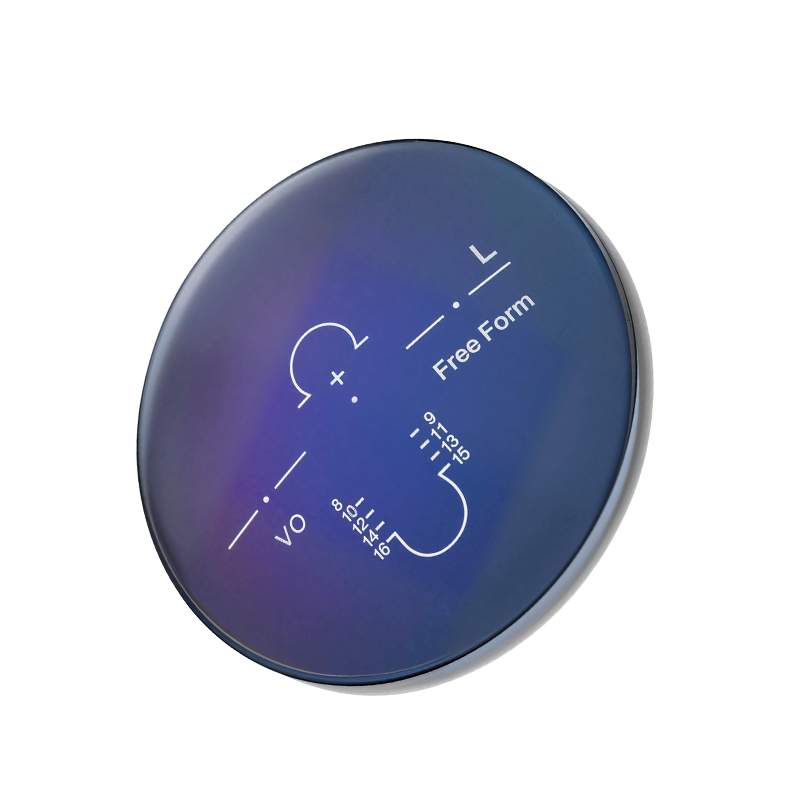 Freeform Blue-Block Photogrey Progressive Lens, 1.56/1.61/1.67Combines progressive, photochromic and blue-light-blocking features with freeform surfacing; available in 1.56, 1.61 and 1.67 indexes.View Product →
If You Wear Both: Making Your Glasses Work Harder
Because the two prescriptions are separate, most people who wear contacts keep a pair of glasses as well, and it is worth choosing those glasses with intent. Glasses can offer things a contact lens cannot: photochromic lenses that darken in daylight and clear indoors, wide progressive corridors for comfortable reading, prism correction, and no daily cleaning routine.
For anyone who spends hours in front of a screen, a lens that combines blue light filtering with light-sensitive darkening gives a useful backup for the days when contact lenses feel dry or tired. It is also the practical reason a glasses prescription rarely goes to waste even if you mostly wear contacts.
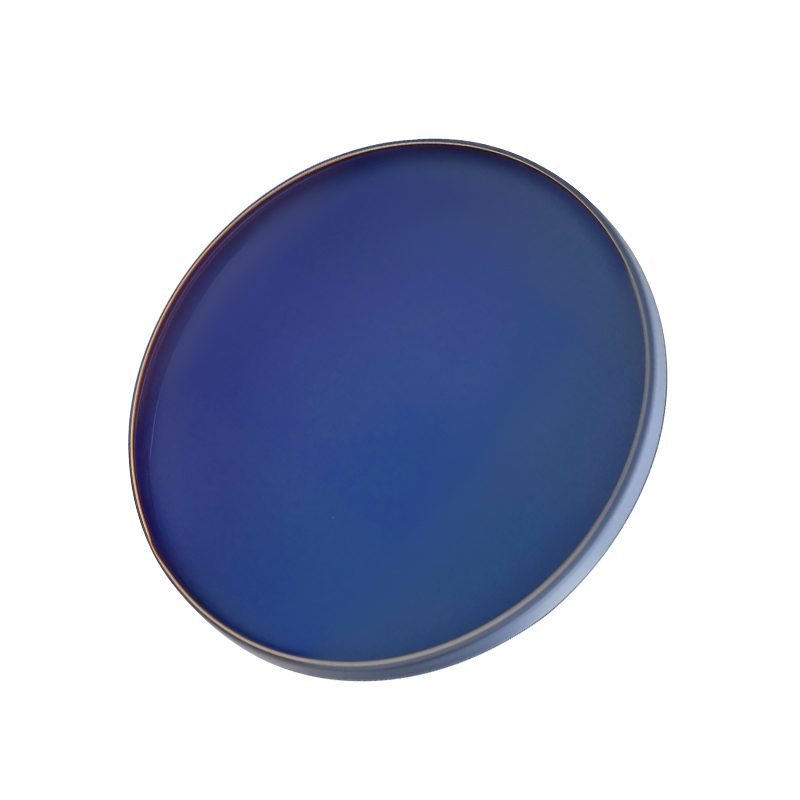 1.56 Photogrey Fast Change Airblue SHMC Finished LensPhotochromic finished lens with fast light adaptation, Airblue blue-light filtering and SHMC coating for screen use and indoor-outdoor transitions.View Product →
Questions We Hear Often
Can I use my glasses prescription to order contact lenses online?
No. A reputable seller will ask for a valid contact lens prescription that includes base curve, diameter and lens details. Without those measurements, a lens cannot be matched to your eye safely.
My two prescriptions have the same numbers. Does that mean they are the same?
It means your correction is mild enough that vertex distance compensation rounded away. It does not mean the documents are interchangeable. The contact lens prescription still carries fit measurements that only come from a contact lens examination.
Do both prescriptions expire?
They do, and the timeframes can differ between the two. Eye health, tear film and corneal shape can all change, so it is worth keeping both up to date rather than relying on an old sheet of paper.
The Bottom Line
Contact lens prescriptions and glasses prescriptions are related but never equivalent. One describes a lens suspended in front of your eye; the other describes a lens resting on it. If you are due for an eye examination, ask for both documents at the same visit, keep each of them current, and treat your glasses as the reliable pair that is always ready when your contacts need a rest.

 English
 Français
 Español
 عربى
عربى 中文
中文