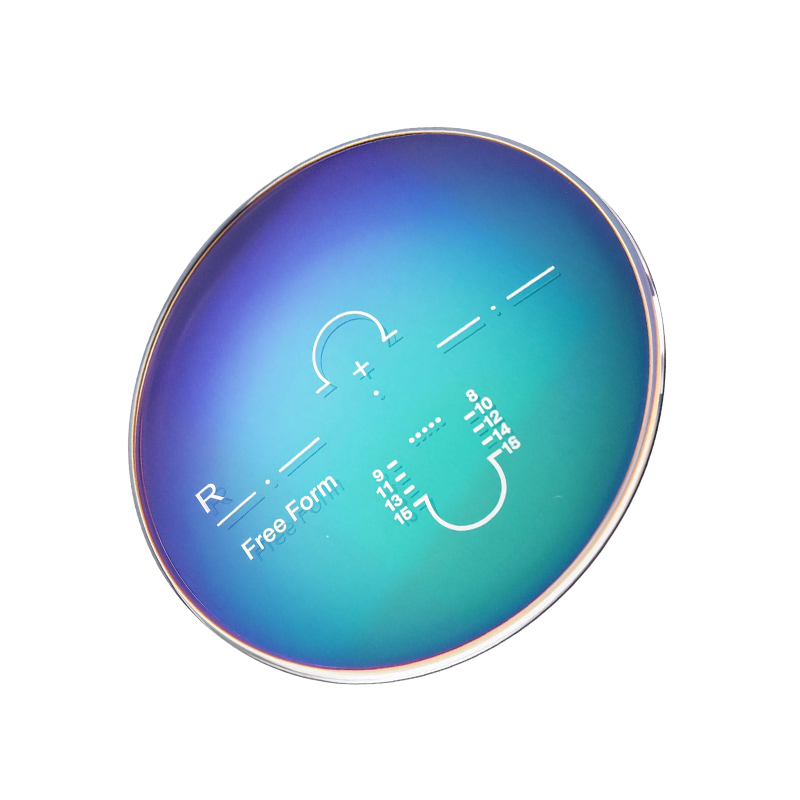
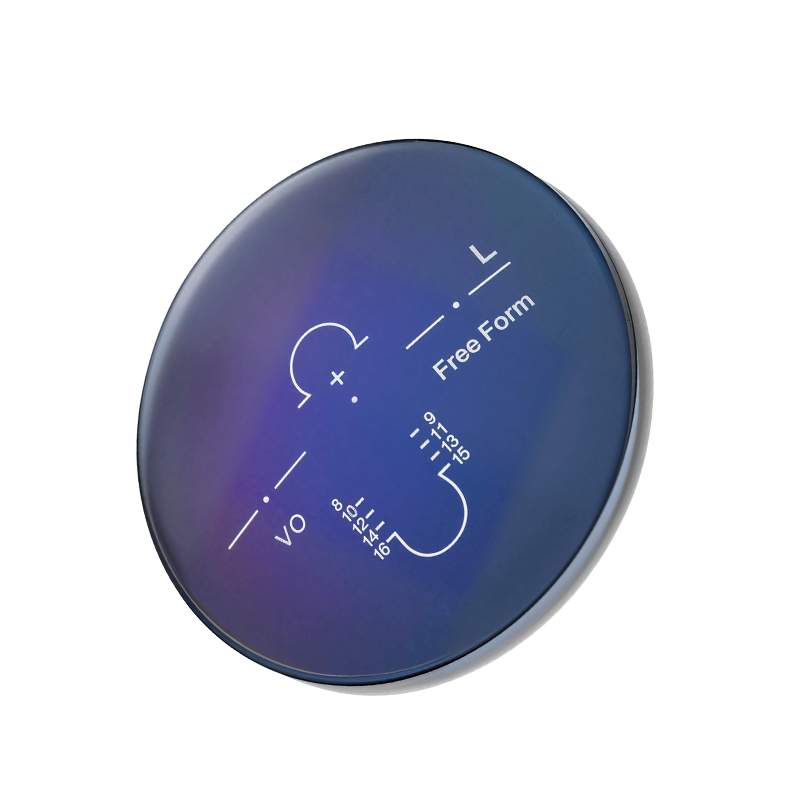
The frames get most of the attention in an optical store, but the part of a pair of glasses that actually does the work is the lens. A lens is a piece of precision optics: a curved surface with a carefully controlled refractive power, produced so that light lands on the retina where it should.
Lenses for glasses have changed enormously over the past thirty years. They are thinner, lighter, tougher and far more functional than they once were. Where a prescription used to mean a simple choice between glass and plastic, a wearer today can pick a lens that filters blue light, darkens outdoors, cuts glare from wet roads, or keeps distance, intermediate and near vision clear at the same time.
We have been manufacturing lenses since 1996, and in that time we have produced everything from basic single vision stock lenses to individually calculated freeform progressives. This guide is our attempt to explain, in plain language, what lenses for glasses are made of, how the main types differ, and how to choose well.
The Five Variables Behind Every Lens
Most confusion about lenses comes from treating every option as a separate product. In practice, any lens for glasses is defined by five variables, and each combination produces a different result.
- Prescription. Sphere, cylinder, axis, prism and add power define what the lens has to do optically.
- Material and refractive index. The resin a lens is cast from determines how thin it can be, how light it feels, and how it behaves in different frames.
- Design. Single vision, bifocal, progressive, or a specialised design such as a myopia control lens.
- Coatings and treatments. Hard coating, anti-reflective layers, blue light filtering, photochromic or polarized treatment.
- Format. Stock (finished) lenses, semi-finished lenses, or fully customised RX lenses made to an individual prescription.
Separate those five and the conversation becomes much clearer. Most "which lens should I choose?" questions are really questions about design, index and coating, in that order.
Single Vision, Bifocal and Progressive Designs
Almost every lens sold today falls into one of three optical designs. The design decides how many viewing distances the lens can serve, and how the wearer moves their eyes across the surface.
Single vision lenses
Single vision lenses correct one viewing distance: distance, intermediate, or near. They are by far the most common lenses for glasses, and for good reason. They are simple, affordable, and easy to adapt to. A young myope, a computer user who needs a dedicated desk pair, and a reader who only wears glasses for books can all be served by single vision.
Bifocal lenses
Bifocal lenses divide the surface into two zones: a large distance area and a smaller near segment below it. The segment is usually flat top or round top, and the visible line is a feature rather than a flaw, because it tells the wearer exactly where the reading zone begins. Bifocals remain a practical choice where a clear, wide near area matters and where cost and simplicity are priorities.
Progressive lenses
Progressive lenses blend distance, intermediate and near power into one continuous surface with no visible line. They demand more from the fitting: accurate pupillary distance, a correct fitting height, and a frame with enough vertical depth for the corridor. Get those right and the result is a single pair of glasses that handles a meeting, a laptop screen and a menu without switching frames.
Specialised designs sit alongside these three. Myopia control lenses, for example, are progressive-style designs for younger wearers, intended to reduce the focusing effort demanded at near and usually prescribed together with outdoor time and regular reviews.
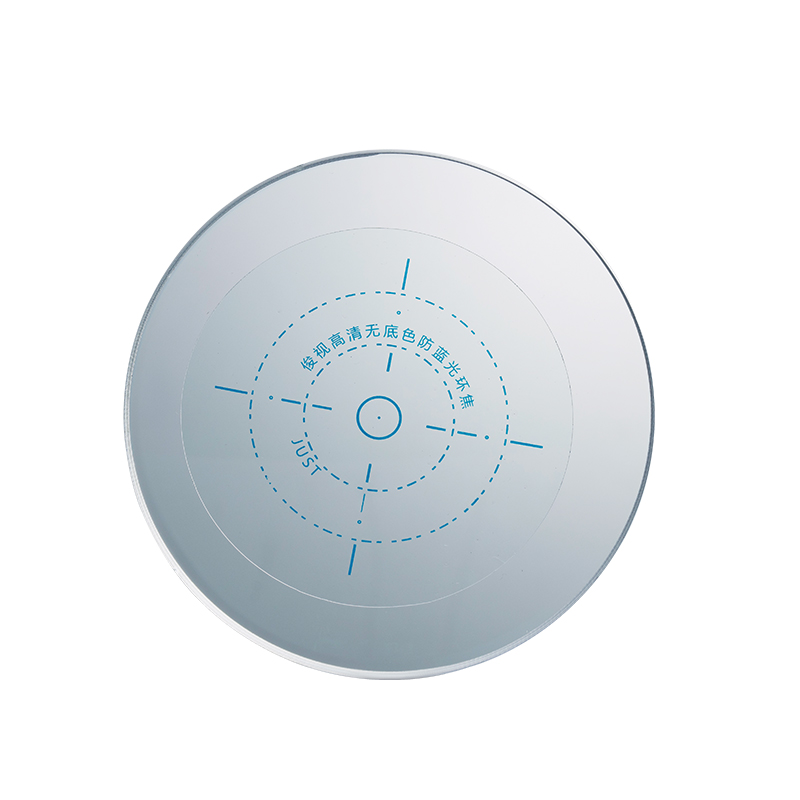 Myopia Control Finished Lens with Peripheral DefocusFor younger wearers needing progression control, this finished lens combines peripheral defocus design with UV420 protection and ultra-bright resin.View Product →
Refractive Index and Lens Materials
Refractive index is the number printed next to every lens description, and it is one of the most misunderstood. A higher index means the material bends light more strongly, so the same prescription can be produced with a flatter curve and therefore a thinner, lighter lens. That matters most in higher prescriptions, where edge thickness becomes visible and weight becomes noticeable.
Refractive index is a simple way to compare how thin a lens can be at a given prescription; higher numbers generally mean thinner lenses.
| Index |
Typical resin |
Commonly suits |
Relative thickness |
| 1.50 |
Standard resin |
Low to moderate powers, spare pairs, budget orders |
Reference thickness |
| 1.56 |
Mid-index resin |
Everyday single vision, bifocal and progressive lenses |
Around 15 to 20 percent thinner |
| 1.61 |
Mid-to-high index resin |
Moderate and higher prescriptions, thin metal and rimless frames |
Noticeably flatter and thinner |
| 1.67 |
High-index resin |
Strong prescriptions where edge thickness matters most |
The thinnest of this range |
There is a trade-off worth knowing. As index rises, Abbe number generally falls, which means slightly more chromatic dispersion at the edges of a strong lens. In practice, modern high-index materials manage this well enough that most wearers notice the weight saving far more than any colour fringing. If you want to go deeper into the chemistry and the practical differences, we keep a detailed lens material guide on the topic.
Coatings and Treatments: Where Comfort Is Won or Lost
Two lenses with identical power, material and design can feel completely different to wear, purely because of what sits on the surface.
- Hard coating. A protective layer that resists the fine scratches of daily cleaning. It is the foundation most other coatings sit on.
- Anti-reflective coating. Multi-layer coatings, often described as HMC or SHMC, reduce reflections from the lens surface. Less reflection means more light reaches the eye, which improves night vision and makes the wearer's eyes visible rather than hidden behind a glare.
- Blue light filtering. Blue block lenses reduce a portion of short-wavelength visible light, aimed at people who spend long hours in front of screens. The coatings come in several tints, from a faint residual colour to a near-neutral finish.
- Photochromic treatment. These lenses darken in ultraviolet light and clear indoors. Spin-coating processes and fast-change formulations have shortened the fade-back time considerably compared with earlier generations.
- Polarization. Polarized lenses block light reflected from horizontal surfaces such as water, snow and asphalt, which is why they are the standard choice for driving and outdoor sun lenses.
Photochromic performance is a good example of why surface technology matters. A lens that darkens quickly but takes ten minutes to clear indoors will frustrate the wearer, no matter how good its optics are.
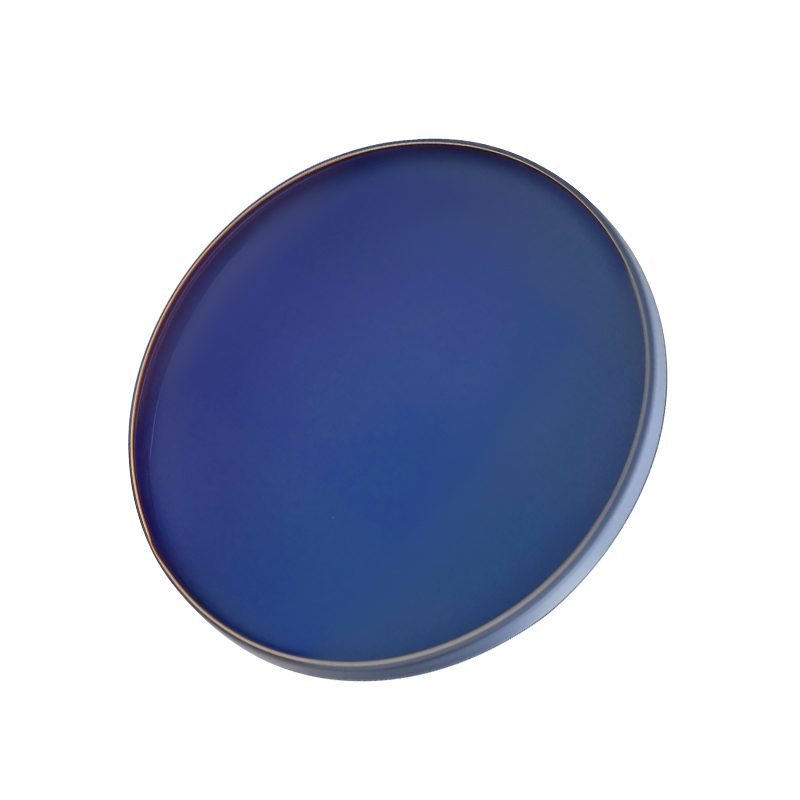 1.56 Photogrey Fast Change Photochromic Lens with Airblue CoatingFor wearers moving between indoor and outdoor light, this fast-changing photochromic lens pairs blue-light filtering with a hydrophobic anti-reflective coating.View Product →
Matching Lenses to Daily Life
Prescription tells you what the lens must correct. Lifestyle tells you which lens will actually be worn happily. A few common patterns:
- Screen-heavy office work. A mid-index lens with a blue light filter, or a progressive with an anti-reflective coating if the wearer is over forty and struggling with near focus by late afternoon.
- Driving and the outdoors. Polarized sun lenses for bright, reflective conditions, or photochromic lenses for wearers who move between indoors and outdoors all day.
- Presbyopia. A progressive for continuous vision, a bifocal where a wide, obvious reading zone is preferred, and a second dedicated pair for the desk if the wearer spends hours at a fixed screen distance.
- Children and teenagers. Impact-resistant material, hard coating, and a design that suits both classroom and outdoor time.
- Active wearers. Lightweight high-index lenses keep strong prescriptions comfortable in sports and rimless frames.
Stock, Semi-Finished and Freeform RX: Three Ways Lenses Reach a Frame
Behind the retail counter, lenses move through the supply chain in three different states, and understanding them explains a lot about price and lead time.
Stock lenses are finished lenses held in inventory across a defined range of powers and base curves. An optical lab can edge them to the frame within hours, which makes them ideal for standard prescriptions and quick turnaround.
Semi-finished lenses arrive with one surface already completed and the other left blank. A lab with generating and polishing equipment grinds the second surface to the prescription, then applies hard coating and anti-reflective layers. This route gives labs full control over power, tint and coating, and it is how a great deal of the world's prescription eyewear is produced.
Freeform RX lenses are calculated point by point from an individual prescription, frame measurement and fitting data, then cut on digital surfacing equipment. They exist for prescriptions and frame shapes that standard tooling cannot handle well, and for wearers who want the most precise progressive performance available.
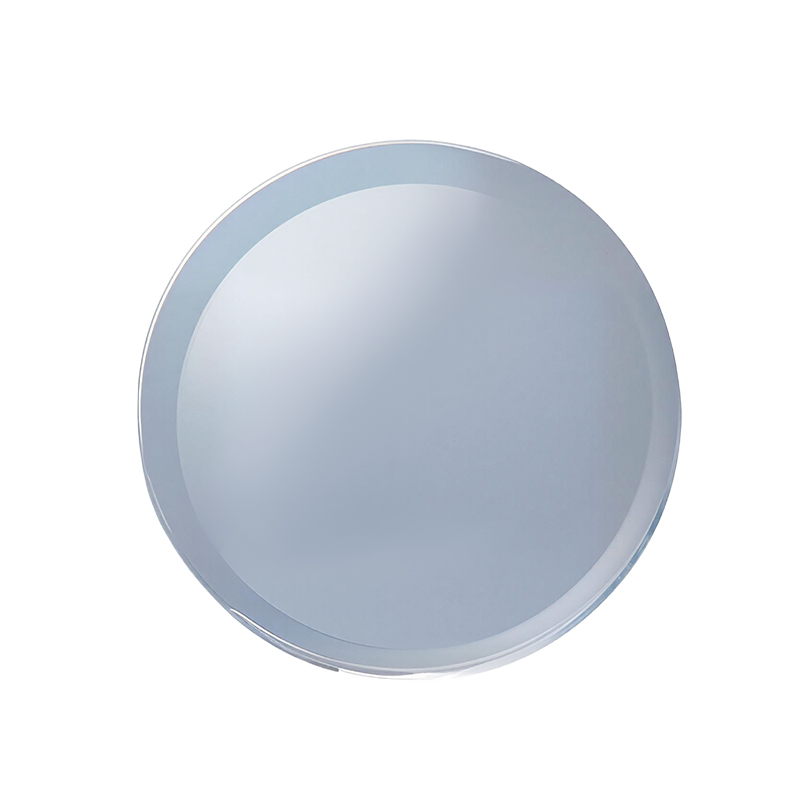 Semi-Finished Lenses for Custom Prescription and OEM SupplyThese semi-finished lens blanks support custom prescription work, including single vision, progressive, blue-light, photochromic and freeform designs, with OEM/ODM options.View Product →
A Practical Checklist Before You Choose
- Confirm the prescription is current, including pupillary distance for progressive lenses.
- Decide the primary viewing task: distance, near, screen, or a mix across the day.
- Choose a refractive index that keeps the lens thin enough for the frame without over-specifying.
- Match the frame to the design. Progressives need vertical depth; rimless frames suit higher index materials.
- Always include a hard coat, and add anti-reflective coating unless there is a specific reason not to.
- Add blue light filtering, photochromic or polarized treatment only where the wearer's routine supports it.
- Ask who will do the surfacing and coating, and what quality checks the finished lens passes before dispatch.
Good lenses for glasses are rarely the most expensive option on the shelf. They are the ones that match the prescription, the frame and the wearer's day, produced consistently enough that the second pair performs exactly like the first.
That consistency is the whole job of a lens manufacturer. If you are a brand, a retail chain, a laboratory or a practice looking for a manufacturing partner who can supply stock, semi-finished and freeform lenses from one source, our team is always happy to talk through the technical details.

 English
 Français
 Español
 عربى
عربى 中文
中文