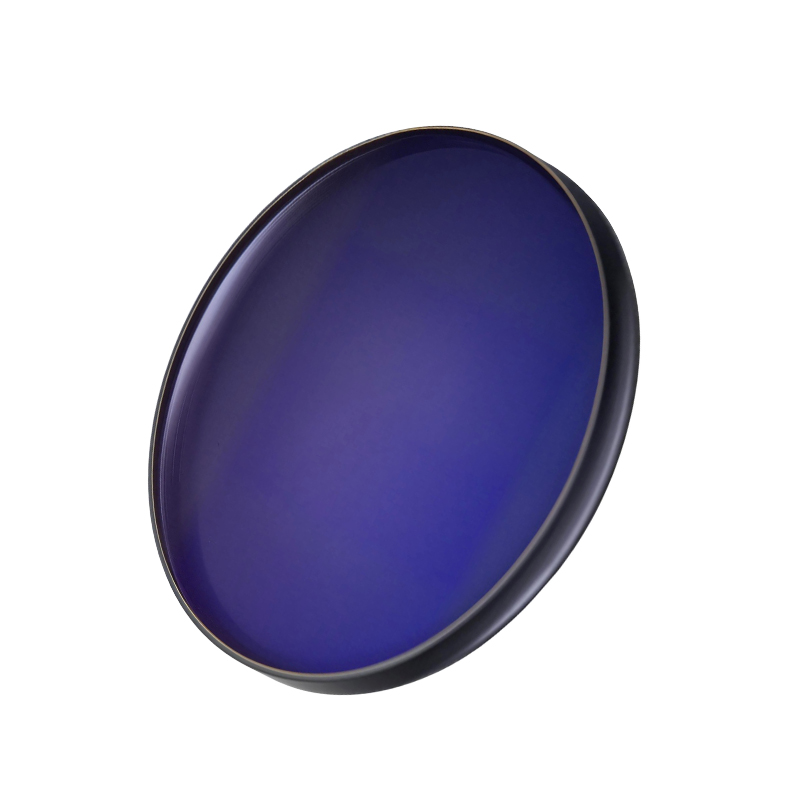
In decades of making optical lenses, the question we hear most often from optical retailers and brand partners is simple: which lens material should we choose? The answer shapes lens thickness, weight, optical clarity, impact resistance, and even how well a coating will perform. In this guide, we explain the most common eyeglass lens materials and how to match them to real-world needs. If you prefer a more technical breakdown, our detailed guide to lens materials covers the laboratory side of the story.
Why Lens Material Matters
Every lens material has a combination of optical and physical properties. The most important are refractive index, Abbe number, specific gravity, and impact resistance.
- Refractive index determines how efficiently the lens bends light. A higher index means less material is needed, so the lens can be thinner for the same prescription.
- Abbe number measures chromatic dispersion. A higher Abbe number means less color fringing around edges and generally sharper vision.
- Specific gravity affects lens weight. Lighter materials are more comfortable, especially in high prescriptions.
- Impact resistance is a safety factor, critical for children, sports, and work environments.
No single material wins in every category. That is why lens manufacturers balance these properties when designing a lens line.
Common Lens Materials at a Glance
The table below is a convenient starting point for buyers comparing finished lens options.
Typical values vary slightly by manufacturer and specific formula. Use them as a general reference when comparing lens materials.
| Material |
Refractive Index |
Abbe Number |
Best Suited For |
| Standard plastic resin |
1.50 |
58 |
Everyday low-to-moderate prescriptions |
| Polycarbonate |
1.59 |
30 |
Children, sports, safety glasses |
| High-index resin (1.56) |
1.56 |
37 |
Budget-friendly thinner lenses |
| High-index resin (1.61) |
1.60-1.61 |
32 |
Slim lenses with balanced optics |
| High-index resin (1.67) |
1.67 |
32 |
Strong myopia prescriptions |
| Glass |
1.52 |
59 |
Premium optics; now niche |
If you are reviewing a supplier catalog, keep these numbers handy. They explain why a lens looks, feels, and performs the way it does.
Standard Resin Lenses: The Foundation of Daily Eyewear
Standard resin lenses, typically with a refractive index around 1.50, remain the most common material in everyday eyewear. They offer excellent optical clarity, a high Abbe number, and a familiar thickness profile that is easy to edge. For prescriptions below roughly -4.00 diopters, standard resin is often the most cost-effective choice.
A small step up, 1.56 resin, is popular because it is slightly thinner than standard plastic while still affordable. It is also a versatile base for anti-reflective, blue-blocking, and photochromic coatings. At JUST, we have been producing resin lenses since 1996, beginning with 1.50 lenses and later expanding to 1.56. That history taught us how to make the basic materials perform consistently in finishing labs and in front of the wearer.
High-Index Lenses: Thin and Light for Strong Prescriptions
As prescriptions move beyond -4.00 or +3.00 diopters, lens thickness becomes a cosmetic and optical concern. High-index materials, such as 1.61 and 1.67, allow the lenses to be noticeably thinner and lighter than standard resin. Many patients describe the difference as the single biggest reason they stop avoiding thicker lenses.
There is a trade-off: higher-index materials typically have a lower Abbe number, which can increase chromatic aberration if the material is poorly designed. A well-crafted aspheric design and a quality anti-reflective coating help control this. That is why material choice alone is not enough; the lens design and coating matter too.
For office and screen-heavy lifestyles, a 1.61 lens with blue-blocking capability and an air-blue anti-reflective coating combines low thickness with practical digital protection. It is one of the most requested combinations among our retail partners.
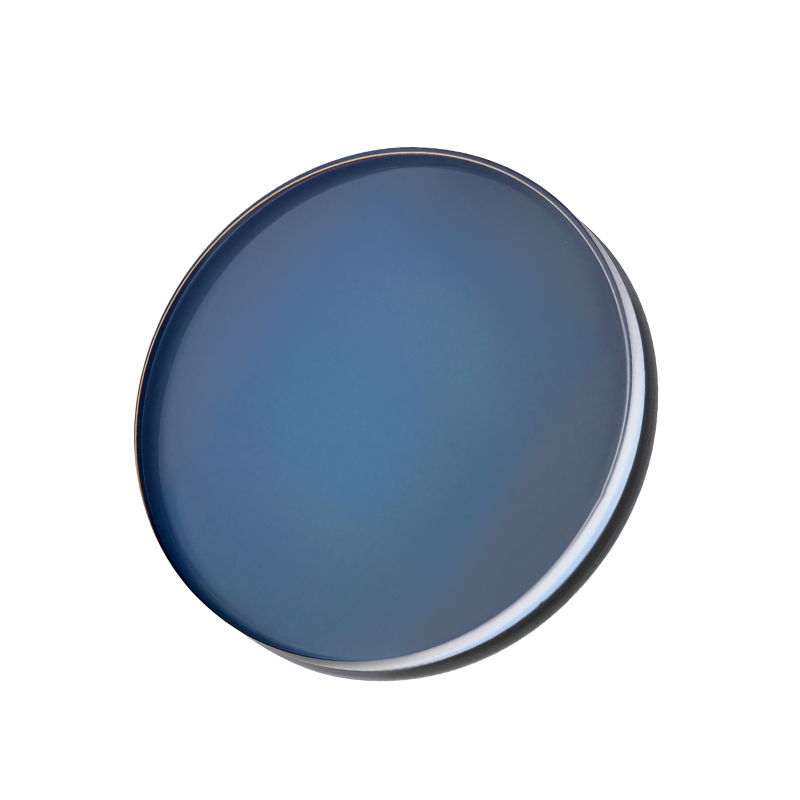
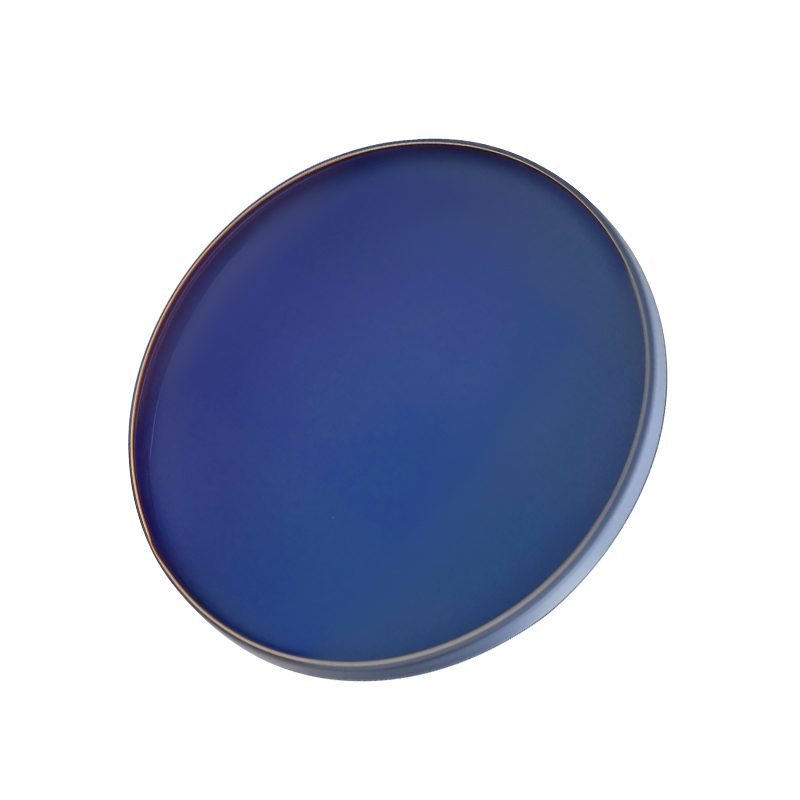
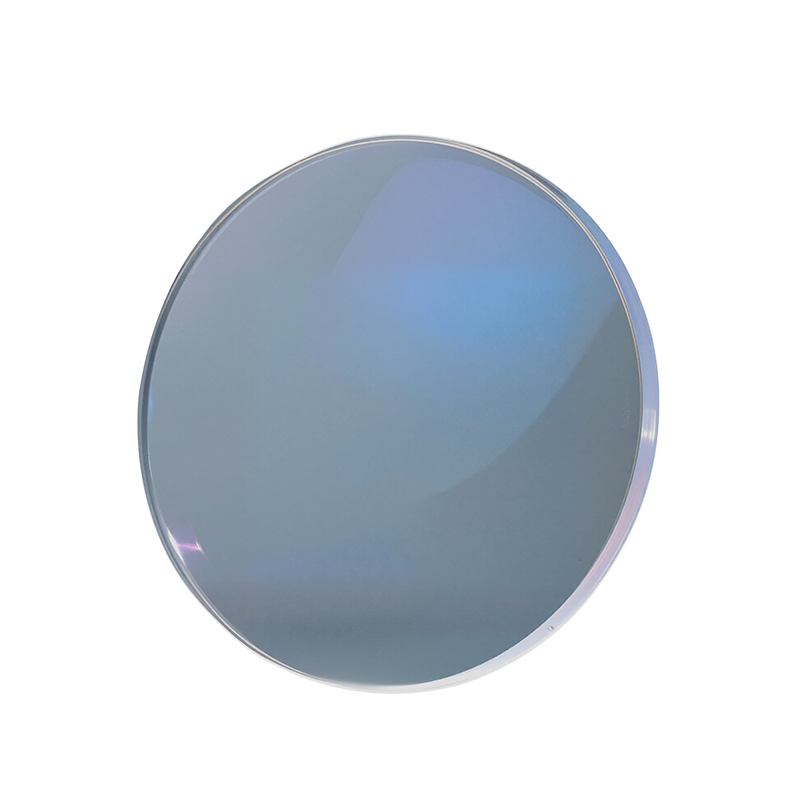 1.61 Blue Block Airblue Coating SHMC Single-Vision Finished LensThis 1.61 index lens combines blue-light filtering with an air-blue anti-reflective coating, offering a thinner profile for mild to moderate prescriptions. It suits office and screen-heavy lifestyles by reducing eye strain and reflections while maintaining high clarity and UV protection.View Product →
For stronger prescriptions, 1.67 offers even more reduction in edge thickness. Many patients with -6.00 or higher choose 1.67 because it makes their lenses comfortable enough to wear from morning to night.
Polycarbonate and Impact-Resistant Alternatives
Polycarbonate lenses have become a standard in safety eyewear because of their high impact resistance and relatively thin profile at 1.59 index. They are often recommended for young children and active adults. The trade-offs are a lower Abbe number, around 30, and a surface that is more sensitive to scratches without a robust hard coat.
We do not manufacture polycarbonate in our production line because our R&D focus has always been on optical resins that offer a stronger balance of clarity and high index. However, we understand that polycarbonate is a legitimate option for specific customers. In those cases, the coating package becomes especially important.
Glass Lenses: The Legacy Choice
Glass was the original lens material. It offers exceptional optical clarity and excellent scratch resistance, and its Abbe number is similar to standard plastic. Yet glass is heavy, and it can shatter on impact, making it less practical for everyday eyeglasses, especially in high prescriptions. Today, glass remains a niche option for certain high-end optical applications. For most people, modern resin lenses deliver better comfort and safety without sacrificing the vision quality that matters.
Coatings and Add-Ons Complete the Lens Material
A lens material is the canvas; the coating is the finishing layer. With the right coating, a 1.50 resin lens can become a hard-wearing, low-reflection, blue-light-filtering product. Without it, even the most expensive high-index lens may feel uncomfortable due to reflections or quickly pick up micro-scratches.
Common coating families include anti-reflective (AR) coatings, hard coats, blue-blocking tints, photochromic treatments, and polarized layers. Each has a specific role, and materials react differently to them. Photochromic lenses, for example, need a resin base that allows even response and good activation speed. Our fast-change photochromic series is designed for wearers who move frequently between indoor and outdoor light.
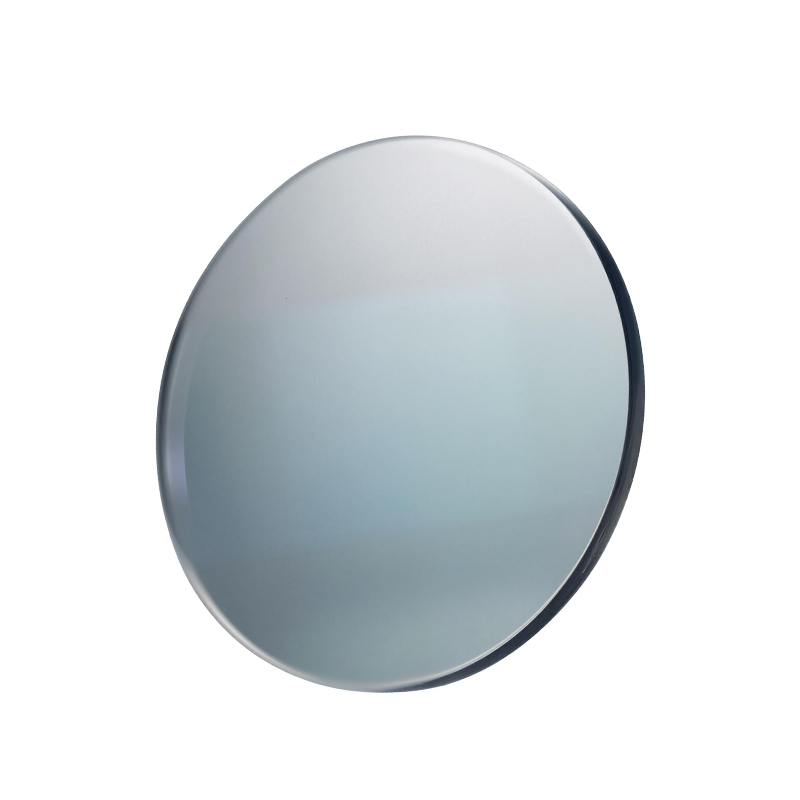
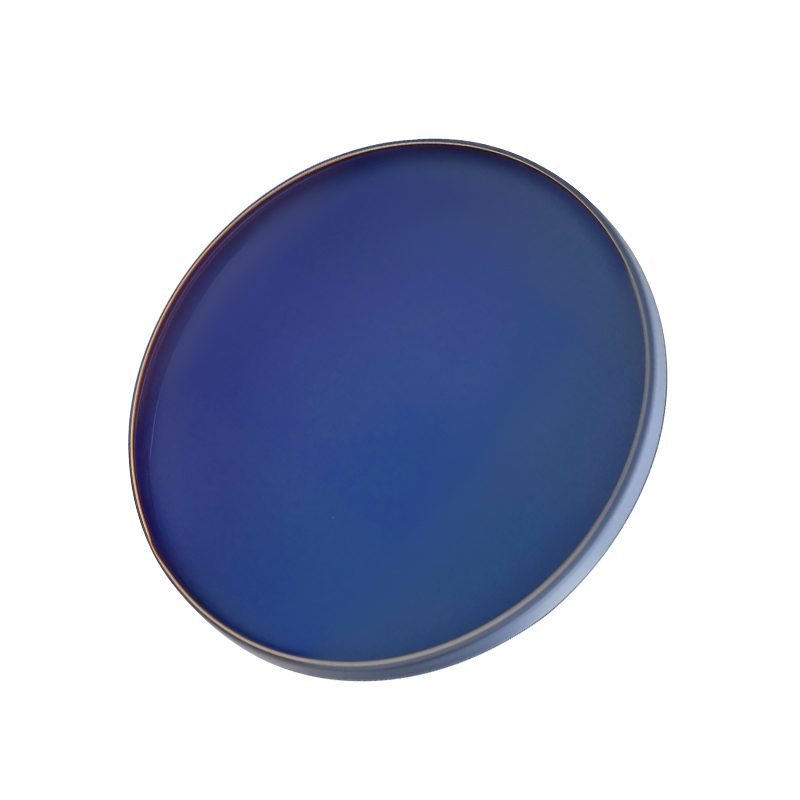 1.56 Fast-Change Photochromic Airblue Coating SHMC Finished LensFeaturing rapid darkening in 5-10 seconds and fast fading indoors, this photochromic lens adapts quickly to changing light. Its hydrophobic and oleophobic SHMC coating resists water, oil, and scratches, making it a durable choice for wearers who move frequently between indoor and outdoor environments.View Product →
Choosing a lens material without considering its coating compatibility is like planning a lens program without checking the edging workflow. The best results come from matching material, coating, and prescription together.
How to Match Lens Material to a Wearer
When we work with eyewear brands and optical chains, we recommend a simple decision path based on the final wearer.
- Low prescriptions and budget-conscious shoppers: standard resin 1.50 or 1.56 offers clear, affordable optics.
- Moderate to high myopia: 1.61 or 1.67 high-index lenses reduce thickness and weight.
- Children and active users: impact-resistant materials are the priority, with a good hard coat and AR coating.
- Office and digital screen users: consider blue-blocking finished lenses in the material most suitable for their prescription.
- Outdoor users: photochromic or polarized lenses help manage glare and UV exposure.
- Complex prescriptions or progressive wearers: freeform RX lenses can correct higher-order aberrations more precisely.
For individual prescriptions, freeform lens design has changed what is possible. Instead of relying only on the material, digital surfacing calculates the lens shape point by point. This is especially valuable for progressive lenses and high-cylinder astigmatic prescriptions. Our freeform progressive series pairs high-index materials with computer-optimized designs.
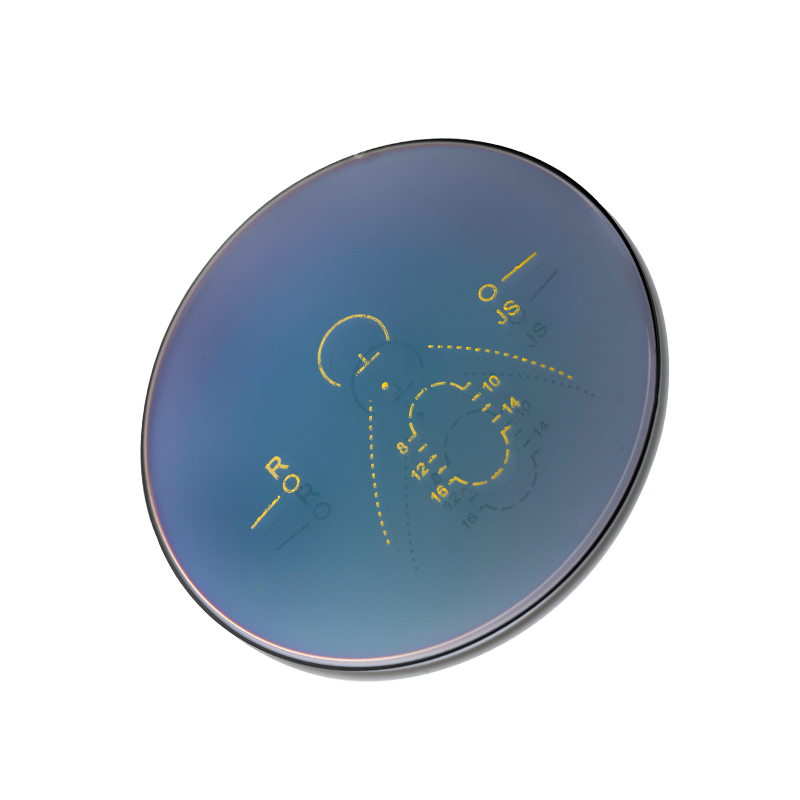
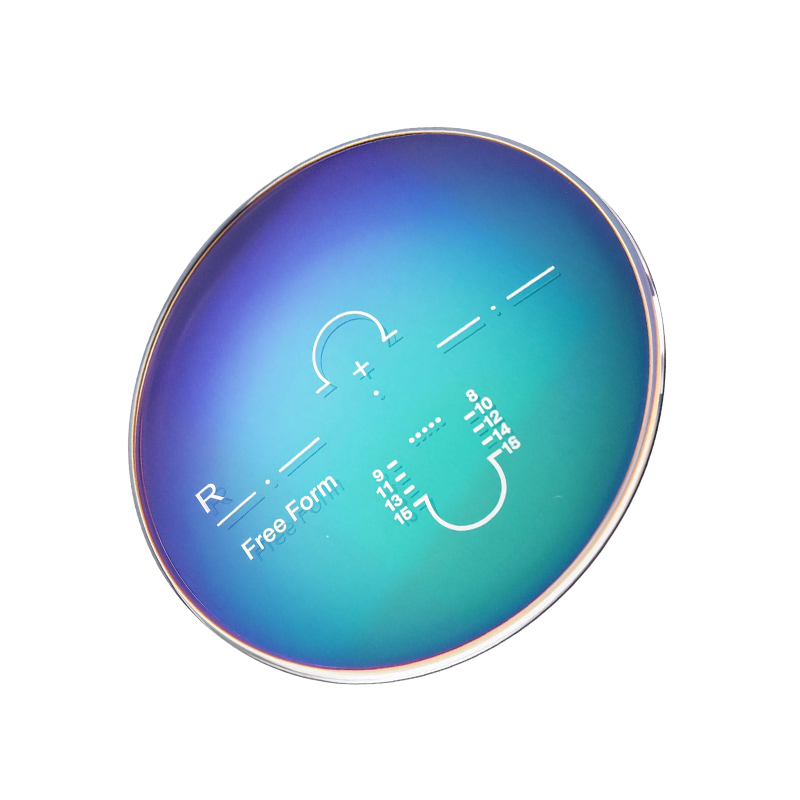 Freeform Progressive Lens in 1.56, 1.61, or 1.67 Index with HC/HMCDigitally surfaced freeform progressive lenses offer a wider field of vision and reduced distortion compared to conventional progressives. Available in high-index materials, these lenses are optimized for individual prescriptions, including astigmatism, and pair advanced design with durable hard or multi-coating options.View Product →
If this sounds like a lot to weigh, that is normal. We help every partner compare material families against their target price point, lens performance goals, and coating requirements. You can also browse our complete lens range to see how finished, semi-finished, and RX options are organized by material and function.
Lens material is not a one-size-fits-all decision. Standard resin is a proven everyday workhorse; high-index resins bring thinness and lightness to strong prescriptions; and impact-resistant options serve safety-conscious wearers. At JUST, our experience in resin lens manufacturing tells us that the best answer is the one that fits the wearer’s vision needs, daily habits, and budget. Start with the material, match it with the right coating, and the final lens will do its job beautifully.

 English
 Français
 Español
 عربى
عربى 中文
中文