Ask five people what the best lens material for sunglasses is and you will usually get five confident answers — and most of them will be right, for a particular frame and a particular wearer. That is the honest starting point. Sun lenses are chosen on a stack of trade-offs: optical clarity against impact resistance, weight against scratch resistance, tint quality against cost, and prescription range against everything else.
We have been casting and coating resin lenses since 1996, and over those years we have produced sun lenses in CR-39, polycarbonate, polyurethane and nylon, in prescriptions that run from low minus up to 1.67 high index. What follows is not a ranking. It is close to the way our technical team actually talks when a brand or an optical laboratory asks which substrate to specify.
What "Best" Really Means for a Sun Lens
A fashion sunglass that sells on colour and comfort is a very different brief from a wrapped sport shield that has to survive an impact test, or a prescription sun lens that must hold a high minus Rx without visible edge thickness. Before comparing materials, it helps to agree on what the lens has to do.
In practice, buyers and lens engineers weigh seven things:
- Optical clarity, usually expressed through the Abbe number — higher values mean less chromatic blur toward the edge of the lens.
- Impact resistance, which matters for sport, children, safety sun lenses and rimless drill mounts.
- Weight, where a few grams decide whether a frame stays comfortable after two hours.
- Tintability, meaning how evenly a substrate accepts dye across the whole power range.
- Polarization compatibility — whether the material suits film lamination or a cast-in polarizing layer.
- Coating adhesion, because hard coats, antireflective stacks and mirrors behave differently on each substrate.
- Supply and cost per pair, including yield, edging behaviour and scrap rate.
Every material wins on some of these and gives ground on others. If you also need the wider picture across all eyewear categories, our guide to choosing the right eyeglass lens material goes further into the non-sun side.
The Materials That Actually Make Good Sunglass Lenses
Six substrates dominate the sun lens market today. Each of them has a personality, and knowing that personality saves a lot of trial-and-error at sampling stage.
CR-39 (1.49 / 1.50 Allyl Diglycol Carbonate)
CR-39 remains the reference point for plastic sun lenses. With an Abbe number around 58 it is the clearest of the common resins, it dyes beautifully and evenly, and it accepts antireflective and mirror coatings without drama. It is also the friendliest on cost and offers a wide prescription range. The trade-off is toughness: CR-39 is a fashion material, not an impact material, so it belongs in acetate and metal frames at low to moderate powers rather than in a sport wrap or a child's frame.
Polycarbonate (1.59)
Polycarbonate is the go-to answer when durability comes first. It absorbs UV by itself, resists impact better than any other common plastic, and stays thin and light. The price is optical: an Abbe number near 30 means more chromatic blur at higher powers, so clarity-minded wearers may notice the difference. Polycarbonate also demands disciplined processing, because stress, heat and solvents affect coating adhesion, and a suitable primer or dedicated hard coat is often needed. Best used for sport wraps, children's sunglasses, safety sun lenses and thin low-to-mid prescriptions.
Trivex-Class Material (1.53)
Impact-resistant 1.53 material sits in a useful middle ground: toughness close to polycarbonate, but an Abbe number in the mid-forties, so edges stay cleaner. It drills well, which makes it a natural fit for rimless sun styles, and it holds moderate prescriptions comfortably. The compromises are material cost, a narrower choice of tint colours, and limited usefulness at the extremes of the power range. When a brand wants both safety and clarity in one lens, this is often the compromise it lands on.
Polyurethane (1.56 / 1.61 / 1.67)
Polyurethane is where premium sun lenses increasingly live. It combines good clarity with high toughness, dyes cleanly, and is available in genuinely useful high-index versions — around 1.61 with an Abbe number near 42, and 1.67 at roughly 32 for stronger minus prescriptions. Coating adhesion is excellent, which matters when a lens carries a hard coat, a multi-layer AR stack and a mirror on the back. It rewards careful edging and controlled laboratory conditions, so it is a material for partners who know their process. Our own 1.61 range uses MR-8 grade polyurethane for exactly this reason.
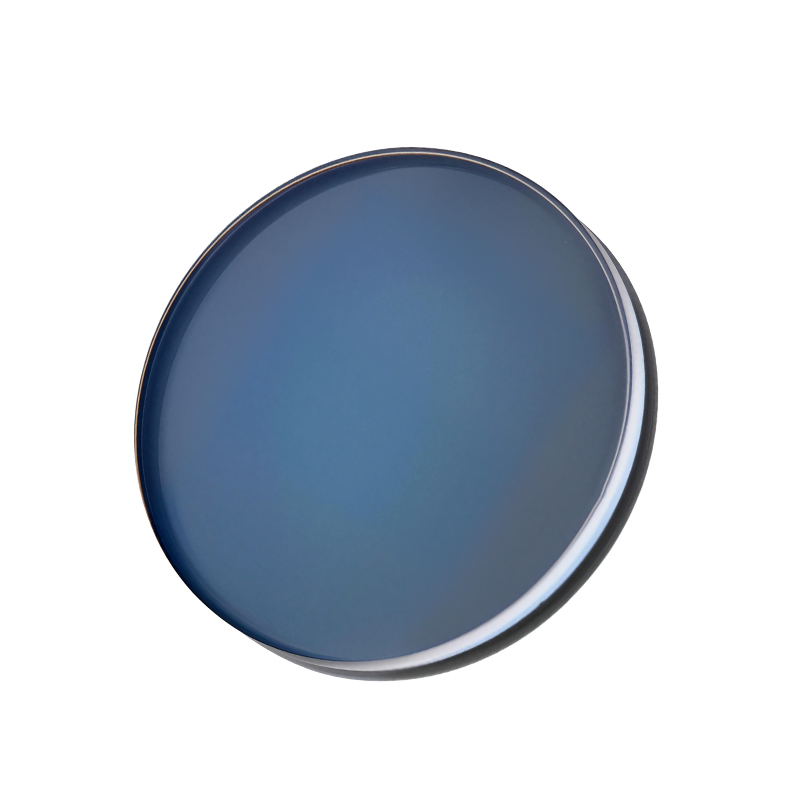
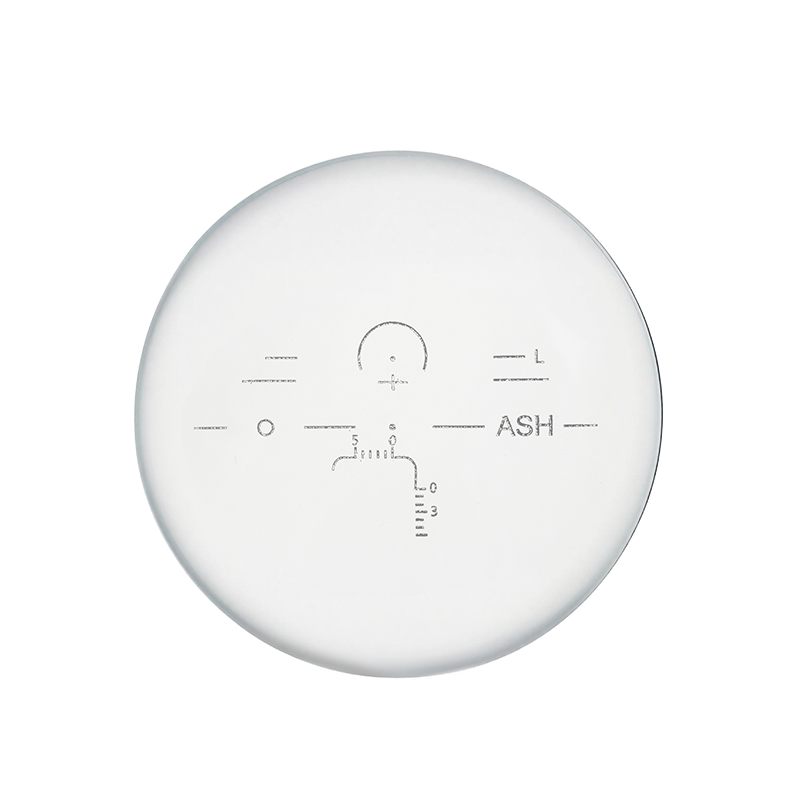
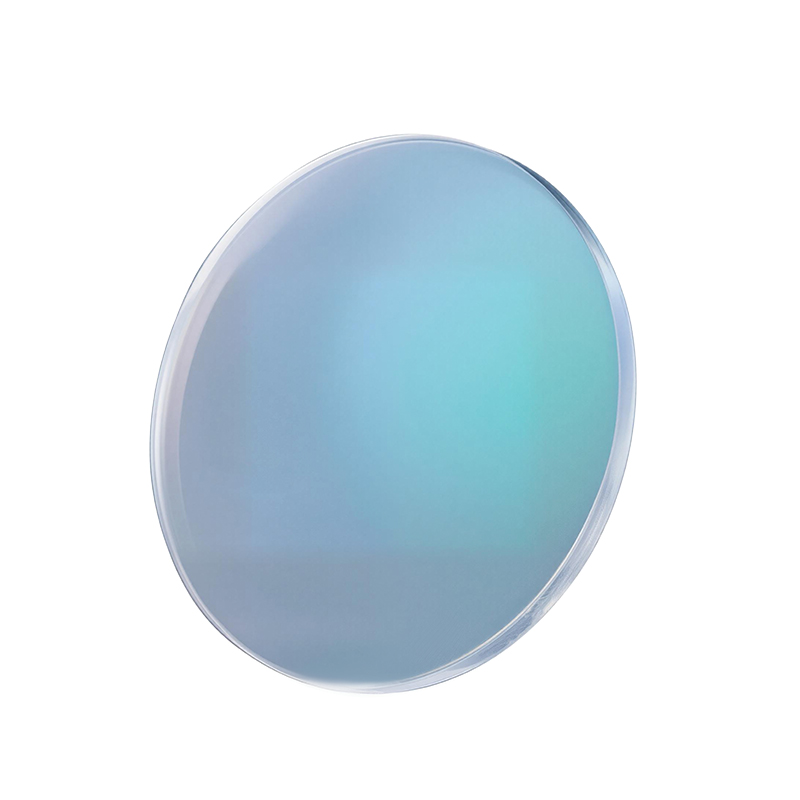 1.61 MR-8 Single-Vision Lenses with Green AR CoatingStock single-vision lenses in MR-8 polyurethane with UV400 and green multilayer anti-reflective coating, available in 65, 72 and 75 mm diameters for thinner, clearer eyewear.View Product →
Polyamide (Nylon)
Polyamide sun lenses are light, optically pleasant and unusually resistant to cosmetic creams, sunscreen and sweat — the reason so many premium fashion and rimless sun styles specify them. They are not the easiest substrate to dye, material cost is higher, and edging tolerances are tighter, so they suit factories and laboratories with experience. For a flagship frame where weight and skin-contact durability are the selling points, they are hard to beat.
Mineral Glass
Glass still holds the clarity crown, with an Abbe number around 59 and excellent scratch resistance. It is also heavy compared with any resin, can shatter, and is normally tinted in the factory rather than in the lab. We see it today in classic aviator silhouettes and premium styles where a certain weight and hand-feel are part of the product story — not in sport, not in rimless, and rarely in high minus.
Side-by-Side Comparison
Indicative values for orientation only; final optical and mechanical performance depends on lens design, centre thickness and the coating stack actually applied.
| Material |
Refractive index |
Abbe (clarity) |
Impact resistance |
Typical sun lens use |
| CR-39 |
1.49 – 1.50 |
~58 |
Moderate |
Fashion frames, gradient tints, low to mid Rx, best value |
| Polycarbonate |
1.59 |
~30 |
Very high |
Sport wraps, children, safety sun, thin low to mid Rx |
| Trivex-class |
1.53 |
~44 |
Very high |
Rimless drill mounts, balanced sport prescriptions |
| Polyurethane |
1.56 – 1.67 |
~42 at 1.61 / ~32 at 1.67 |
High |
Premium polarized, high-wrap sport, high minus Rx |
| Polyamide (nylon) |
1.50 – 1.61 |
~42 |
High |
Lightweight premium fashion, rimless, chemical resistance |
| Mineral glass |
1.52 – 1.70 |
~59 |
Low, can shatter |
Classic and premium styles, scratch-critical use, factory tint |
How Material Choice Shapes Tint, Polarization and Coatings
The substrate decides more than the base curve. Dye behaviour follows material chemistry: CR-39 and polyurethane take colour evenly across a wide power range, polycarbonate needs tighter temperature control in the dye bath, and glass is tinted at the melting and forming stage rather than dipped.
Polarization is a similar story. Film lamination works well on CR-39, polycarbonate and nylon, while cast-in and laminated polarizing on polyurethane and high-index substrates give the optical quality that premium sun programmes ask for. Our own 1.49 polarized range in grey, brown and yellow is built for volume fashion and driving styles, with mirror-coated versions for the sports and outdoor tier. If you want the technical background on what an uncoated polarized blank actually gives you, this note on polarized sunglass lenses in UC form is a useful short read.
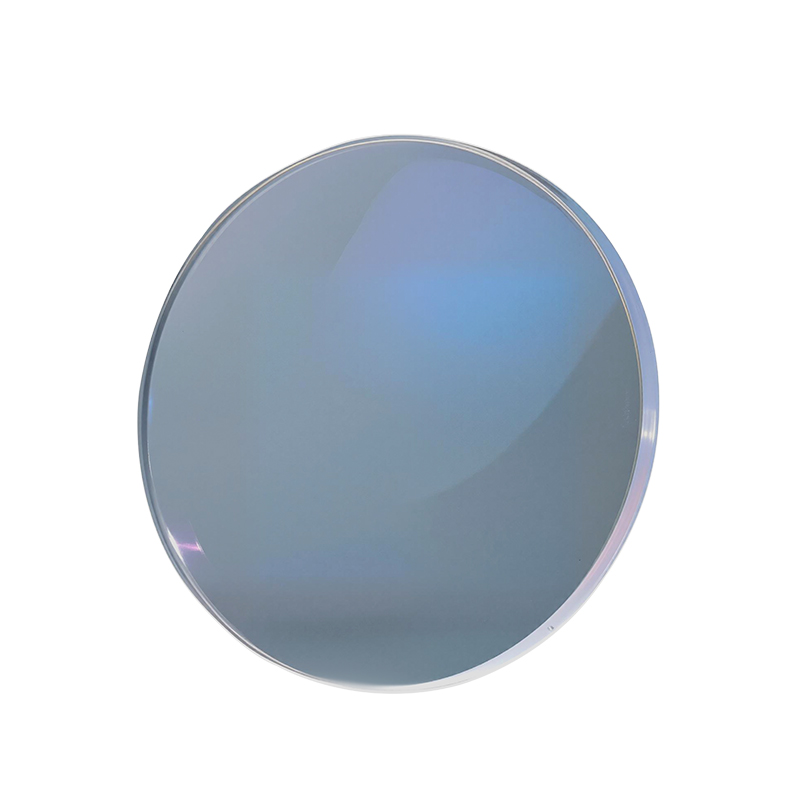
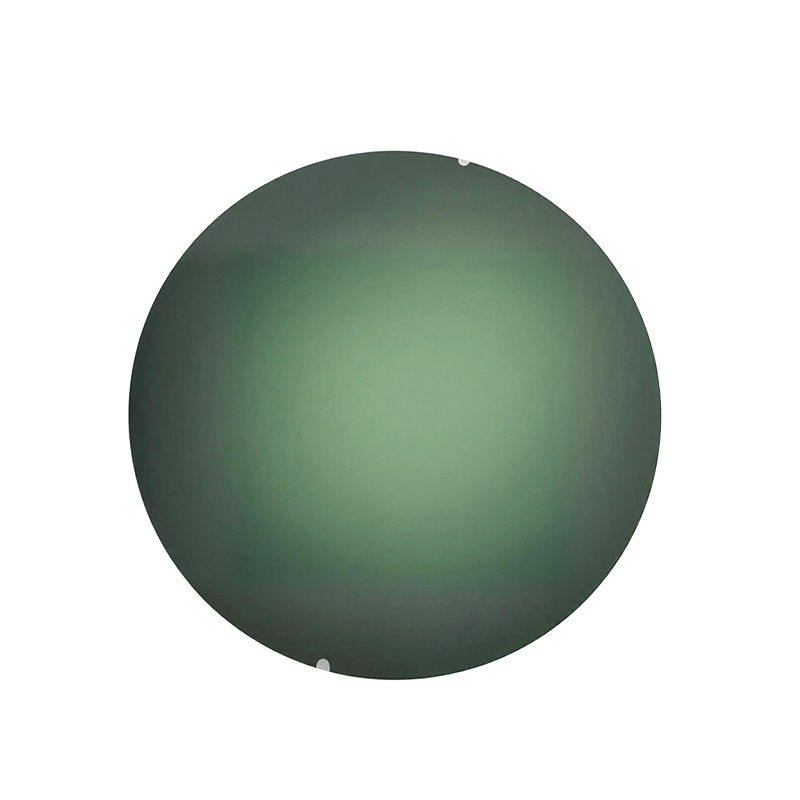 1.49 Polarized UC Sunglass Lenses in Grey, Brown and YellowWholesale polarized sunglass lenses with UV410 protection, 75 mm diameter and wear-resistant hydrophobic coating, available in grey, brown and yellow for glare-heavy outdoor use.View Product →
Finally, coatings. A hard coat that bonds perfectly on 1.61 polyurethane may need a primer layer on polycarbonate, and mirror stacks behave differently on each substrate. That is why we prefer to quote a lens as a complete system — substrate, hard coat, AR and mirror — rather than as a material name alone.
Matching Material to the Frame and the Price Tier
Once the wearer and the frame are fixed, the material decision usually becomes obvious:
- Volume fashion and entry price tiers: CR-39 in 1.49 or 1.50, with solid, gradient or mirror finishes.
- Sport, children and safety-led programmes: polycarbonate for maximum toughness, or a Trivex-class 1.53 where clarity and drill mounting matter.
- Premium polarized and high-wrap sun: polyurethane in 1.56 to 1.61, moving to 1.67 when the prescription demands it.
- Lightweight rimless and skin-contact styles: polyamide, accepting a higher material cost for the weight and chemical resistance.
- Classic and heritage styles: mineral glass where clarity, weight and scratch resistance are part of the brand promise.
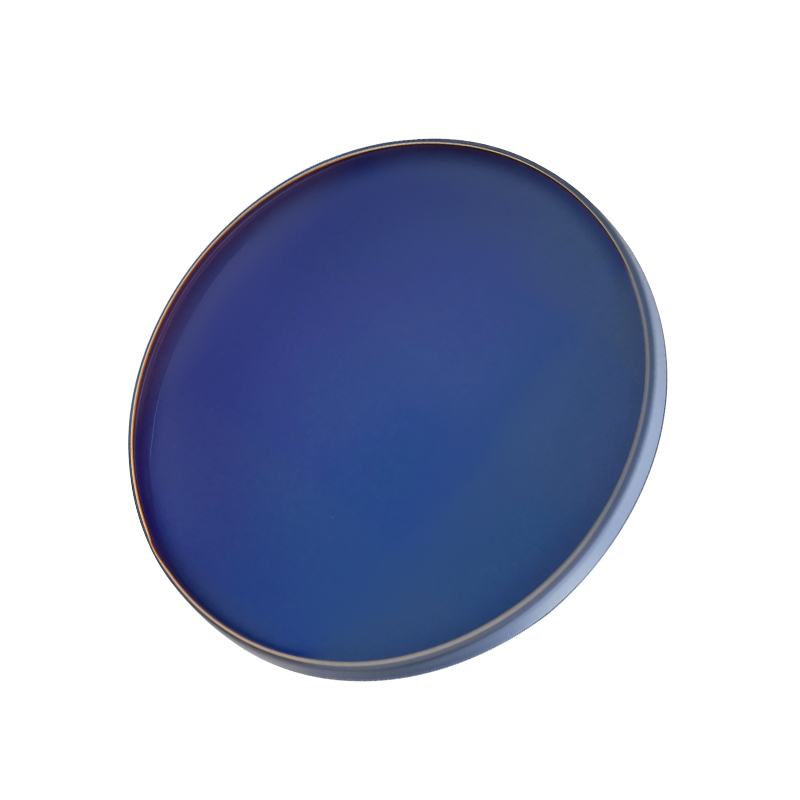
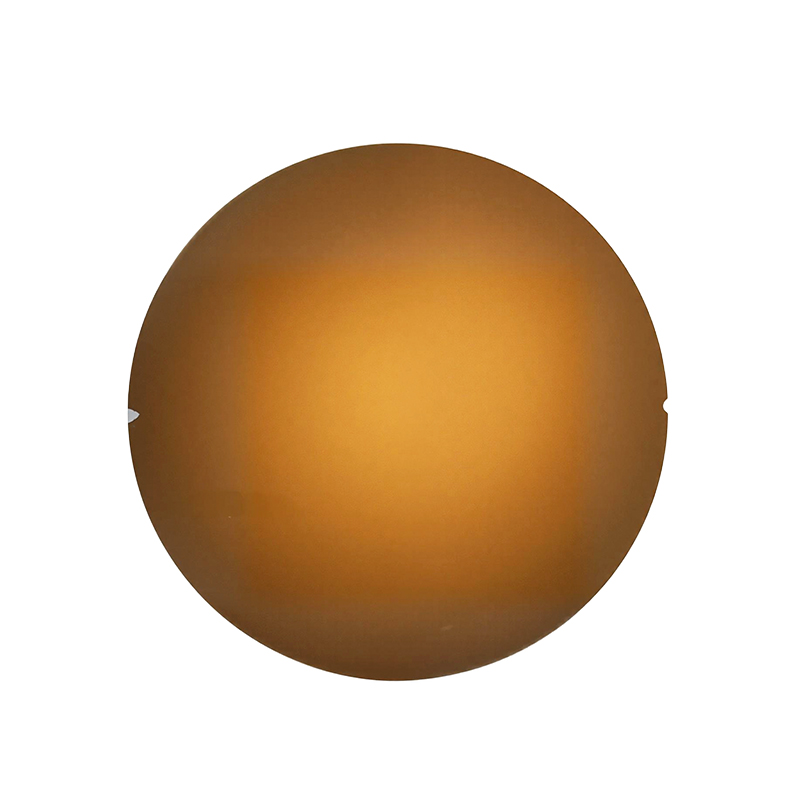 1.49 Polarized Mirror Sunglass Lenses in Eight ColorsWholesale 1.49 polarized mirror lenses with UV410 protection, 75 mm diameter and wear-resistant hydrophobic coating in silver, green, pink, blue, gold, red, purple and yellow.View Product →
Mirror finishes deserve a mention of their own. On 1.49 polarized blanks they give a strong, even reflective surface at a sensible cost, which is why they remain the backbone of outdoor and driving collections. On higher-index substrates the same coating becomes a premium detail, best reserved for the top of the range.
A Practical Sourcing Checklist
- Confirm the impact standard the finished sunglass must meet before choosing a substrate.
- Check the prescription range you actually sell — a material that stops at moderate powers will not cover your high-minus orders.
- Ask how the supplier dyes and coats the substrate, not just which resin it buys.
- Request samples in your real power range, since tint evenness shows up at the edges of the range, not in a plano demo pair.
- Verify coating adhesion with an actual adhesion and abrasion test rather than a visual check.
- Confirm batch-to-batch consistency, lead time and documentation before scaling to production volumes.
The Short Answer
If we had to answer in one line: polycarbonate is the best lens material for sunglasses that must survive hard use, CR-39 is the best value for fashion sun lenses, and polyurethane is the best all-round choice for premium polarized and higher prescriptions. Everything else is a deliberate compromise between those three poles. Tell us the frame, the wearer and the price tier, and the right substrate usually names itself.

 English
 Français
 Español
 عربى
 中文